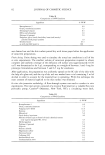
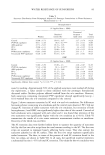
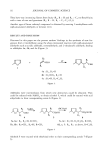
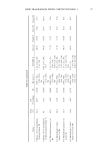
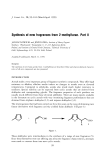
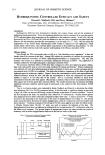
WATER RESISTANCE OF SUNSCREENS 81 sopropyl adipate was chosen as solvent for the prototype oil formulation with benzo- phenone-3 and octyl methoxycinnamate concentrations at 6% and 7.5% w/w, respec- tively. The other formulations are presented in Tables I through III. IN VITRO MODELING TECHNIQUE Radiolabeling of formulations. [•4C] benzophenone-3 was obtained as solid material and was solubilized in ethanol to give a specific activity of 1.05 pCi/pl of solution. Sunscreen preparations were spiked with the radiolabeled solution so that each microgram of benzophenone-3 applied to the skin surface had approximately 1600 dpm (disintegra- tions per minute) for the hydroalcoholic preparations, 600 dpm for the diisopropyl adipate oil formulations, and 450 dpm for emulsions. [3HI octyl methoxycinnamate was obtained as a solution in toluene with a specific activity of 1.93 pCi/pl. Sunscreen preparations were spiked with the radiolabeled solution so that each microgram of octyl methoxycinnamate applied to the skin surface for in vitro studies had 1600 dpm for hydroalcoholic preparations, 450 dpm for diisopropyl adipate oil formulations, and 250 dpm for emulsions. Selection of receptor fluid. The receptor fluid was aqueous solution of 0.5 % polyoxyethylene oleyl ether (Volpo © 20), a nonionic surfactant with an HLB of 16. Polyoxyethylene oleyl ether increased the solubility of both sunscreens by the mechanism of micellar solubi- lization. This receptor fluid, though non-physiologic, increases the solubility of sun- screen agents without affecting skin barrier function (6). Preparation of skin membrane. Upon receipt the freshly excised skin was washed gently with 1% (w/w) aqueous dishwashing detergent, rinsed with aleionized water, and patted dry with a paper towel. A 250-300 lam thick layer of the skin was cut from the surface with a Padgett © Electrodermatome (Padgett Instrument, Kansas City, MO). The skin pieces were then rinsed and dried with paper towels before storage in plastic bags at 4øC. The skin was removed from the refrigerator and kept in isotonic solution to hydrate at room temperature one hour before starting the experiment. The dermatomed skin was then cut into 10-mm circular pieces with a brass punch and placed epidermis-side up in the diffusion cells. The skin treated in this fashion from the stage of receipt until use retained its original permeability characteristics for four weeks after dermatoming (7). After mounting the skin in diffusion cells the receptor fluid was permitted to flow for 15 minutes followed by application of 0.5 ml of aleionized water to the skin surface for 30 minutes. After ensuring that the skin was intact (no leakage or drainage), the water Table I Composition of Hydroalcoholic Prototype Formulation Ingredient % W/W Benzophenone-3 3.0 Octyl p-methoxycinnamate 7.0 SD alcohol 40 (anhydrous) 68.0 Poloxamine 704 9.0 Polymer (if present) 5.0 Water 8.0

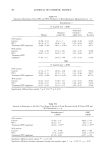
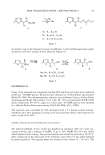
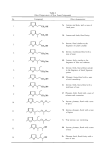
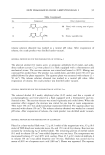
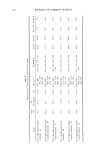
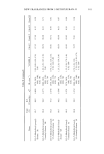
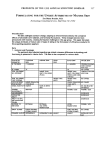
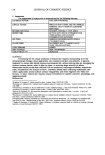
82 JOURNAL OF COSMETIC SCIENCE Table II Composition of O/W Emulsion Ingredient % W/W Benzophenone-3 Octyl p-methoxycinnamate Diisopropyl adipate DEA-cetyl phosphate Polymer (if present) Propylene glycol (and) diazolidinyl urea (and) methyl paraben (and) propyl paraben Distilled water qs with distilled water to 6.0 7.5 8.5 2.0 5.0 1.0 65.3 100 was drained out and the skin surface patted dry with tissue paper before the application of sunscreen preparations. Finite dosing. Finite dosing was used to simulate the actual use conditions in all of the in vitro experiments. The smallest volume of sunscreen preparation required to obtain complete and uniform coverage of the diffusion cell surface area (approximately 0.636 cm 2) was determined to be 4 }al, corresponding to a weight of between 3 and 4 mg for prototype formulations and between 5 and 6.5 mg for emulsions. After application, the preparation was uniformly spread on the SC side of the skin with the help of a glass rod, and the tip of the rod was washed into a vial containing 2 ml of alcohol in order to account for the material lost in spreading. With this technique the exact amount of material applied to the skin surface was obtained. In vitro skin permeation methodology. A flow-through system was used to conduct in vitro experiments. The total system consisted of a receptor fluid reservoir a variable flow rate peristaltic pump, Cassette © (Manostat, New York, NY) a circulating water bath, Table III Composition of W/O Emulsion Ingredient % W/W Benzophenone-3 6.0 Octyl p-methoxycinnamate 7.5 Polyglycerol-3-DI-IS 11.0 Beeswax 0.5 Mineral oil 5.0 Octyl dodecyl myristate 4.0 Mineral oil (and) apricot kernel oil (and) calendula extract (oily vegetol marigold WL 1072) 4.5 Methyl paraben 0.1 Polymer (if present) 5.0 Glycerin 5.0 Sodium chloride 0.5 Magnesium sulfate 0.5 Deionized water 50.0 Carbomer 940 0.3 Imidazolidinyl urea 0.3 Triethanolamine 99% 0.3
Purchased for the exclusive use of nofirst nolast (unknown)
From: SCC Media Library & Resource Center (library.scconline.org)