116 JOURNAL OF COSMETIC SCIENCE 8 p. Burke and H. Maibach, Exogenous ochronosis: an overview, ,L of Dermatological Treatment, 8, 21 (1997). 9 National Toxicolog3.' Program, Toxicology and carcinogenesis studies of hydroquinone in F344/N rats and B6C3F• mice, Technical Report No. 366 (1989). •o j. English, L. Perr).,, M. Vlaovic, C. Moyer and J. O'Donoghue, Measurement of cell proliferation in the kidneys of Fisher 344 and Sprague-Dawley rats after gavage administration of hydroquinone, Fundamental andApplied Toxicology, 23, 397 (1994). • R. David. J. English. L. Totman, C. Moyer, and J. O'Donoghue, Lack of nephrotoxicity and renal cell proliferation following subchronic dermal application of a hydroqumone cream, Food and Chemical Toxicology, 36, 609 (1998). •" E. Barber, T. Hill, and D. Schum, The percutaneous absorption of hydroquinone (HQ) through rat and human skin in vitro, Toxicology Letters. 80, 167 (1995). •3 R. Wester, J. Melendres. H. Xiaoying, R. Cox, S. Serranzana, H. Zhai, D. Quan, and H. Maibach, Human in vivo and in vitro hydroquinone topical bioavailability, metabolism, and disposition, d Toxicol. Environ. Health, Part A, 54, 301 (1998). • 4 T. Dooley. Topical skin depigmentation agents: current products and discovery of novel inhibitors of melanogenesis, d. of Dermato logi cal Treatment, 8, 275 (1997). •5 E. Stt A Comparison of Skin Lightening Agents, d. of Cosmetic Science, 49, 208 (1998).

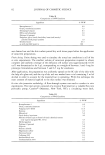
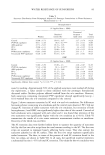
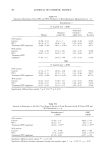
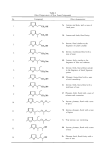
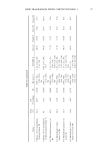
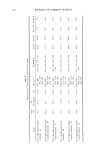
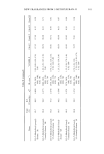
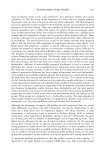
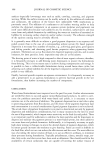
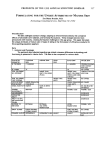
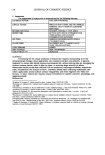
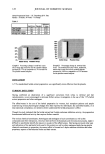
PREPRINTS OF THE 1999 ANNUAL SCIENTIFIC SEMINAR 117 FORMULATING FOR THE UNIQUE ATTRIBUTES OF MATURE SKIN Zoe Diana Draelos, M.D. Dermatology Consulting Services, High Point, NC 27262 Introduction The skin undergoes constant change, adapting to environmental stresses, the cumulative effects of ultraviolet (UV) radiation, and hormonal fluctuations. These changes become more pronounced with maturity, creating formulation challenges in this age group. This paper discusses the unique attributes of mature skin in hopes of aiding in the formulation of efficacious products for this expanding population segment. Data 1. Artatomic and Physiologic The pertinent data collected regarding age related cutaneous differences in physiology and functioning is presented in tabular form. The data is also compared for various races. EVALUATED CAucASIA• ' HISPANIC SKIN" ASIAN BLACK SKIN'" MATURE SKII• PARAMETER SKIN' SKIN' SC THICKNESS 7.2 MICRONS 6.S MICRONS EPIDERMIS BECOMES MORE COMPACT WITH AGE SC LAYERS 17 22 NO CHANGE TEWL FOLLOWING HIGHER THAN " HIGHER THAN LOWER IN HEALTHY SLS EXPOSURE TM WHITE FOLLOWING WHITE FOLLOWING AGED SKIN 2% SLS PREOCCLUDED SKIN 0.5% SLS TEWL FOLLOWING HIGHER THAN HIGHER THAN NO CHANGE TAPE STRIPPING WHITE WHITE CORTICOSTEROID HIGHER PERMEATIOI • LOWER PERMEATIDI NO CHANGE PENETRATION •' THAN BLACK THAN WHITE VESSEL REACTIVITY HIGHEST SAME AS WHITE LESS NO AGE-RELATE D SKIN DIFFERENCE STINGING GRI•,•TEST POSSIBLY LESS POSSIBLY LESS SUSCEPTIBILITY , ,, MELANOGENESIS DECREASED EXFOLIATION DECREASED ABILITY ABILITY TO HEAL DECREASED AND WITHSTAND TRAUMA RESPONSE TO"' 'ERYTHEMA ERYTHEMA HYPER- POSSIBLY' LESS IRRITATION AND HYPER- PIGMENTATION PIGMENTATION •WEAT GLAND-• FENNER APOCRINE- MOR E APOCRINE- NO CHANGE ECCRINE GLANDS ECCRINE GLANDS CERAMIDE LEVELS v' INTERMEDIATE INTERMEDI•TE"HIGH HIGHEST ' ' LOWEST DECR•ASE'D wITH AGE
Purchased for the exclusive use of nofirst nolast (unknown)
From: SCC Media Library & Resource Center (library.scconline.org)