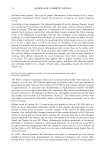
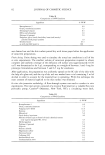
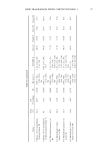
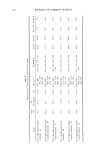
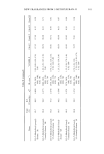
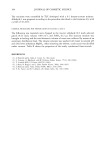
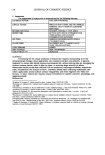
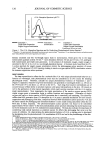
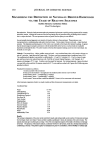
118 JOURNAL OF COSMETIC SCIENCE 2. Appearance The appearance of mature skin is characterized by the following features. CUTANEOUS FEATURE AGED SKIN APPEARANCE SURFACE TEXTURE RETAINED SKIN SCALE BROWN TONES RED TONES YELLOW TONES TISSUE REBOUND SKIN THICKNESS SUBCUTANEOUS FAT IRREGULAR WITH COARSE AND FINE WRINKLES, NUMEROUS CRUSTY GROWTHS (SEBORRHEIC KERATOSES) EXCESSIVE,, ES ,PECIALL,Y ' ,OVE, R JOJNTS , MOTTLED WITH DIFFUSE DYSPIGMENTATION (POIKILODERMA) AND LOCALIZED DYSPIGMENTATION (LENTIGO,S) NUMEROUS FINE BROKEN BLOOD VESSELS TELANGIECTASIAS) SALLOWHESS DUE TO CLUMPED ELASTIC TISSUE (SOLAR ELASTOSIS) SLOWED MORE TRANSPARENT DECREASED Summary Formulating for the unique attributes of mature skin requires incorporating all of the aforementioned changes, where appropriate, into cosmetics and skin care products. In general, cleansers for mature skin should remove environmental dirt, without altering skin pH, damaging the stratum corneum barrier, which is slow to repair, or removing large amounts of sebum. Moisturizers should provide both UVB and UVA sun protection, encourage exfoliation, smooth skin scale, and plasticize the stratum corneum. Cosmetics should mask underlying undesireable skin colors, apply easily around surface contour irregularities, and resist migration into folds and furrows. In short, mature skin requires unique formulations for specific anatomic, physiologic, and appearance needs. References 'Stephens TJ, Oresajo C: Ethnic sensitive skin. Cosmet Toilet 109:75-80, 1994 "Berardesca E, Maibach HI: Sodium-lauD'l-sulphate-induced cutaneous irritation. Contact Dermatitis 19:136- 140,1988 '"Berardesca E, Maibach H: Racial differences in skin pathophysiology. J Am Acad Dermatol 34:667-672, 1996 'vStephens TJ, Oresajo G: Ethnic sensitive skin. Cosmet Toilet 109:75-80, 1994 Vltarvell JD, Maibach HI: Percutaneous absorption and inflammation in aged skin: a review. J Am Acad Dermatol 31:1015-1021,1994 '•Berardesca E, Maibach HI: Racial differences in sodium lauryl sulphate induced cutaneous irritation: black and white. Contact Dermatitis 18:65-70, 1988 v"Stoughton RB: Bioassay methods for measuring percutaneous absorption. In: Montagna W, Stoughton RB, Van Scott EJ (eds). Pharmacology of the skin. New York: Appleton-Century-Crofts, 1969, pp 542-544 '•"Sugino K, Imosawa G, Maibach HI: Ethnic difference of stratum comeurn lipid in relation to stratum comeurn function. J Invest Dermatol 100:597, 1993

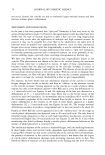
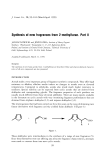
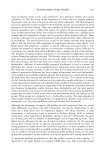
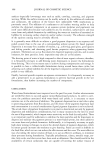
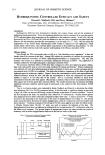
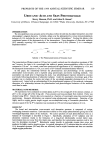
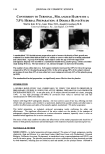
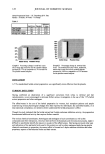
PREPRINTS OF THE 1999 ANNUAL SCIENTIFIC SEMINAR 119 UROCANIC ACID AND SKIN PHOTODAMAGE Kerry Hanson, Ph.D. and John D. Simon* University of Illinois, Urbana-Champaign, IL 61820, *Duke University, Durham, NC 27708 INTRODUCTION: The role epidermal trans-urocanic acid (t-UA) plays within the skin has elucidated researchers since the chromophore's original discovery. Currently, debate over the photoprotective versus immunomodulatory behavior of t-UA excludes the use of urocanic acid in cosmetic formulations. I Fueling this debate is the complicated nature of the photoreactivity of the chromophore. Upon absorption of ultraviolet radiation (UV) naturally occurring t-UA isomerizes to cis-urocanic acid (c-UA) (Scheme 1) in a wavelength- dependent manner. 2 __ / COOH __ HN •.N :"' N.-:. • NH Scheme 1. The Photoisomerization of Urocanic Acid The isomerization efficiency peaks at 310 nm, but is greatly reduced near the absorption maximum of 280 nm 2 however, the latter is at a wavelength that induces a greater immunomodulatory effect in the skin compared to 3 l0 nm? As a result, some have questioned the significance of UV absorption by t-UA, and the subsequent isomerization to c-UA, as a source of UV-induced immunomodulatory behavior. In this paper, the relationship between the photoreactivity and photobiology of the epidermal chromophore trans-urocanic acid is explored using spectroscopic and kinetic modeling methods. One assumption was made prior to beginning this study: Any photobiological response initiated by urocanic acid results following absorption of ultraviolet radiation. Under this assumption, the primary goal of this program was to elucidate the nature and origin of the wavelength-dependent photoreactivity of trans- urocanic acid. Armed with an understanding of the photochemical response of the molecule, subsequent discussion of a relationship between the photochemical and photobiological behaviors of the molecule could then be made. MATERIALS AND METHODS: All experiments were conducted in solution phase at pH 5.6, the average pH of the stratum corneum, or pH 7.2, the average pH of the living cell. Trans-urocanic acid was purchased from Aldrich. Purity was checked using HPLC. Kinetic data were acquired as a function of wavelength using time-resolved laser spectroscopy. Energetic information was acquired using photoacoustic spectroscopy. Detection of the highly reactive oxygen species singlet oxygen was accomplished using a Germanium photodiode. The emission signal of the 3•. •-IA transition was monitored at 1270 nm following irradiation of t-UA. RESULTS: n The broad and structureless trans-urocanic acid absorption spectrum is composed of unique, overlapping electronic transitions. Each transition exhibits its own unique photochemistry giving rise to the wavelength-dependent nature of the molecule. The action spectrum of each photochemical event as a function of wavelength is described in Figure 1. Specifically, absorption of UV radiation near the absorption maximum results in the formation of a long-lived electronically excited triplet state. Isomerization does not occur from this triplet state, and therefore the isomerization quantum yield is low near the absorption maximum? Bimolecular energy transfer to molecular oxygen does occur and produces the highly reactive singlet oxygen. In contrast, absorption of UV radiation near the red-tail of the t-UA absorption spectrum (310 nm) does not efficiently lead to triplet formation and does not sensitize singlet oxygen production.
Purchased for the exclusive use of nofirst nolast (unknown)
From: SCC Media Library & Resource Center (library.scconline.org)