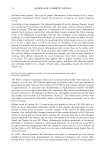
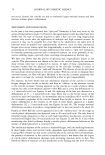
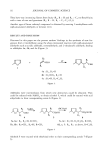
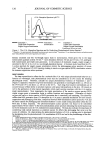
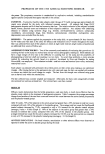
120 JOURNAL OF COSMETIC SCIENCE Transition 3 t-UA Absorption Spectrum pH 7.2 ß I I I 1 240 280 320 360 Wavelen•h (nm• Transition 2 -- Triplet State Generation Singlet Oxygen Sensitization Isomerization Transition 1 Triplet State Generation Singlet Oxygen Sensitzation Transitions are not to scale Figure 1. The t-UA Absorption Spectrum and Its Underlying Photochemical Action Spectra.* * Transition 1 • is experimentally determined by photoacoustic spectroscopy, Transittons 1-2 are based upon kinetic and photoacousttc data 4 and published isomerization quantum yieM values. • Instead, excitation near this wavelength region leads to isomerization, which gives rise to the large isomerization quantum yield at 310 nm. 2'4 Upon absorption between 310 nm and 351 nm, t-UA undergoes both isomerization and triplet state generation. In the presence of molecular oxygen, singlet oxygen is sensitized in the UV-A by t-UA in a wavelength-dependent manner. A literature study found that the UV- A action spectrum for singlet oxygen sensitization mimics the photosagging action spectrum of mouse skin, 4-5 and the proposed UV-B/C transition leading to reactive oxygen species (ROS) sensitization mimics the immune suppression action spectrum. 3 DISCUSSION: The data reported herein reflect that for a molecule like t-UA with unique photochemical behavior as a function of wavelength, each photochemical event must be considered as its own source for initiating physiological events. Therefore, consider the unique photochemical behavior of Transitions 1 and 3 (Figure 1) separately. Reactive long-lived intermediates are generated at wavelengths below ca. 270 nm in the UV-B and UV-C and above ca. 320 nm in the UV-A. Such long-lived reactive intermediates are of concern because of their ability to sensitize reactions with natural chromophores in the skin. Of concern as well is the application of other topical ingredients which could sensitize reactions with the t-UA reactive triplet intermediate(s). Most importantly, the triplet sensitization of the reactive oxygen species (ROS) singlet oxygen poses a tremendous threat to cellular functions and components. Generation of singlet oxygen can lead to a chain reaction of ROS generation that is essentially self-sustaining. This discovery reflects that ROS generation from UV absorption by t-UA poses a potential mechanism for both immune suppression and photoaging of the skin comparison between ROS-sensitization action spectra by t-UA and the action spectra for photoaging and immunomodulation is easily made raising speculation about the role ROS play in these responses. The photoisomerization action spectrum was found to be red-shifted approximately 40 nm relative 4 to the immunomodulation action spectrum indicating that isomerization may not be the dominant source oft-UA-mediated immunomodulation. The data also indicate the importance of considering weak optical transitions as potential sources for effects like photoaging that occur over the course of a lifetime. By characterizing the photochemical behavior of t-UA, a starting point is developed for deciphering how the photochemical t-UA-sensitization of ROS can lead to the photodamage of the skin. References: I Cosmetic Ingredtent Review Panel. FinatReport on the Safety A.* •essment ofUA. d. Am. Col/. Toxtc. 14. 386 (1995) 2 Mon-ison. H. Bernasconi. C. Pandey. G A P/avelength Effect •m UA t•)•Z Photoisomerizatitnt. Photochem. Photobiol. 40. 549 (I 984) 3 DeFabo. EC.Noonan. F P MechanismoflmmuneSnppre.•.•ionbyUVIrraditi•ntinvivo J. Erp. Med 155.84(1983) 4 Hanson. K M. Simon. J D The UV-.4 Photoreactivity oftra..t.*-Uroca, ic .4cid and the Photoaging of the SMn. Proc. Natl..4ca• Sci.. 95. 10576 (1998). Hanson. K M. Simon. J D The Origin of the P/avetength-Depemlent Photoreactivity oftrans-Urocanic .4cid Photochem. Photobiol. 67. 538 (1998). Hanson. K M. Simon. J D /'he Photochemtcat Iaomerization Kinetics of Urocaoic .4cid aml Their Effects ulnm the In Vitro aml In Viw• Photoi*'omeri:ation .4ctiot Spectra. Photochem Photobiol.. 66. 819 (1997). Hanson. K M. Li. B. Simon. J D ,4 Spectroscopic Sludy oflhe Epidermal Chromophore tra,.*-Urocanic ,4cid J. ,4m. Chem. Soc.. 119. 2715 (1997). Li. B. Hanson. K M. Simon. J D /'he Primary Processes of the Electronic I•cited State of t-Urocansc ,4cid J. Phy.*. Chem . I01. 969 (1997). Hanson. K M. Simon. J D Photochemistry of Urocanic ,4cid: Evidence that U,4 ShouM Be Used with Caution in Cosmetic Formulatio, c J. Stsc. Cos. Chem. 4•. 151 (May/June 1997) 5 BiaseL D L. Harmon. D P. On-. T V P/avelength Depetnlence of Hi.*'tological. Phy.*ical. and Via'ible Changes in Chrtmically UV-Irradiated Hairle.• Mouse Skin. Photochem. PhotobioL SO. 763 (1989)

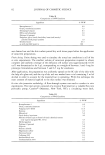
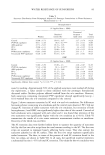
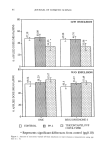
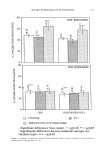
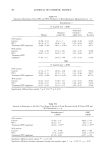
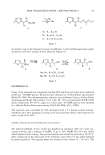
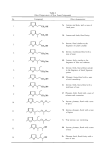
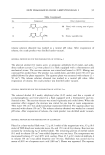
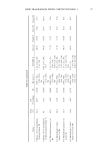
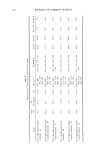
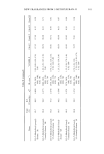
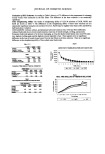
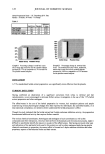
PREPRINTS OF THE 1999 ANNUAL SCIENTIFIC SEMINAR 121 EFFECTS OF ALKALI METAL HYDROXIDES AS STRAIGHTENING AGENTS OF EXCESSIVELY CURLY HAIR Ali N. Syed, Hassan Ayoub and Anna Kuhajda Avlon Industries, Inc., Bedford Park, IL 60638 Introduction In order to achieve the widest variety of hairstyles, excessively curly hair is often straightened temporarily or permanently. In order to straighten hair permanently, chemical relaxers containing alkali metal hydroxides are commonly used as active ingredients •. To date no comparative study has been conducted indicating the effects of alkali metal hydroxides on hair. Therefore, this study investigates the effects of equi-molar solutions of alkali metal hydroxides on the properties of hair. Methods The hair used in this study was blended Oriental hair, obtained fi'om DeMeo Brothers, in New York. All hair samples were cleaned 2, equilibrated at 65 % relative humidity and 21 øC. At least 10 samples were utilized for each study for statistical analysis. Single Fiber Tensile Kinetics: The kinetic testing was carried out on a Dia-Stron Miniature Tensile Tester (MTT). Our method involves imposing a 1% strain on the fiber, measuring the stress, and then removing the strain at 1 minute intervals 3.4. The root portion, the portion immediately downstream, and the portion farthest fi'om the root were randomly utilized to test the 1.325 M LiOH, NaOH, and KOH solutions. Fiber Tensile Testing: Dia-Stron MTT was utilized for testing F 20 index. Hair fibers were randomly divided into three groups. The F20 index ofuntreated fibers was farst determined. Each group of fibers was then treated with 1.325 M LiOH, NaOH, and KOH respectively for 18 minutes. The F20 index of treated fibers was determined and a loss in F20 index due to treatment of alkali metal hydroxides was determined 5 Evaluation of Hair Swelling: The average diameter of dry hair fibers at 65 % R.H. and 21øC was measured prior to treatment using a computer-interfaced laser micrometer which was set up to take the diameter every 5 seconds throughout the experiment. The fiber was immersed in a test solution of either 1.325 M LiOH, NaOH, or KOH for 20 minutes. After 20 minutes of immersion, the solution was replaced with deionized water for 5 minutes to simulate rinsing. The percent swelling was determined 6 and a graph showing the swelling for each solution is given in Figure 2. Determination of Hair Porosity: The porosity of hair was determined utilizing the centrifuge method by Valko and Barnett 7. The sample of previously weighed hair was immersed in water for 30 minutes. This wet sample was then centrifuged for 10 minutes and weighed again immediately. The uptake of water was then determined. The fibers treated with 1.325 M LiOH, NaOH, and KOH were subjected to the same procedure and their porosity for each alkali metal hydroxide was determined. DtJjeerential Scanning Colorimetery: The isotherms of treated hair were compared to untreated hair using a Perkin Elmer Differential Scanning Colorimetery (DSC). The peaks in each of them were compared to determine the amount of loosely bound water. Fiber Straightening Ability: To determine the degree of straightening, three tresses were treated with 1.325 M LiOH, NaOH, and KOH for 18 minutes. The degree of straightening was determined by utilizing Image Analysis System where degree of straightening is calculated by dividing the length of curvature of hair by the length ofhaix fiber after treatment • Results & Discussion Single Fiber Kinetics: Figure I shows a plot of average of 10 fibers each for all test solutions. Visual examination indicates that LiOH solution has a slower rate of reaction than NaOH solution, whereas KOH solution has the fastest rate of reaction. Fiber Tensile Testing: It is clear fi'om Table 1-2-3 that fibers treated with 1.325 LiOH lose 79.22% of their tensile strength whereas fibers treated with 1.325 M NaOH and KOH lose 84.23% and 96.59% of tensile strength respectively. Therefore, LiOH solution leaves the fibers significantly less damaged than NaOH and KOH in terms of F20 index. Evaluation of Hair Swelling: Figure 2 visually indicates that LiOH solution swells hair fibers less than NaOH and KOH respectively. Although NaOH and KOH swell hair nearly equal until 20 minutes, their peaks at the start of rinsing are much different. The KOH peak is much higher than the NaOH peak, which indicates that KOH solution is swelling hair fibers too much and results in greater damage of the fibers. Evaluation of Hair Porosity: Table 8 indicates that the porosity of LiOH treated hair fibers is the lowest i.e. 42.79 %, whereas the porosity of NaOH and KOH treated hair fibers is 46.42 % and 48.06 %, respectively.
Purchased for the exclusive use of nofirst nolast (unknown)
From: SCC Media Library & Resource Center (library.scconline.org)