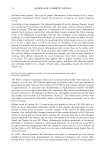
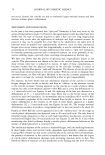
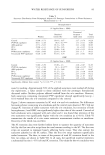
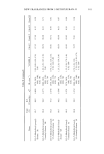
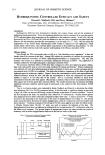
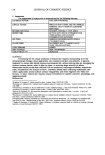
124 JOURNAL OF COSMETIC SCIENCE OXIDATIVE HAIR DYES BASED ON POLYMERIC THICKENERS R. McMullen and Janusz Jachowicz, C. Jones •, C. J. Chang •, and D. Derore International Specialty Products, *Rohm and Haas Introduction A typical oxidative hair coloring kit usually contains several products such as a lotion containing dye precursors (colorant), a developer with hydrogen peroxide, a conditioner or shampoo for use immediately following the coloring procedure, and a multi-use conditioner for assuring proper maintenance of the dyed hair. More recently introduced products have incorporated polymeric thickeners, conditioning agents, photo-filters, antioxidants, and low molecular weight viscosity modifiers into the hair coloring system. Polymeric thickeners are often used to produce a non-dripping mixture of colorant and developer, which is applied to hair. In order to enhance the feel of dyed hair and/or to prevent hair surface damage during the dyeing procedure, conditioning agents are frequently included in the colorant. In addition to this, antioxidants and photo-filters are also found in colorants, in which function is to prevent hair photo-damage and retard color fading. Furthermore, low molecular weight viscosity modifiers can be used to adjust the theological properties of the system in order to facilitate mixing of a colorant and a developer. Traditionally, special surfactant systems in combination with solvents, such as isopropanol and propylene glycol, were employed to produce a thickening effect on mixing of the colorant and developer. However, more novel formulations, based on polymeric thickeners, produce an increased viscosity due to a change in pH or as a result of hydrophobic interactions with surfactants. Products of this kind can be formulated by employing anionic polymers, such as Acrylates/Steareth-20 Methacrylate Copolymer and Acrylates Copolymer, or by using nonionic polyurethanes, such as PEG-150/Stearyl/SMDI Copolymer and PEG- 150/Decyl/SMDI Copolymer. Additionally, mixtures of thickening polymers may be utilized to adjust the rheology (shear-thinning or Newtonian) of the final hair coloring system. Conditioning effects can be obtained using polymers, such as Polyquatemium 28, while photo-protection can be observed using Dimethylpabamidopropyl Lauridimonium Tosylate (DLT). This paper will discuss the use of polymeric thickeners in combination with conditioning and hair protection agents in several types of oxidative haircoloring products including lotions, gels, and creams. We will report formulation performance by spectroscopic color analysis, flourescence measurements, mechanical combing analysis, and rheological (viscosity) evaluations. Materials & Methods The polymeric thickeners, Acrylates/Steareth-20 Methacrylate Copolymer, Acrylates Copolymer, Acrylates/Methacrylates/Beheneth-25 Methacrylate Copolymer, and PEG-150/Stearyl/SMDI Copolymer (Rohm & Haas) were used in the developer formulations. Dimethylpabamidopropyl Lauridimonium Tosylate (ISP) was used as a photofilter. The hair dyes, listed in Table 3, were purchased from Jos. H. Lowenstein & Sons, Inc. The viscoelastic properties of the hair dye systems were characterized using a Brookfield DV-II viscometer and a Brookfield DV-II+ viscometer. For pH measurements, an ATI Orion PerpHect Meter Model 330 was used. Viscosity readings were obtained using spindles from the T and LV series, ensuring the correct % of scale with each spindle. The combing measurements of hair tresses, treated with a color system, were performed using a Dia-Stron Miniature Tensile Tester operated by MTTWlN software. In order to quantify the degree of color-fading, we used a HunterLab ColorQUEST Sphere Spectrocolorimeter manufactured by Hunter Associates Laboratory, Inc., Reston, VA, USA. The use of the spectrocolorimeter enabled us to obtain the tristimulus (L, a, b) values, which were utilized to calculate discoloration parameters as a result of photo-irradiation. These data will be provided in the paper presentation, but not in this extended abstract. Results & Discussion In the course of our investigations, we examined the polymeric thickeners in neat solutions and in dye systems. The dye systems consisted of a low viscosity developer and a colorant in the form of a cream, lotion, or gel. In this work, we report the use of both nonionic and anionic polymers, in the developers of the dye system, as shown in Table 1. We have also included the formulation of a hair dye colorant in Table 2, which is representative of the gels examined in the present study. As indicated in the table, C14-15 Pareth-10 and C12-15 Pareth-3 were used to adjust the gel consistency of the colorant. The viscoelastic profiles for various nonionic and anionic developers (e.g. Table 1), various colorants (e.g. Table 2), and a mixture of the two will be presented. These plots, in terms of viscosity vs. shear rate, demonstrate the low

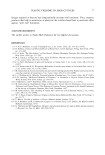
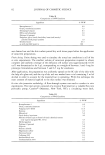
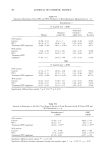
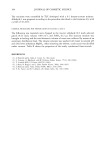
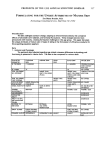
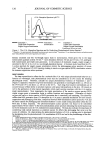
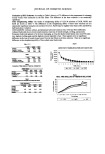
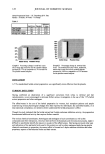
PREPRINTS OF THE 1999 ANNUAL SCIENTIFIC SEMINAR 125 viscosity/Newtonian behavior of the developers tested as well as the higher viscosity/shear-thinning behavior of the colorant and the mixture of the two components. The formulations were prepared with and without conditioning or protective agents, such as Polyquaternium 28 and DLT. The conditioning effects were monitored by combing analysis of the dyed hair. In one series of experiments we examined the conditioning effect of DLT by dyeing hair with a colorant containing DLT (Table 2) and with a colorant devoid of DLT. This was followed by treatment of the tresses in both series with a conditioning formulation (Table 3) that also contained DLT. Immediately after the dyeing procedure (Table 4), hair dyed with the colorant containing DLT (Series 1) was easier to comb than hair subjected to a treatment with the dye that did not contain DLT (Series 2). However, after post-treatment with the conditioning formulation, hair that had been previously treated with DLT (Series 1) was more difficult to comb than hair that was not previously treated with DLT (Series 2). This result suggests that deposition of DLT on the hair surface during dyeing alters its electrostatic nature, to the extent that further adsorption of DLT in the conditioning stage is inhibited Conclusions The study has demonstrated the efficacy of polymeric thickeners (anionic and nonionic ) for gel, cream and lotion-type hair dye formulations. It has also shown that they can be employed in combination with conditioning and protective agents. Hair Dye Developer I (anionicl 95.40% Deionized H20 3.00% H20• 1.50% Anionic PolymericThickener* 0.10% NaEDTA *Acrylates/Steareth-20 Methacrylate Copolymer, Acrylates Copolymer, or Acrylates/Methacrylates/Beheneth-25 Methacrylate Copolymer Hair Dye Developer II (nonionic} 95.30% Deionized H:O 3.00% H•O• 1.50% PEG-150/Stearyl/SMDI Copolymer 0.10% NaEDTA 0.10% Phosphoric Acid Table 1 Hair Dye Colorant Gel 68.60% Deionized H:O 10.00% C14-15 Pareth-10 10.00% C12-15 Pareth-3 4,20% NH4OH 3.60% Ethanolamine 1.40% Dyes 0.35% p-phenylenediamine 0.35% 2-methylresorcinol 0.25% resorcinol 0.25% p-am•nophenol 0.10% 4-amino-2-hydroxytoluene 0.05% I -Naphthol 0.05% N,N-b•s-(2-hydroxyethyl)-p-phenylenedlamine sulfate 1.00% Dimethylpabamidopropyl Lauridimonium Tosylate 0.50% Decyl Glucoside 0.30% Na Bisulfite 0.30% L-Ascorbic Acid 0.10% NaEDTA Table 2 DLT Conditioning Formulation 85.90% Deionized H20 10.00% PEG-150/Stearyl/SMDl Copolymer 2.50% Cetearyl Alcohol 1.00% DLT 0.50% Sodium Laureth Sulfate 0.10% NaEDTA Table 3 Combing Analysis After Dyeing (ColoranO Series I (with DLT) Series 2 (without DLT) 2141 + 527 4683 + 964 After Post-treatment (Conditioning Formulation) series 1 (with DLT) Series 2 (with DLT) 1169 + 191 504 + 84 The data are reported in terms of Combing Work (G-cm). Table 4
Purchased for the exclusive use of nofirst nolast (unknown)
From: SCC Media Library & Resource Center (library.scconline.org)