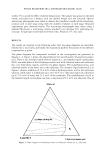
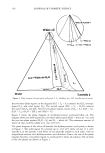
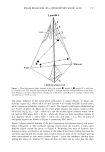
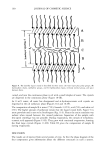
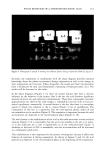
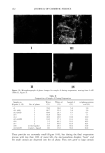
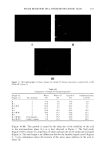
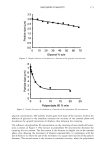
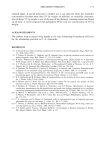
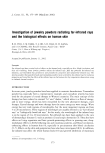
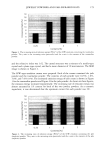
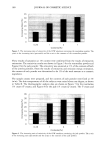
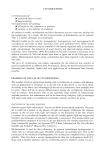
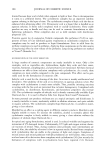
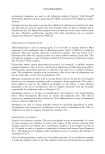
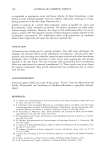
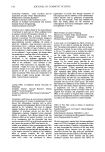
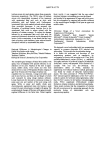
EMULSION STABILITY 171 3.5 3.0 ,.• 2.5 2.0 1.5 1.0 0.5 0 I I I I I II ß 0 10 20 30 40 50 60 70 Glycerol % w/w Figure 2. Droplet diameter of emulsions as a function of the glycerol concentration. 7 6 5 4 3 2 1 0 0 I I I I I 5 10 15 20 25 Polysorbate 80 % w/w Figure 3. Droplet diameter of emulsions as a function of the polysorbate 80 concentration. glycerol concentration. The stability results agree with those of the viscosity. Indeed, the addition of glycerol to the emulsion increases the viscosity of the external phase and decelerates the upward movement of droplets, thus delaying the creaming. The influence of polysorbate 80 concentration on the creaming of one-month-old emul- sions is shown in Figure 5. The increase in polysorbate 80 concentration decreases the creaming for two reasons. The first reason is the decrease in droplet size in the internal phase, thus delaying the movement of droplets exponentially, in compliance with the law of Stoke (13), where the rate of the movement is a square root function of the particle diameter. The second reason is the increase in emulsion viscosity, when the polysorbate

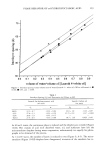
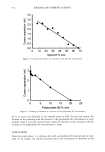
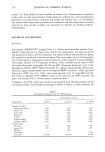
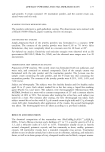
172 JOURNAL OF COSMETIC SCIENCE 3.5 • 2.5 e 2.0 ß ß g' • 1.13 O 0.5 0.0 ' 0 10 20 30 40 50 60 70 Glycerol % w/w Figure 4. Creaming of emulsion as a function of the glycerol concentration. o o 5 lO 15 20 25 Polysorbate 80 % w/w Figure 5. Creaming of emulsion as a function of the polysorbate 80 concentration. 80 is in excess and dissolved in the external phase as well. For the first reason, the decrease in the creaming with the increase in the polysorbate 80 concentration is more dramatic than it is for the second reason, where the decrease in the creaming with the increase in the polysorbate 80 concentration is linear. CONCLUSIONS From the results above, it is obvious that with a polysorbate 80 concentration of more than 1% by weight, the viscosity increases due to the dissolution of emulsifier in the
Purchased for the exclusive use of nofirst nolast (unknown)
From: SCC Media Library & Resource Center (library.scconline.org)