184 JOURNAL OF COSMETIC SCIENCE REFERENCES (1) J. S. Dover, T.J. Phillips, and K.A. Arndt, Cutaneous effects and therapeutic uses of heat with emphasis on infrared radiation, J. Am. Acad. Dermatol., 20, 278-286 (1989). (2) R. Anderson, Lasers in dermatology--A critical update, J. Dermatol., 27, 700-705 (2000). (3) S. Inoue and M. Kabaya, Biological activities caused by far-infrared radiation, Int. J. Biometeorol., 33, 145-150 (1989). (4) Y. Niwa, K. Tominaga, and K. Yoshida, Successful treatment of severe atopic dermatitis-complicated cataract and male infertility with a natural product antioxidant, Int. J. Tissue React., 20, 63-69 (1998). (5) B. Meffert and H. Meffert, Optical radiation and its effects on the skin, Biomedizinische Technik., 45, 98-104 (2000). (6) N. Ise, T. Katsuura, Y. Kikuchi, and E. Miwa, Effects of far-infrared radiation on forearm skin blood flow, Ann. Physiol. Anthrop, 6, 31-32 (1987). (7) H. Meffert, H. P. Scherf, H. Baumler, H. Ziegler-Bohme, L. Gulke, H. Struy, D. Strangfeld, H. Siewert, and N. Sonnichsen, Systemic effects of ultraviolet, visible and infrared radiation in serial whole body irradiation. I. Oxygen utilization, flow properties of blood, hemodynamics, blood components and phagocytosis, Dermatol. Monats•chr., 175, 609-622 (1989). (8) D. I. Sessler and A. Moayeri, Skin surface warming: Heat flux and central temperature, Anesthesiology, 73, 218-224 (1999). (9) T. Ogawa, J. Sugenoya, N. Ohnishi, K. Natsume, M. Ochiai, M. Nishida, N. Shinoda, K. Katoh, and R. Imamura, Dynamic sweating response of man to infrared irradiation in various spectral regions, Int. J. Biometeorol., 35, 18-23 (1991). (10) T. Frodin, P. Helander, L. Molin, and M. Skogh, Hydration of human stratum corneum studied in vivo by optothermal infrared spectrometry, electrical capacitance measurement and evaporimetry, Acta Derre. Venereol., 69, 461•467 (1988). (11) Y. Udagawa, H. Nagasawa, and S. Kiyokawa, Inhibition by whole-body hyperthermia with far- infrared rays of the growth of spontaneous mammary turnours in mice, Anticancer Res., 19, 4125•4130 (1999). (12) Y. Niwa, O. Iizawa, K. Ishimoto, X. Jiang, and T. Kanoh, Electromagnetic wave emitting products and "Kikoh" potentiate human leukocyte functions, Int. J. Biometeorol., 37, 133-138 (1993).

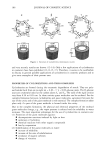
Cosmet. Sci., 53, 185-191 (May/June 2002) Applications of cyclodextrins in cosmetic products: A review HANS-JORGEN BUSCHMANN and ECKHARD SCHOLLMEYER, Deutsches Textilforschungszentrum Nord-West e. V., Adlerstrasse 1, D-47798 KreJ•ld, Germany. Accepted for publication January 31, 2002. Synopsis Cyclodextrins are non-toxic cyclic polysaccharides. They form inlusion complexes with numerous organic molecules. The physical and chemical properties of the guest molecules change due to complex formation. Thus, for example, the stability of the complexed molecule against light and oxygen increases and the vapor pressure is reduced. The solubility of slightly soluble molecules increases in a cyclodextrin complex. All these and further advantages of cyclodextrins and their complexes can be used for the formulation of cosmetic products. As a result, effects are possible not realizable with common techniques. INTRODUCTION The first reference to cyclodextrins was published in 1891 (1). Some years later Schar- dinger also observed the formation of cyclodextrins (2). At this time nothing was known about the structure of these molecules. Freudenberg continued in studying these com- pounds obtained from starch (3). He called them Schardinger dextrins. Further studies by him and Botcherr showed the cyclic structure of Schardinger dextrins (Figure 1) (4,5). Beginning at that time, they were also called "cyclodextrins." Cramer realized that these cyclodextrins were able to include neutral molecules within their cavities (6). From that time on, the interest in cyclodextrins increased. However, cyclodextrins were avail- able only in small quantities. Thus no practical applications seemed to be suitable for these molecules. However, in 1980 Saenger published a review article about cyclodex- trins (7) in which he mentioned some industrial applications. The First International Cyclodextrin Symposium organized by Szejtli took place in Budapest in 1981 (8). One year later the first cyclodextrin book written by Szejtli was published (9). Since then an increasing interest in cyclodextrins and their possible applications has existed. Due to improvements in the production of cyclodextrins, their prices have dropped significantly during the last twenty years. As a result, more industrial applications have become possible and the increasing demand has caused a further reduction in production costs for cyclodextrins. Up to now mainly pharmaceutical applications have been de- scribed in the literature (10,11). Some further applications in analytical chemistry, food, 185
Purchased for the exclusive use of nofirst nolast (unknown)
From: SCC Media Library & Resource Center (library.scconline.org)