J. Cosmet. Sci., 53, 193-197 (May/June 2002) Abstracts Journal of the Society of Cosmetic Chemists Japan Volume 35, No. 1, 2001 Basement Membrane Damage, a Sign of Skin Early Aging, and Laminin 5, a Key Player in Basement Membrane Care Satoshi Amano Skin Biology Research Laboratories, Shiseido Life Science Research Center Skin is composed of the epidermis and the dermis, whicll are separated by the epidermal basement membrane. This membrane plays an important role in maintaining the skin structure by forming anchoring complex. It also controls proliferation and differentiation of basal cells in the epidermis and maintains the polarity of the epidermis. Disruption and reduplication of the epidermal basement membrane have been reported in skin from elderly people. Indeed, they are also seen in facial skin of people in their late 20s and early 30s, when changes in skin surface texture take place. Such damage and alteration are thought to be signs of early aging of skin, which might lead to the formation of wrinkles and sagging. Therefore, early basement membrane care could be an effective approach to prevent apparent skin aging. Laminin 5 is a glycoprotein and a component of anchoring complex in the epidermal basement membrane, playing an important role in the adhesion of epidermis to dermis. Purified laminin 5 stimulates the formation of epidermal basement membrane in a skin quivalent model and in epidermal sheet gra•ing in vivo. Furthermore, basement membrane formation is also enhanced by substances that stimulate laminin 5 synthesis in the skin equivalent model, as well as by purified laminin 5. These results suggest thatlaminin 5 itself and substances that stimulate laminin 5 synthesis could be effective players in basement membrane care. The Development of Quick Drying Nail Enamels Katsuyuki Kaneko, Ryota Yamasaki, Toshihito Yabu, Yoshikazu Soyama, Yoshimaru Kumano, Isamu Kaneda, Toshio Yanaki Product Development Center, Basic Research Center, Shiseido Co., Ltd. Nail enamels are very popular as a point makeup product next to lipsticks. Recently the number of user steadily increases with the prosperity of nail salons and nail art. This popularity of nail enamel put it more important position. The qualities required in nail enamel are speed of drying, even formation of film with high gloss, non irritant against the nail, and long lasting luster and finish. There is a strong growing demand for quicker drying nail enamels in recent markets, and several products are found. However, with conventional technologies, there is a limit in reducing the drying time, because of its poor appearance. This paper describes the technologies of fast drying nail enamels with the example of"dip-in - water" nail enamel. Although the process of drying is- usually regarded as solvent evaporation, in the case of developing this new nail enamel, the drying of nail enamel is considered as precipitation process of film former. This unique idea made it possible to reduce drying time dramatically with the help of water. A New Method for Evaluating Optical Traits of Stereoscopy of Face Masahide Shimoyama, Manabu Fuse, Koichi Shimmoto, Tsuyoshi Ogihara Research & Development Division, KOSE Corporation In the functions of the cosmetics, one of the crucial points is to represent the stereoscopy. Now its objective evaluation is required. Though the facial stereoscopy by the makeup is created through emphasizing the light and shade, its effectiveness until now has been evaluated by human senses such as the sense of sight. Obtaining an objective evaluation is quite difficult. A series of methods that are proposed by this study can help resolve this problem. This study proves that facial light and shade can be directly measured in a short time, enabling the calculation of the 3D facial traits and stereoscopy brought by the traits. The assembled device was designed to irradiate * These abstracts appear as they were originally published. They have not been edited by the Journal of Cosmetic Science. 193

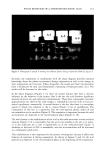
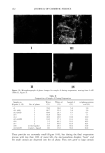
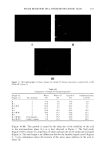
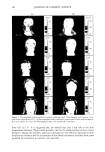
194 JOURNAL OF COSMETIC SCIENCE light to an subject in various directions at a fixed distance and then make an impression of the subject, ready to be processed. By the image processing through the average values and the variance values calculated previously, it became possible to reproduce the subject traits of the light and shade on a image. Then by standardizing the analyzed results of the subjects, the conventional facial traits which are usually known were successfully reproduced. Meanwhile the difference in the effect brought by applying the foundations became obvious. It was discovered by analyzing the subject with two kinds of foundations which differed in the optical traits. Consequently this series of methods is considered greatly efficient in evaluating the facial stereoscopy, objectively and universally. Evaluation of Pigmentation by Multispectral Image Analysis (Third Report) Visualization of Melanin Pigmentation in the Epidermis Osamu Kaneko, Yukiko Kawaguchi Institute of Beauty Sciences, Shiseido Co., Ltd. A method is proposed for visualizing melanin masses in pigmented regions of the epidermis. Amultispectral image of the pigmentation is obtained at dominant wavelengths of 400, 550 and 700rim and the luminanee of each pixel is converted to a spectral reflectance. Since the spectral reflectance can be expressed linearly, spectral reflectance was then determined in 10nm steps (41 different wavelengths) in the visible region (380-780 nm). The spectral reflectance of pixels at each wavelength was reconverted to luminanee to reconstruct a single multispectral image. Then, the multispectral image at each of the 41 wavelengths was converted to a binary image, and the binary images were laminated into a single composite image to provide visualization of the melanin masses that cause pigmentation in the epidermis. Using this method, it is possible to obtain three dimensional visualization of melanin masses that cause pigmentation in freckles, chloasmas, dark circles and moles, and to visualize changes in melanin distribution in the epidermis following suntan induced pigmentation. Microbial Flora of the Normal Human Skin Kanarne Ishisaka, Keiji [shikawa, Makoto lnagaki, Wataru Sugiura Sankodo Co., Ltd., Osaka Prefectural Institute of Public Health Skin microbial flora was collected from the skin surface of the cheek and the former forehead of healthy men and women, and quantification and identification of the bacilli were performed. When the number of aerobic bacteria was compared between the sampling regions, the higher numbers of aerobic bacteria were detected in the cheek than the forehead in men. On the contrary, the higher numbers of aerobic bacteria were detected in the forehead compared to the cheek in women. Isolation and identification of the aerobic bacteria showed that Staphylococcus epidennidis was dominant in these samples. S. epidermidis was detected from all 48 subjects, and the detection rate was 100%. When the number of anaerobic bacteria was compared between the sampling regions, the higher numbers of anaerobic bacteria were detected in the forehead than the cheek both in men and women. Isolates from men contained higher numbers of anaerobic bacteria than those from women in both sampling regions. Propionibacterium acnes was a dominant species in these samples. P. acnes was detected from all 48 subjects, and the detection rate was 100. Staphylococcus capitis, which belongs to aerobic bacteria. was detected in 17 men among 19 men, while it was detected in only one woman among 29 women. Thus, the differences of species types in the aerobic bacteria were observed between men and women. Study of the enzyme activity of S. epidermidis, the dominant species of the aerobic bacteria, showed that these activities were differed for samples from every subject, and were differed also for the bacteria collected from the same subject. The rate of subjects which had S. epidermidis with acetoin production ability was decreased along with aging. On the contrary, the rate of subjects which had S. epidermidis with urease activated ability was increased along with aging. Inhibitory Action of 4nButyiresorcinol (Rucinol) on Melanogenesis and Its Skin Whitening Effects Takayuki Katagiri, Tadashi Okubo, MidoriOyobikawa, Kiyoko Futaki, Masao Shaku, Mitsuo Kawai, Masaki Takenouchi POLA Laboratories, POLA Chemical Industries, Inc. We have reasoned that by either enhancing inhibition effectiveness oftyrosinase activity or by inhibiting the activities of both tyrosinase and TRPI, we should be able to develop more effective whitening cosmetics. We found 4- n - butylresorcinol (BR) to have strong inhibitory effect against melanogenic enzymes which are responsible for hyperpigmentation. BR reversibly inhibited melanin production in B16 mouse melanoma cells without any effects on cell growth, and its potency was stronger than that ofarbutin or kojic acid which are widely used in whitening cosmetics. Topical application of 0.3% BR lotion prior or posterior to UVB irradiation effectively suppressed UVB induced hyperpigmentation in human. In our extensive consumer usage test involving 449 healthy females, a large proportion of subjects felt there were improvements in conditions of pigmentation, skin darkness, and freckles increased in as little as I month. These experimental data indicated that BR is an effective skin whitening agent which can be safely used in cosmetics. Furthermore, a trial to evaluate clinical effects of 0.3 BR lotion in patients with liver spot was made. BR lotion was evaluated as slightly
Purchased for the exclusive use of nofirst nolast (unknown)
From: SCC Media Library & Resource Center (library.scconline.org)