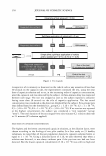
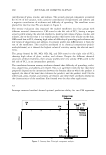
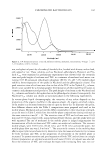
186 JOURNAL OF COSMETIC SCIENCE with deionized water and electrolytically plated with mercury (8.0 x 10⁻⁴ to 2.0 x 10- 3 M) and lead (5.0 x 10- 4 to 2.0 x 10- 3 M) metal ions from 10 ml of acetate buffer (pH 4.5) and 0.1 M perchloric acid, respectively. The plating time was 4 min, with a potential scan from -0.8 to 0.0 V at 1500 rpm. The pH 7.5 ammonium buffer was made by mixing 0.1 M solutions of ammonia and ammonium chloride in deionized water. Briton and Robinson buffer (pH 9.28) was prepared by mixing 0.5 M solutions of phosphoric acid, boric acid, acetic acid, and 0.2 M sodium hydroxide solution. Differential pulse voltammograms (DPV) were taken for chlorinated bacteriostats in a phosphate buffer (pH 2.6), 0.1 M ammonia, Briton and Robinson buffer, and methanol or water containing various supporting electrolytes such as sodium perchlorate, lithium chloride/lithium hydroxide, tetraethylammonium tetra- fluoroborate, and tetrabutylammonium hydroxide solution. A 1-g amount of cosmetic and pharmaceutical samples was accurately weighed, dis- solved in 10 ml of methanol and water (1:1, v/v), and mixed by vortex treatment for 20 min. After centrifuging, the supernatant was transferred into a 10-ml amberized cali- brated flask and made up to volume with methanol and water (1: 1, v/v). In order to obtain calibration graphs for the bacteriostats, 10 ml of the supporting electrolyte was pipetted into a voltammetric cell and de-aerated with nitrogen for 4 min before voltam- metric measurement. By micropipette, aliquots of 1000 mg 1- 1 bacteriostat solution were added. After each addition, voltammograms were obtained the solution was de- aerated for 2 min after each addition, before obtaining the voltammogram. Quantative analyses were performed in the differential pulse mode. The potential was set at 0.0 to 1.0 V and -1.0 to -2.0 V versus saturated calomel electrode (SCE) for oxidation and reduction. The pulse height was 50 mV, and the scan rate was 10 mV s- 1 , with a drop time of 1.0 s. For sample solution analysis, 1 ml of the solution was pipetted into a 10-ml amberized calibrated flask and diluted to volume with tetrabutylammonium hydroxide solution. This solution was analyzed by DPV using the same conditions as for the calibration graph. RESULTS AND DISCUSSION CHOICE OF ANALYTICAL METHOD Figure 2 shows the absorption spectra of triclocarban (TCC) and triclosan. Based on the UV spectra of the bacteriostats in the HPLC mobile phase, the wavelengths selected for absorbance determination were 214 and 260 nm for TCC and 215, 233, and 280 nm for triclosan, respectively. Although TCC and triclosan have a maximum at 215 nm and the absorbance of 233 nm was higher than 280 nm for triclosan, the interfering effect of the matrix was observed at the lower wavelength. At the same time, the absorbance of triclosan was considerably suppressed and shifted to a longer wavelength. Thus we could not perform the simultaneous determination of both bacteriostats in a mixture by single-wavelength UV detection. A very large number of packings for reverse-phase liquid chromatography are now commercially available. These materials can be quite different in performance or nature, since they may be prepared from various silica gels, bonded with diverse chlorosilianes, end-capped or not, and so on. From the various vendors, columns were packed with particles of 5-10 µm, pore diameters of 10-12.5

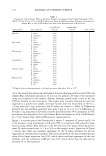
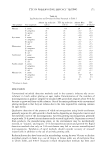
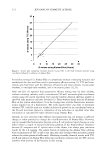
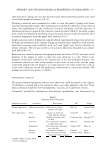
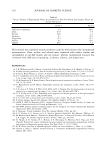
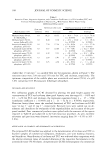
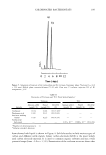
3.0000 2.0000 1.0000 0.0000 220.00 CHLORINATED BACTERIOSTATS 260.00 300.00 Wavelengh ( nm ) 340,00 187 380.00 Figure 2. UV absorption spectra: 1-cm cell reference solution, methanol concentration, 50 mg 1- 1 curve 1, triclocarbon curve 2, triclosan. nm, and spherical particles of octadecyl-bonded silica, bonded with diverse carbon load, end-capped or not. These columns, such as Nucleosil, µBondapack, Hypersil, and Vy- clack C 18 , were examined in preliminary experiments that showed that the retention time and peak height of triclosan and TCC in a mixture of methanol and water con- taining 0.05 M potassium dihydrogen phosphate (80:20, v/v, pH 3.05) mobile phase exhibit a better separation of two peaks in Nucleosil and the µBondapack column. The peak retention time of triclosan was close to that of the TCC in the Vydack C 18 column, which is not suitable for a chromatographic determination of chlorinated bacteriostats in cosmetic and pharmaceutical products. The peak height of triclosan in the Nucleosil and C 18 columns was found to be higher than in the µBondapack column. Consequently, the Nucleosil C 18 column was chosen as stationary phase in the following experiments. In reverse-phase liquid chromatography, the retention of any solute depends on the proportion of the organic modifier in the aqueous eluant. An organic-enriched compo- sition results in a decreased retention time or capacity factor (k). To illustrate this point, four different eluants with the Table I compositions were prepared and used as the mobile phases. Methanol and acetonitrile differ considerably in their eluotropic strength, as can be seen in Table I, which lists the mobile-phase compositions eluting triclosan at the same retention time (k' = 9). The retention time of TCC and triclosan were 10.23 min and 10.53 min, respectively, using methanol/water elution, and the peaks were not well separated The use of methanol in the mobile phase is judged inappropriate for determination of both triclosan and TCC under our analytical conditions. The isocratic mobile phases were 50:50 (v/v), 60:40 (v/v), and 70:30 (v/v) acetonitrile:water the mobile-phase flow rate was 1.0 ml min- 1 . The acetonitrile content in the mobile phase affects capacity factors and sensitivity. Retention time decreases and sensitivity increases for both triclosan and TCC as the proportion of acetonitrile in the mobile phase is increased. To permit retention and good separation of both TCC and triclosan in a single dilutent preparation, an optimal acetonitrile and water (70:30, v/v) eluent was selected. Since the retention of TCC and triclosan decreases with increasing flow rate, we con-
Purchased for the exclusive use of nofirst nolast (unknown)
From: SCC Media Library & Resource Center (library.scconline.org)