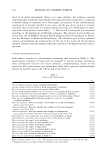
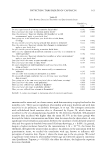
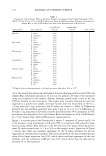
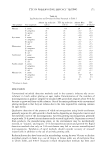
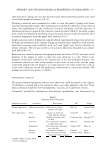
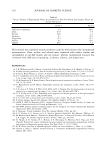
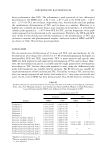
156 JOURNAL OF COSMETIC SCIENCE lived in an urban environment (Paris or its inner suburbs). No inclusion criterion concerning skin sensitivity was included. The main exclusion criteria were a suspected or known allergy to capsaicin or to chili pepper, the presence of any dermatological, neurological, or vascular disorder in test areas, and the use of any topical or systemic treatment that could modify test findings (dermocorticoids, anti-inflammatories, medi- cine with central nervous system effect, ... ). This clinical investigation was conducted according to the Declaration of Helsinki principles. The protocol received ethics ap- proval from the CCPPRB of Kremlin-Bicetre Hospital (Comite Consultatif de Protec- tion des Personnes en Recherche Biomedicale). All volunteers gave written, informed consent acknowledging the understanding of the aim of the study and the procedures involved. Subjects were also informed that they were free to withdraw from the study at any time. SENSITIVE SKIN QUESTIONNAIRE Each subject completed a questionnaire concerning skin sensitivity (Table I). This questionnaire contained 20 items and was designed to provide accurate information about self-declared sensitive skin status (existence, symptomatology, factors of skin reactivity). This questionnaire was derived from those used in previous epidemiological surveys on sensitive skin in the UK (2) and in the USA (3). Table I Sensitive Skin Questionnaire Do you regard yourself as having a sensitive facial skin? Do you consider yourself as having a facial skin prone to irritation? Do you consider yourself as having a reactive* facial skin? Do you avoid certain cosmetics that you feel may cause your facial skin to react*? Do you consider that your facial skin reacts* readily to cosmetics or toiletries? Do some cosmetics or toiletry products make your facial skin itch, sting, or burn? Have you ever experienced an adverse reaction on your face to a cosmetic or toiletry product? Does the expression "does not tolerate cold weather or a cold environment" apply to your facial skin? Does the expression "does not tolerate hot weather or a hot environment" apply to your facial skin? Does the expression "does not tolerate fast changes in temperature" (e.g., going into a warm shop from a cold street) apply to your facial skin? Does going out in the wind cause your facial skin to itch, burn, or sting? Does going out in the sun cause your facial skin to itch, burn, or sting? Does your facial skin react* to air pollution? Does your facial skin react* to your monthly cycle? Does your facial skin react* to alcoholic drinks? Does your facial skin react* to spicy food? Does your facial skin react* to emotion and/or stress? Have you ever suffered from eczema or dermatitis? Did you suffer from eczema or dermatitis as a child? Have you ever suffered from asthma or hayfever? Subjects had to respond "yes" or "no." The incidence of positive responses is shown for all items. * Stinging, burning, or itching sensation associated or not with redness. Yes 65.3% 43.3% 58.7% 36.7% 33.3% 42.0% 32.0% 58.0% 27.3% 50.7% 55.3% 34.0% 20.7% 29.3% 20.7% 14.7% 48.0% 12.7% 10.0% 12.7%

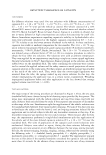
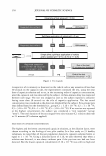
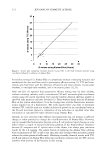
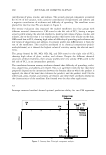
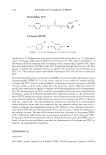
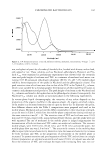
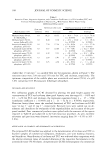
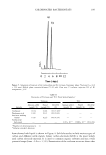
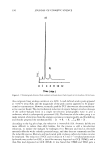
DETECTION THRESHOLDS OF CAPSAICIN 157 TEST STIMULI Six different solutions were used: five test solutions with different concentrations of capsaicin (Cl = 3.16 x 10- 5 % C2 = 1 x 10- 4 % C3 = 3.16 x 10⁻⁴% C4 = 1 x 10- 3 % CS = 3 .16 x 10- 3 % w/w) and the vehicle as control. The vehicle consisted of a 10% ethanol/90% water (w/w) solution prepared using distilled water and absolute ethanol (99.85%, Merck Eurolab®, Briare le Canal, France). Capsaicin is soluble in ethanol, but not in water. Ethanol in high concentrations can induce skin reactivity by itself (13). Hence, formulation experiments regarding capsaicin's stability in hydroalcoholic solu- tions were previously conducted at the highest capsaicin concentration (CS = 3.16 x 10- 3 %) in order to use the lowest amount of ethanol in the vehicle. In these conditions, capsaicin was stable at ambient temperature for two months. The 3.16 x 10- 3 % cap- saicin solution was prepared from pure-grade capsaicin powder (8-methyl-n-vanillyl-6- nonenamide, 2:98.0%, Fluka®, Buchs, Switzerland). The 3.16 x 10- 3 % solution (CS) was diluted using a dilution factor of -VW (=3.16) in a stepwise procedure in order to obtain the four other test solutions. The solutions were used at ambient temperature. They were applied by an experimenter employing a single-use cotton tipped applicator (Societe Industrielle du Bois®, Saint-Sauveur, France) plunged in the solution, and then rubbed twice on the nasolabial folds. The tubes containing the solutions were custom- ized to control the applied volume and for safety reasons to avoid projections of excess capsaicin solution to the ocular areas. For that purpose, an absorbent sponge was attached to the inside of the tube's neck. Thus, every time the cotton-tipped applicator was removed from the tube, the sponge soaked up any excess solution. In this way, the volume impregnating the applicator was, to a certain extent, standardized. Weighing impregnated applicators before and after application to the face showed that average applied volume was 0.02 ml (+/-10%). TEST APPLICATIONS The major steps of the testing procedure are illustrated in Figure 1. First, the test areas (nasolabial folds) were cleansed using facial cleansing wipes provided by the sponsor. The wipes were impregnated with the vehicle solution and used five times over both test areas. Subjects were excluded from the study if they reported any sensation of discomfort at this stage of the test. Simultaneous split-face application of the vehicle solution over the nasolabial folds followed three minutes after cleansing. The aim of this first step was to familiarize the subject with the humid, cool, and wiping sensations induced by the application and to exclude subjects who felt any discomfort sensation at this step. If no discomfort sensation was reported, the test could continue. Three minutes after the first step, the experimenter performed a single-blind simultaneous split-face application of the vehicle and of the more diluted capsaicin solution (C 1 = 3 .16 x 10- 5 % ) over the nasolabial folds. The sides of application of the capsaicin and control solutions were randomized. Subjects were asked to report, during the three minutes following the application, any new sensation or any difference between the test areas, stating precisely the side, the nature (stinging, burning, tingling, itching, other) and the intensity using the following scale: 1 = doubtful, barely perceptible 2 = slightly perceptible 3 = moderately perceptible 4 = strongly perceptible 5 = painful. The experimenter stopped the test at this point if the reported sensation concerned the capsaicin side and lasted more than 30 seconds. In the absence of any sensation or in the case of any sensation
Purchased for the exclusive use of nofirst nolast (unknown)
From: SCC Media Library & Resource Center (library.scconline.org)