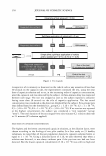
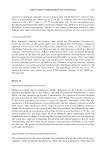
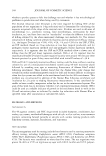
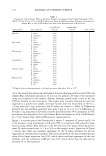
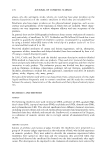
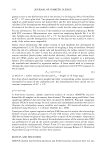
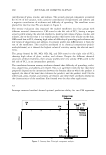
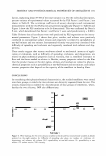
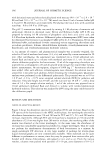
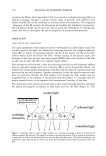
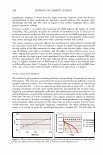
158 JOURNAL OF COSMETIC SCIENCE Reported discomfort : Reported discomfort - Cleansing of test areas at t = 0 mn l l ml Im -1 Withdrawal l Split-face application of vehicle at t = 3 mn l m l Simple blind, split-face application of vehicle and Ci solution at t = (i+1) x 3 mn (i = 1 to 5) Reported sensation .l.. l End of the test of more than 30 seconds on capsaicin side i=1to4 IMill - - Ci as detection threshold I = s End of the test � Detection threshold : CS Figure 1. Test diagram. (irrespective of its intensity or duration) on the vehicle side or any sensation of less than 30 seconds on the capsaicin side, the experimenter continued the rest, using the next dose of capsaicin solution and so on, in the increasing order of capsaicin concentration, until the capsaicin side was detected by the subject. A three-minute delay was respected between each stage. The rest was stopped as soon as the subject reported a sensation lasting more than 30 seconds on the side of capsaicin application. The last tested concentration was considered as the detection threshold for the subject. Five groups were thus defined based on the threshold (i.e., group Cl = 3.16 x 10- 5 % C2 = 1 x 10⁻⁴% C3 = 3.16 x 10⁻⁴% C4 = 1 x 10- 3 % CS= 3.16 x 10- 3 %). If no reaction was reported at the highest concentration, the subject was considered a "non responder" (group "none"). The total duration of the test ranged from nine minutes (Cl solution detected) to 21 minutes (CS solution applied). SELECTION OF CAPSAICIN CONCENTRATION The highest and the lowest concentrated capsaicin solutions, as the dilution factor, were chosen according to the findings of two pilot studies. In a first study on 21 healthy volunteers, we noted that all the rest population detected a capsaicin solution below or equal to 1 x 10- 2 %. Using a dilution factor of 3.16, we also observed that when a solution was detected, it was always without pain if the previous one had not been detected. But the lowest capsaicin concentration (3.16 x 10⁻⁴%) was still too high and

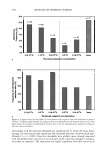
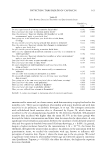
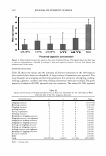
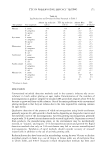
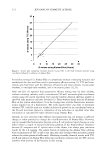
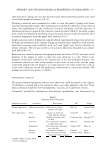
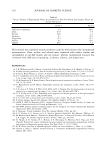
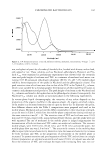
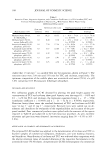
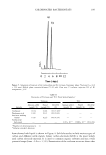
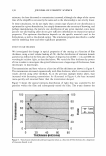
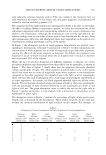
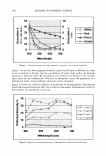
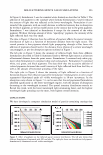
DETECTION THRESHOLDS OF CAPSAICIN 159 caused too-significant sensations on two subjects with self-declared very sensitive skin. Thus, a second study was carried out on 11 of the 21 subjects with two more diluted solutions (3 .16 x 10- 5 % and 1 x 10⁻⁴%). In the latter case, the test was painless, even for the two aforementioned subjects with very sensitive skin. Moreover, the second study allowed us to assess repeatability. On the 11 test subjects, detection thresholds never differed more than one level between two test sessions carried out at a two-week interval. STATISTICAL METHODS First, descriptive statistics and graphics were carried out. Percentages of positive re- sponse for all items of the questionnaire were tabulated. The distribution of detected capsaicin concentration was described using simple bar charts, as the frequency of self-declared sensitive skin and the mean age in subpopulations ranked by detected capsaicin concentration. Then, different inferential statistics were calculated depending on the nature of the data. For each item of the questionnaire, the association with the detected capsaicin concentration was tested using Kendall's 'T 6 statistic. The relationship between self-declared sensitive skin and the detection threshold was tested using the Cochran-Armitage trend test. In addition, the influence of age on detected capsaicin concentration was tested using the non-parametric Jonckheere-Terpstra trend test. All results are reported with two-sided p-values. The significance level u was set to 5%. Statistical analysis was carried out using SPSS software (Version 11.00 SPSS Inc., Chicago, IL). RESULTS DETECTION THRESHOLDS OF CAPSAICIN During the initial stages (cleansing or double application of the vehicle), no subjects reported discomfort due to the vehicle, and thus no premature withdrawals occurred before the first capsaicin application. Consequently, the capsaicin detection threshold was determined in the total study population (n = 150). Figure 2a shows the distribution of the study population according to capsaicin detection thresholds. Note that the population is distributed among six possible levels: the five capsaicin solutions and the level "none." This distribution shows clearly that there were several different detection thresholds of capsaicin in this general adult female population. As illustrated, the range of detected capsaicin concentration was at least of two log units because 27 .3% (N = 41) of the panelists did not reach their detection threshold. More noteworthy about the distribution was its shape. Considering the previous works on sensitive skin typology, one could have expected a unimodal distribution with high frequencies for the mean concentrations and low values for the extreme concentrations. As shown, it was clearly not the case. The pattern of the obtained distribution suggests the existence of at least a bimodal distribution. RELATIONSHIP WITH SELF-DECLARED SENSITIVE SKIN The association with detection threshold was established for all the items of the ques- tionnaire. Table II displays Kendall's 'T 6 values and their significance. Note that the
Purchased for the exclusive use of nofirst nolast (unknown)
From: SCC Media Library & Resource Center (library.scconline.org)