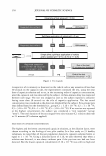
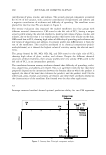
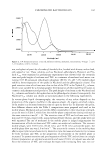
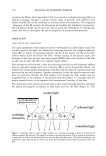
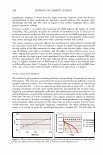
194 JOURNAL OF COSMETIC SCIENCE as well as the Monte Carlo algorithm (9,10) to account for multiple-scattering effects as photons propagate through a coating. Several types of particles with different sizes and/or complex Rls can be combined to simulate realistic formulations. The imaginary component of the RI accounts for absorption and enables the simulation of pigments. The simulation model can be used not only to guide the formulation of existing ma- terials, but also to investigate the optical properties of potential new materials. SIMULATION INPUT AND OUTPUT PARAMETERS The input parameters of the simulation are the wavelength of incident light in vacuoJ the incident angle of the light, the diameter of scattering particles, the complex refractive index (RI) or indices of scattering particles, the RI of the matrix, the RI of the half- infinite media above and below the film, volume loading of the particle types, the thickness of the film, and the root mean square (RMS) slope of the surface of the film to take into account the effect of a random rough surface. One assumption of the model is that the scattering particles are well-dispersed spheres that are separated enough such that clustering effects can be disregarded. Hence, the model most closely models formulations with relatively low particle concentrations and particles that are well dispersed. Another assumption is that the particle material itself does not penetrate through the film surface, even though the film surface may be roughened due to the topology of the particles near the surface it is assumed that the matrix material serves at the topmost (and bottommost) boundary of the film. The trajectories of the photons are monitored as they scatter through the film, including the spatial and angular coordinates as they enter and exit the film (Figure 1). This record em angle and distance from source scattering / absorption incident light I\!!\! 1 reflected light transmitted light Fi gu re 1. Schematic (not to scale) of light incident on a coating containing a mixture of particles of different complex Rls and sizes. The angle of incidence is specified by the user. The exit angle of each photon is monitored, as well as the horizontal distance traveled from the light source. The reflected light has two components: light reflected directly off the top of the film and light scattered back by particles within the film.

MIE-SCATTERING MONTE CARLO SIMULATIONS 195 enables a wide range of outputs to be calculated, including total transm1ss10n and reflection, haze, diffuse reflectance, angular intensity distribution of transmitted/ reflected light, and spatial intensity distribution of transmitted/reflected light. The number of photons propagated through the film affects the amount of noise seen in the final values: for all the simulations presented in this paper, 10 million photons were propagated per simulation. ANGULAR INTENSITY DISTRIBUTION The angular intensity distribution of the transmitted and reflected light is calculated by monitoring the angle of each photon as it exits the film, either from the top surface (reflection) or the bottom surface (transmission). The angular intensity distribution is affected both by the roughness of the film surface and by the volumetric scattering properties within the film. The reflected light has two components. Direct reflection off the top surface of the film, from photons which do not enter the film at all, maintains the color of the incident light. The roughness of the top surface affects the appearance of gloss. Backscattered reflection from within the film involves photons being scattered back through the top surface as a result of interacting with particles within the film absorption by pigments within the film causes color changes as determined by the model. The simulation distinguishes between these two components of reflection. Transmitted light cannot be separated into these two components, although its behavior is affected by both the roughness of the film surface and the volumetric scattering within the film. Haze and diffuse reflectance are scalar quantities derived from the full angular intensity distributions calculated above. Haze, an indicator of angular scattering, is the percentage of transmitted light that is deflected by more than 2.5 degrees from the normal. In this paper we define diffuse reflectance to be the reflective counterpart to haze, i.e., the percentage of reflected light that is deflected by more than 2. 5 degrees from the normal. SPATIAL INTENSITY DISTRIBUTION Volumetric scattering within a turbid medium contributes to its characteristic appear- ance (4). As a narrow beam of light passes through a turbid material, the beam spreads spatially due to the diffusion of the photons. The simulation tracks the trajectories of individual photons as they propagate through the coating and calculates the intensity of reflected light as a function of distance from the source. Our incident light source is an infinitesimally narrow collimated beam. It is convenient to focus on the horizontal, not vertical, spreading of the light because the thickness dimension of a film is essentially negligible compared to the area dimensions. The intensity of the transmitted and reflected light is calculated as a function of (horizontal) distance from the beam. Scalar quantities derived from the full spatial intensity distribution function conveniently include the percentage of total photons that travel a distance x from the source, and the distance from the source at which the light intensity drops to a certain percentage of the initial value. RANDOM ROUGH SURFACE MODEL The effect of a rough surface on the scattered light distribution 1s modeled via a
Purchased for the exclusive use of nofirst nolast (unknown)
From: SCC Media Library & Resource Center (library.scconline.org)