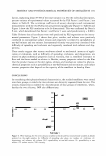
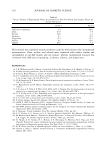
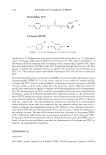
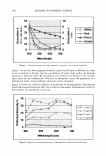
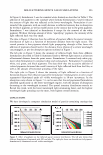
212 JOURNAL OF COSMETIC SCIENCE Laurel Wax as a New Natural Cosmetic Raw Material: Characterization, Stability, Sensorial Studies and Safety Evaluation John Jimenez, Lilian Garcia, Jairo Calle Linea Vegetal Mukuna, Natural raw materials for cosmetics, Carrera 40C No 56-41, Bloque B2, Apto 415, Pablo VI, Bogota, Colombia IFSCC Magazine, 8 (2005) (1) 33-41 Colombia has the third greatest biodiversity in the world and many plants have yet to be studied. Laurel wax is obtained from the fruit of Myrica pubescens, a small tree that can be found in some rural zones in the Narifio department. The main objective of this investigation is to contribute to the development of sustainability of the communities that produce laurel wax in Colombia by proposing possible uses in personal care products. This work involves: 1. Determining the physicochemical properties of wax obtained from the fruit of Myrica pubescens, which is known in the region as laurel wax, 2. Proposing applications and uses of this wax in personal care products on the basis of the results of comparative stability and sensory studies with other natural waxes. 3. Performing a safety evaluation using the Het-Cam test and thereby avoiding animal experiments. Emulsions and color cosmetics can be developed with laurel wax. Replacement of beeswax with laurel wax in lipsticks was studied using analytical sensory techniques with the help of a trained panel this change improved the slipperiness and uniformity. According to a safety evaluation based on the Het-Cam test, laurel wax should not be an irritant in vivo. Continuous Three-Dimensional Examination of Interior Hair Structure Ken-ichi Tanaka, Yukata Tango, Koichi Shimmoto Research & Development Division, KOSE Corporation, 48- 18 Sakae-cho, Kita-ku, Tokyo 114-0005, Japan IFSCCMagazine, 8 (2005) (1) 3-8 The ability to continuously examine the interior hair structure throughout a treatment process is very important in designing effective hair products. Microscopy is commonly used to observe the interior of hair, but this method requires a sliced sample, making continuous observation impossible. Use ofX- ray computed tomography (CT) as a non-destructive measurement has been proposed, but this method has a disadvantage in that it is impossible to obtain full-color interior images of the sample. Thus, a non-destructive method for continuous, full-color examination of the interior hair structure has been lacking. In this study a new method is proposed that enables non-destructive and continuous measurement of the interior hair structure with color information. In our method, optical CT is used for reconstruction of the interior hair structure. Our new theories enabled us to solve the crucial problem of the large observational error of traditional optical CT systems caused by internal light scattering and to make its practical application possible. A new optical CT system based on our method was implemented. This system displ-yed sufficient accuracy when the phantom image was mea�red, and clear and full-color cross-sectional images were obtained without destruction of the sample when human hair was observed. When the bleaching and dyeing processes were continuously measured, changes in the interior hair with time could be observed. These results clearly indicate that our new method provides a powerful tool for research and product development. Compatibility Testing of Colored Cosmetics - A New Tool for Objective Testing Near Infrared Remission Spectroscopy (NIR-RS) Mathias Rohr, Nikolai Ernst, Andreas Schrader Institut Dr. Schrader - Creachem GmbH, Max-Planck- Strasse 6, D-37603 Holzminden, Gennany IFSCC Magazine, 8 (2005) (1) 11-15 Previous methods for skin compatibility testing of colored cosmetics were limited by their ability to detect erythema reactions (reddening) underneath non-transparent products. The objective of this study is to present a new spectroscopic method to quantify reddening of human skin in vivo below colored cosmetics ( e.g. hair dye, lipstick, makeup). The skin compatibility of non-transparent cosmetic products was detennined by detection of a remission band in the near- infrared spectral region. In this study a spectrophotometer with a short arc xenon lamp and a single monochromator on the excitation side as well as an emission monochromator with a near-infrared photodiode (NIR photodiode) on the detection side was used. To induce an erythema reaction different test areas were treated with a 1 molar solution of ammonia. Afterwards they were colored with a permanent oxidative hair dye or lipstick. Before the coloring procedure, the baseline state of the test areas was documented by measuring the remission in the range from 1050 run to 1250 run. This measurement was repeated after the erythema reaction had been covered by a colored cosmetic. The results of data analysis revealed a remission band at approximately 1150 run that was directly linked to the intensity of the erythema reaction. Non-visible reddening of the skin thus becomes measurable with this new method regardless of the optical properties of the product tested.
Purchased for the exclusive use of nofirst nolast (unknown)
From: SCC Media Library & Resource Center (library.scconline.org)