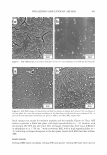
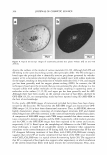
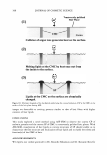
]. Cosmet. Sci., 56, 297-309 (September/October 2005) A novel method for visualizing hair lipids at the cell membrane complex: Argon sputter etching/scanning electron microscopy YOSHINORI MASUKA WA, HIROMI SHIMOGAKI, KENJI MANAGO, and GENJI IMOKAW A, Tochigi Research Laboratories, Kao Corporation, 2606 Akabane, Ichikai-machi, Haga, Tochigi, 321-3497 (Y.M., H.S., G.I.), and Wakayama Research Laboratories, Kao Corporation, 13 3 4 Minato, Wakayama, Wakayama, 640-8580 (K.M.),Japan. Accepted for publication May 11, 2005. Based on a presentation at the 13th International Hair-Science Symposium, Potsdam, Germany, September 10-12, 2003 Synopsis Hair lipids localized at the cell membrane complex (CMC) play a part in chemical diffusion, cell cohesion, and mechanical strength. There is no method currently available to visualize hair lipids at the CMC. We found that scanning electron microscopy (SEM) of a transversely polished hair plane followed by argon sputter etching (ASE) provides a specific characteristic image consisting of circular patterns (CP) and stitch patterns (SP) at the cortex. Both the CP and the SP are formed as convex structures and are associated with melanin granules and the CMC, respectively. While the convex formation of the CP is not affected by any treatments tested, that of the SP disappeared following treatment of hair fibers with organic solvents and reappeared following incubation of the solvent-treated hair fibers with melting lipids, which suggests that the hair lipids are responsible for the convex SP. Other treatments, such as chemical fixation, thin sectioning, and pre-/post-incubation of the hair plane, reduce or abolish the convex formation of the SP. These findings suggest that the following pathway leads to the convex formation of SP during ASE: (a) joule heat is generated on the surface by violent collisions of argon ions, (b) melting CMC lipids ooze out from the inside to the surface, and (c) CMC lipids that have oozed out are chemically changed, leading to the final convex formation of the SP. With ASE-SEM, visualization of hair lipids as convex structures of SP should enable us to characterize the fine structure and localization of hair lipids and to clarify the roles and functions of the CMC of human hair. INTRODUCTION The cell membrane complex (CMC) consists mainly of proteins and lipids and is dis tributed between cortical or cuticle cells of human hair as well as wool (1-3). The CMC Address all correspondence to Genji Imokawa. 297

298 JOURNAL OF COSMETIC SCIENCE is composed of a tram-line structure including a densely stained 8-layer (proteins) sandwiched between lightly stained J3-layers (lipids) on both sides (1). It has been proposed that lipids of the CMC comprise a bilayer structure, based upon the fact that lipids extracted from wool or human hair are able to form liposomes (4,5). A strong orientation of hair lipids, probably at the CMC, in planes parallel to the axis of hair fibers, has been recently shown using a microbeam synchrotron radiation diffraction technique (6). Therefore, it has been suggested that lipids of the CMC play roles in the physicochemical phenomena of hair fibers, such as chemical diffusion, cell cohesion, and mechanical strength (2,3,7-9). Since the CMC has a thickness of approximately 25 nm (1-3), optical microscopy is not able to resolve the CMC structure. On the contrary, as transmission electron microscopy (TEM) has conventionally been used to observe the CMC (1-3), electron microscopy (which is superior in spatial resolution to optical microscopy) provides sufficient reso lution to analyze the subtle structures of hair fibers. However, the J3-layers in TEM images always appear as negative staining patterns, not attributable to the existence of the lipids, which implies that the J3-layers do not directly reflect lipids distributed in the CMC. Although scanning electron microscopy (SEM) can clarify the fine structure of hair fibers, it is impossible to observe lipids in the CMC using SEM, even of a polished hair plane, since detection in SEM is based upon secondary electrons derived from an uneven surface. Thus, there are currently no available methods to directly visualize lipids in the CMC of hair fibers. We have recently found that argon sputter etching-SEM (ASE-SEM) of a transversely polished hair plane provides a specific characteristic image, especially at the cortex. This finding prompted us to determine how the characteristic image on the surface of the hair plane is generated by ASE-SEM and to validate the use of ASE-SEM images in research on the microstructures of hair fibers. In this study, we have characterized ASE-SEM images of the hair plane by examining the effects of several treatments on the ASE-SEM images. MATERIALS AND METHODS CHEMICALS Epon 812 resin, 25% glutaraldehyde, and osmium tetroxide were from TAAB (Reading, UK). Oleyl oleate, myristyl myristate, and isopropyl palmitate were from Kao (Tokyo, Japan), while other fats and oils were from Tokyo-Kasei (Tokyo, Japan) or Wako (Tokyo, Japan). MATERIALS Scalp hair fibers were obtained from a healthy Japanese volunteer, aged 28 years. The volunteer had never subjected her hair to any chemical treatments such as perming or coloring, except for shampooing and conditioning. The hair fibers were washed with n-hexane for 5 min and then were cut to ca. 1 cm prior to preparation for ASE-SEM.
Purchased for the exclusive use of nofirst nolast (unknown)
From: SCC Media Library & Resource Center (library.scconline.org)