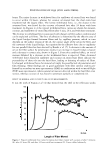
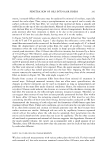
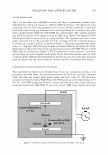
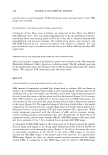
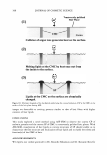
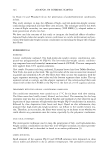
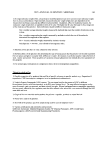
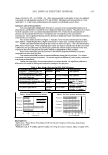
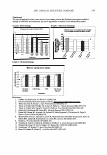
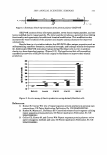
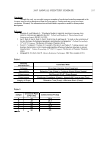
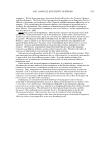
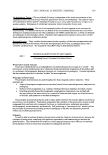
VISUALIZING HAIR LIPIDS BY ASE-SEM 299 ASE-SEM OBSERVATION The 1-cm hair fiber was embedded in resin, and then a transversely polished resin embedded hair block was exposed to ASE for SEM observation. The Epon 812 resin containing the hair fiber was polymerized in an oven. Rough trimming of each hair block with a glass knife was followed by the careful polishing of a transverse hair plane with a diamond knife (MT6740, DiATOME Ltd., Switzerland). The carefully polished hair block was placed in the target position for ASE in an Hitachi Ion Sputter E-1030 (Hitachinaka, Japan) connected to an argon cylinder. The specimen was then etched under a pressure of 6 to 7 Pa, a current of 6 mA, a voltage of 0.3 kV, a working distance of 30 mm, and a time of 360 sec, as shown in Figure 1. The etched specimen was coated with a ca. 5-nm layer of Pt-Pd using the same instrument (Hitachi Ion Sputter E-1030). Observation of the polished hair plane was performed using an FE-SEM Hitachi S-4300 SEM under an accelerating voltage of 5 kV. For observation of thin sections, 1-µm-thick sections were cut with a sapphire knife while 90-nm ultra-thin sections were cut with a diamond knife. ASE was then performed for the hair sections on a cover glass using the same procedures and the same conditions as those used for the polished hair planes. COMPARISON OF ASE-SEM IMAGES WITH TEM IMAGES The transversely polished resin-embedded hair block was prepared according to the procedures described above. An ultra-thin section of the block was cut with a diamond knife, and then was stained with uranyl acetate and lead citrate (3). The ultra-thin sections were observed with a TEM (Hitach H-7000) under an accelerating voltage of 75 kV. If a clear TEM image was obtained, another polished hair plane of the remaining block was examined by ASE-SEM. In case of an unclear TEM image, further ultra-thin Electrode rgon tm phere 6-7P 360 30mm Target 6mA 0.3 kV Figure 1. Schematic diagram of the instrument used for ASE in this study.

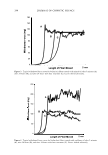
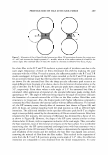
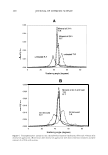
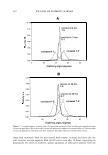
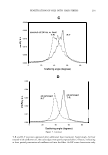
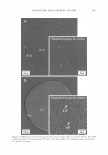
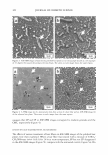
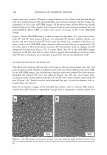
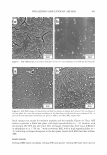
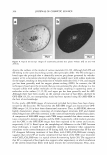
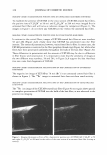
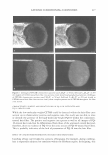
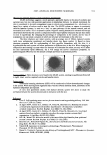
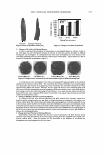
300 JOURNAL OF COSMETIC SCIENCE sections were cut and subsequent TEM observations were continued until a clear TEM image were recorded. TREATMENTS OF HAIR FIBERS AND POLISHED HAIR PLANES Treatments of hair fibers were as follows: (a) immersion of hair fibers into CH 3 Cl/ CH�OH/water (v/v/v, 18:9: 1) at room temperature for 24 hr, (b) immersion of solvent treated hair fibers into melting lipids at 80°C for 24 hr, and (c) chemical fixation with glutaraldehyde and osmium tetroxide. The polished hair planes were observed with ASE-SEM followed by pre- and post-incubation with ethanol or n-hexane. Pre- and post-incubations refer to incubations with the solvent just before ASE and just after ASE, respectively. OBSERVATION OF THE POLISHED HAIR PLANE BY OPTICAL MICROSCOPY Optical microscopic images of polished hair planes were observed with a Microwatcher (Mitsubishi Chemical, Tokyo, Japan) via a reflection mode. The IR (infrared) spectrum of the polished hair plane was measured with an IR microscope (Spectrum One, Perkin Elmer, UK) using an ATR (attenuated total reflection) mode. RESULTS CHARACTERISTICS OF ASE-SEM IMAGES OF THE HAIR PLANE SEM images of transversely polished hair planes with or without ASE are shown in Figure 2. In the SEM images without ASE, as used conventionally, the hair plane can be visualized only as the even surface, and therefore, micro-three-dimensional structures of the cuticle and the cortex in the hair plane could not be observed (Figure 2a). In contrast, when ASE treatment was performed on the hair plane prior to SEM observation, mi crostructures of the cuticle and the cortex became distinct with a characteristic pattern at the cortex (Figure 26). The magnified image of the cortex revealed that it was mainly composed of two types of structure, circular-shaped ones and slender thread-shaped ones, designated here as circular patterns (CP) and stitch patterns (SP), respectively. When several parameters associated with the efficiency of ASE, such as pressure, voltage, current, working distance, and treatment time, were characterized, we found that of all parameters tested, pressure most strongly affected ASE-SEM images of the hair plane, and that a pressure of 6 to 7 Pa is required for an optimal ASE-SEM image. A comparison of ASE-SEM images at the tilting angle of 45 degrees toward the primary electron beam with images at no tilting angle demonstrated that both CP and SP are convex structures in the surrounding plane (Figure 3). In order to determine the intra or intercellular localization of CP and SP in the cortex, TEM images of ultra-thin sections and ASE-SEM images in the adjacent plane were observed. In a representative TEM image (Figure 4a), there are densely stained melanin granules and the lightly stained CMC. A comparison of each TEM image with the adjacent ASE-SEM image
Purchased for the exclusive use of nofirst nolast (unknown)
From: SCC Media Library & Resource Center (library.scconline.org)