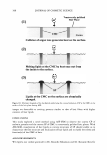
284 JOURNAL OF COSMETIC SCIENCE dominated by surface-deposited oil. Recently, Ruetsch et al. (2) showed that coconut oil penetrates into the hair cortex and reduces the swelling of the hair fiber. The presence of oil films on the surface of fibers leads to capillary adhesion between the fibers and increased specular reflection of light from the surface. The magnitude of these two effects depends on the thickness of the oil film, determined by the amount of oil applied. Penetration of oil into the fiber reduces the film thickness, which affects both capillary adhesion and light reflection. In this paper, the penetrability of various oils is studied by means of the changes in interfiber adhesion and light reflection measure ments. The force of adhesion between fibers plays an important role in describing fiber assembly behavior and is measured using a recently described dynamic fiber pull-out method (3). The capillary adhesion force measured on a single fiber due to its contact with other fibers in the assembly is sensitive to the amount of oil on the fiber surface. Therefore, it is possible to determine which oils are more readily diffused into the hair fiber, thereby leaving thinner films of oil on the surface without "clumping" of the hair assembly. A goniophotometer records the angular profile of reflected light and is frequently employed to quantify luster. This method is also known to serve as a sensitive probe of the hair surface, mostly used for detection of structural changes caused by cosmetic products and mechanical grooming (4-6). In this study we demonstrate that the changes in reflected light intensity, angular position for specular reflectance, and calculated scale angle can all be successfully used to detect the changes in the thickness of the surface oil film as a result of penetration. EXPERIMENT AL MATERIALS The hair used in this study was black hair of Indian origin supplied by Marica Industries Ltd., Mumbai, India. Pure coconut oil, mineral oil, and ricebran oils were also provided by Marica Industries Ltd .. Cold-pressed extra-virgin olive oil (Filippo Berio, Italy), expeller pressed sunflower oil (Hain Pure Foods, Inc., New York), pure sesame oil (Kadoya, Summit Import Corp., New York), and pure mustard massage oil (KTC Edibles Ltd. England) were obtained from commercially available sources (health and food stores). MEASUREMENT OF INTERFIBER ADHESION Hair tress preparation. Prior to treatment, the hair tress was kept overnight at 21 °C and 65% RH. A hair tress with a weight of 2 grams was gently combed in order to ensure parallel alignment of the hair fibers. Then 0.2 cc of the appropriate oil was directly applied to the tress with a syringe. The oil was gently massaged with gloved fingers into the tress for five minutes to distribute it uniformly into the hair assembly. In the application procedure a small amount of oil is left on the glove, but is considered to be negligible to have an effect on the measurement. Packing density and hair fiber mounting. A detailed description of the method is given in reference 3. The hair tress (about 0.5 grams of hair per cm3) was packed into a specially

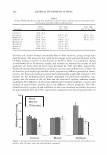
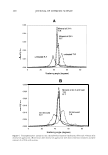
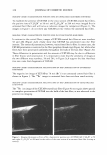
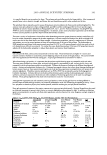
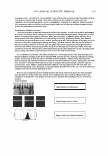
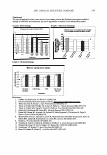
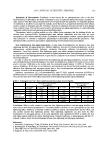
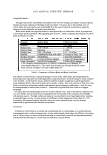
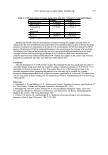
PENETRATION OF OILS INTO HAIR FIBERS 285 fabricated 3.8-cm-long brass cylinder with a diameter of 0.8 cm by pulling the hair tress through the cylinder. The excess of hair fibers was removed. From the packed hair assembly a single hair fiber was partly pulled out in the root-to-tip direction from the middle of the cylinder, and then attached to a Kevlar monofilament. The Kevlar mono filament was subsequently attached to a recording electrobalance (TRI-Scan) via a stain less steel hook. The force of withdrawal (mg) was recorded while the TRI-Scan stage was moving downward at a rate of 0.02 mm/sec. From the curve of force versus distance moved, an average force was calculated. For each oil treatment, measurement was re peated on ten specimens, i.e., pulling out ten single fibers, one at a time, from each packed hair assembly. Interfiber adhesion measurements were repeated after keeping the packed cylinder at a constant temperature and humidity (21 ° C and 65% RH) for 24 hours. A third set of measurements was performed after additional heat treatment using a blow-dryer at medium heat for five minutes. Warm airflow was directed on both cylinder walls and its openings. Even though this procedure is not highly reproducible in terms of the temperature experienced by the hair assembly compared to a constant temperature oven, we used this procedure mainly because of its use in practice. MEASUREMENT OF ANGULAR REFLECTED LIGHT PROFILE The goniophotometer (GP) was used to record the scattered light intensity as a function of the angle. The light source was a He-Ne laser of 632 nm. The measurements were performed on single Indian hair fibers placed horizontally in the sample holder at an angle of incidence of 45°. The scale angle a was calculated from the GP curves of fiber in the root-to-tip (R-T) and tip-to-root (T-R) position, given by: a = (0TR - SRT)/4, where 0TR and 0RT stand for the angle of specular peak appearance for tip-to-root and root-to-tip positions, respectively (4). Measurements were performed on the same fiber as in the case of adhesion measurements, which were done on the same hair assembly, directly after oil application, 24 hours after oil application, and with short-term heat treatment using a blow-dryer. A thin oil layer was applied by moving the fiber through an oil drop at the tip of a needle. Additional scans were recorded after removing the remaining surface oil by dissolution, moving the fiber through a drop of acetone, as described previously. RES UL TS AND DISCUSSION EFFECT OF VARIOUS OILS ON INTERFIBER ADHESION Fiber withdrawal forces for hair treated with various oils are shown in Table I. Compared to untreated Indian hair, the withdrawal force is increased by a factor 3 to 9 for all oils used in this study. The withdrawal force of a fiber from a bundle is a function of the number of points of contact and the normal forces acting (laterally) at these points. Upon oil application, liquid bridges are formed between fibers and additional normal force arises from the negative Laplace pressures of these liquid bridges (capillary adhesion). The magnitude of the adhesive force is a product of the Laplace pressure of the liquid bridge and its area. Comparing the initial withdrawal forces (i.e., directly after oil application) with forces measured after 24 hours, we observe a decrease of about 20% for mustard and olive oil.
Purchased for the exclusive use of nofirst nolast (unknown)
From: SCC Media Library & Resource Center (library.scconline.org)