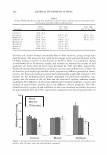
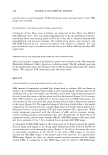
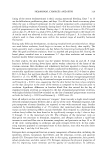
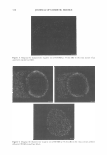
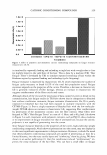
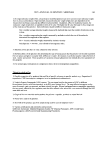
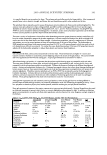
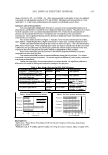
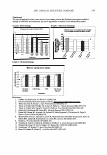
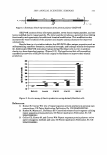
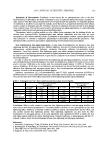
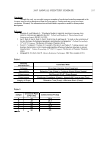
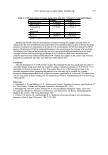
286 JOURNAL OF COSMETIC SCIENCE Table I Average Withdrawal Forces with 95% Confidence Levels for Various Oil Treatments Calculated from the Dynamic lnterfiber Adhesion Measurement Initial Force (mg) Force (mg) Treatment force (mg) after 24 hr after 24 hr w/heat Untreated 29.6 ± 8.1 Coconut oil 116.2 ± 7.7 103.7 ± 9.6 63.9 ± 10.4 Mineral oil 107.4 ± 2.8 110.5 ± 1.7 108.1 ± 10.9 Sunflower oil 184.6 ± 24.3 108.3 ± 13.2 83.9 ± 12.9 Ricebran oil 109.4 ± 2.0 109.8 ± 1.8 Mustard oil 287.3 ± 27.4 221.2 ± 19.3 Sesame oil 203 ± 58.7 192.2 ± 85.5 Olive oil 264.0 ± 45.0 192.0 ± 61.0 For these oils, results showed considerable fiber-to-fiber variation, giving a large stan dard deviation. The reason for this could be the change in the area and thickness of the oil films, leading to uneven oil distribution on the fiber. There is no significant change in withdrawal forces for mineral, sesame, and ricebran oil, whereas for coconut oil and sunflower oil, forces after 24 hours have decreased by 10% and 40%, respectively. Further discussion will mainly focus on mineral, coconut, and sunflower oils, as these oils are found to give highly reproducible results representing different penetration charac teristics. For these oils, results are summarized and presented graphically in Figure 1. For mineral oil, the withdrawal force remains unchanged even after heat treatment, sug gesting that the nature of the oil film and the associated capillary adhesion remain unchanged. The difference in the initial adhesion force between sunflower, coconut, and mineral oil-treated fibers could be due to the different cohesive properties. The with drawal forces for coconut oil and sunflower oil after heat treatment are further decreased by approximately 40% and 20%, respectively, compared to the force measured after 24 250 Initial ■ 24 hrs 200 D 24hrs w/heat s 150 0 u. 100 l! "0 50 o Coconut Mineral Sunflower Figure 1. Average withdrawal forces for Indian hair tress treated with coconut, mineral, and sunflower oils, initially, after 24 hours, and with additional heat treatment.

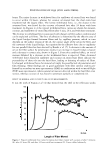
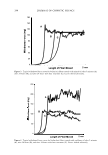
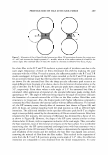
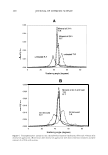
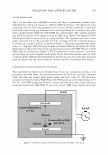
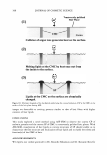
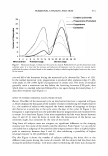
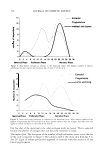
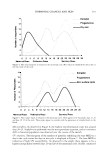
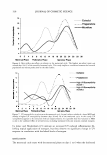
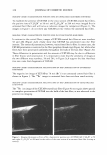
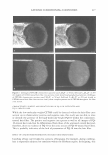
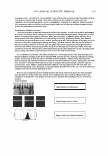
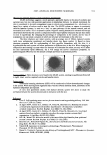
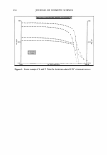
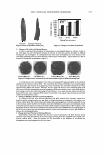
PENETRATION OF OILS INTO HAIR FIBERS 287 hours. The major decrease in withdrawal force for sunflower oil-treated hair was found to occur within 24 hours, whereas for coconut oil-treated hair the short-term heat treatment had the largest effect. The lowest withdrawal force, i.e., the closest to the untreated hair, was found for the coconut oil-treated hair after 24 hours with heat treatment. In Figures 2-4 the typical withdrawal force curves are shown for mineral, coconut, and sunflower oil-treated hair fibers after 5 min, 24 h, and with heat treatment. The decrease in withdrawal force is associated with changes in fiber-surface condition and can be explained as follows. The force of adhesion is determined by the effective area of the liquid bridges formed between fibers and by capillary pressure, which in turn depends on the surface tension of the oil, the contact angle of the oil on the fiber, and the curvature of the liquid bridge. An equation for the adhesive force due to capillarity for two parallel fibers has been derived by Brooks et al. (7). A decrease in the amount of oil on the fiber surface by penetration results in an increase in liquid bridge curvature and a decrease in contact area, shown in Figure 5. From this combined effect, an initial increase followed by a decrease in the withdrawal force is expected. Thus, decreased withdrawal forces found for sunflower and coconut oil-treated hair fibers indicate the penetrability of these oils into the hair fibers, leading to thinning of surface oil films. Unchanged withdrawal forces for mineral oil imply the possible lack of penetration and film thinning. These findings are in good agreement with fiber interior studies per formed by secondary ion mass spectrometry (SIMS) in combination with a time-of-flight (TOF) mass spectrometer, where mineral oil was not detected within the hair fiber cross section, whereas coconut oil was found to penetrate partially or completely (2). EFFECT OF MINERAL AND COCONUT OILS ON GP MEASUREMENTS It was the work of Stamm et al. (4) that showed that the shift in the reflectance peaks 160 - Cl) � � 140 120 100 80 60 40 20 0 A 5mm Length of Fiber Moved Figure 2. Typical withdrawal force curves for Indian hair fibers treated with coconut oil after 5 minutes (A), after 24 hours (B), and after 24 hours with heat treatment (C). Curves shifted arbitrarily.
Purchased for the exclusive use of nofirst nolast (unknown)
From: SCC Media Library & Resource Center (library.scconline.org)