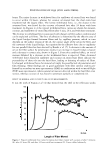
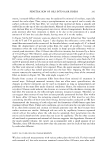
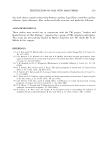
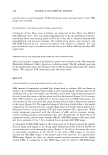
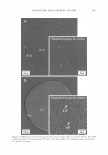
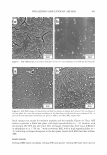
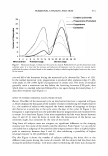
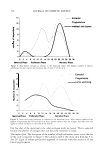
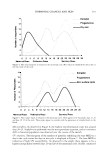
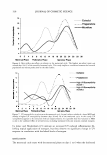
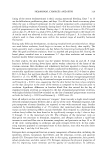
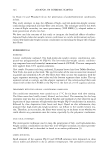
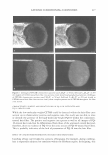
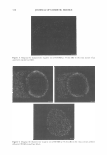
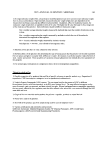
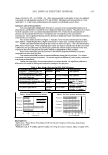
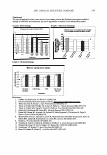
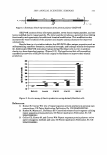
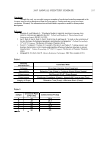
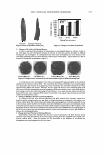
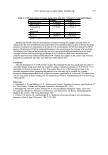
VISUALIZING HAIR LIPIDS BY ASE-SEM 303 Figure 5. ASE-SEM images of transversely polished hair planes following various treatments of the hair fibers. a: An untreated hair fiber (control). b: A hair fiber treated with CHCL/CH,OH/water 19:9:1 for 24 hr. c: A solvent-treated hair fiber incubated with a melting lipid mixture (squalene/oleyl olate/triolein/oleic acid {wt 10:30:10:50}) at 80°C for 24 hr (a solvent-treated hair corresponds to that treated with CHCI,/ CH,OH/water 19:9: 1 for 24 hr). d: A solvent-treated hair fiber incubated with melting triolein at 80°C for 24 hr. the other hand, when solvent-treated hair fibers were further incubated with a melting lipid mixture (squalene/oleyl olate!triolein/oleic acid [ wt 10:30: 10:50}, which is a model of hair lipids) for 24 hr at 80°C, SP reappeared while CP remained unchanged (Figure Sc). Images similar to that shown in Figure Sc were also obtained by incubation with other lipids that melt at 80°C, such as C 1 rC 18 fatty acids, myristyl myristate, oleyl oleate, and isopropyl palmitate (data not shown). In contrast, SP did not reappear following treatment with triolein (Figure Sd). The effects of chemical fixation of hair fibers on ASE-SEM images of the polished hair

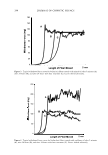
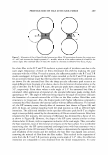
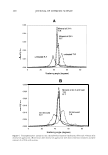
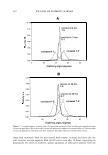
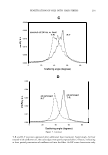
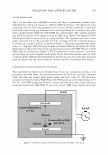
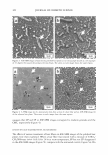
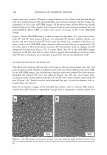
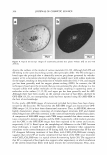
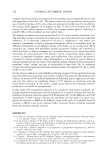
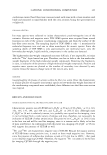
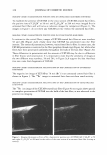
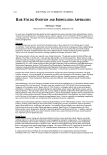
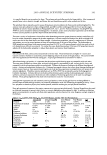
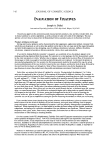
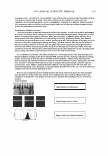
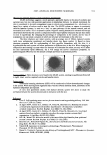
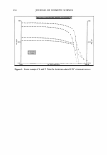
304 JOURNAL OF COSMETIC SCIENCE planes were also studied. Whereas a single fixation of hair fibers with glutaraldehyde only or a double fixation with glutaraldehyde and osmium tetroxide did not change the appearance of CP in the ASE-SEM images, SP became poorly defined following double fixation (Figure 6). This implies that chemical fixation with osmium tetroxide but not glutaraldehyde affects CMC to reduce the convex structures of SP in the ASE-SEM images. Figure 7 shows ASE-SEM images of thin sections of a hair fiber. In 1-µm-thin sections, both CP and SP were present (Figure 7a), although SP became slightly shorter and thicker and were distinct from SP in the usual hair plane (e.g., compare with Figure 2). Some cracks in this ASE-SEM image seemed to have occurred during its preparation. On the other hand, in 90-nm ultra-thin sections, CP were present with no changes, but SP disappeared completely (Figure 76). It seems likely that SP in the ASE-SEM images disappear in 90-nm ultra-thin sections, which suggests that underlying structures more than 90 nm in thickness are essentially required for the convex formation of SP. ASE-INDUCED CHANGES IN THE HAIR PLANE The effects of incubating the hair plane with organic solvents were studied next. Pre- and post-incubation with ethanol or n-hexane were used just before ASE and just after ASE. In the ASE-SEM images, pre-incubation of the hair plane with ethanol for a few minutes abolished SP whereas CP were not affected (Figure 8a). On the other hand, post incubation with ethanol affected neither CP nor SP even when treated longer than 60 min (Figure 8-b). Similar results were obtained for pre- or post-incubation with n hexane (data not shown). Optical microscopic images of the polished hair planes with or without ASE demon strated that ASE elicited a remarkable change from a transparent colorless plane to a Figure 6. ASE-SEM images of transversely polished hair planes following single chemical fixation of hair fibers with glutaraldehyde (a) and double chemical fixation with both glutaraldehyde and osmium tetroxide (b).
Purchased for the exclusive use of nofirst nolast (unknown)
From: SCC Media Library & Resource Center (library.scconline.org)