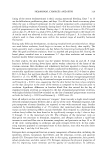
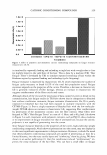
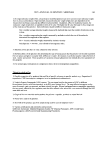
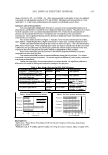
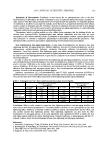
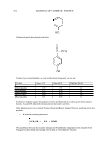
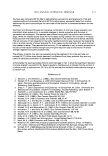
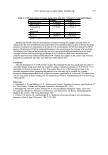
362 JOURNAL OF COSMETIC SCIENCE HO Parabens arc para hydroxybenzoic acid esters: II Parabcns hme limited solubility in water md this limits the quantity you can use. Parnben Water. 25°C Water. 80°C Propylene Glycol Mcthylparabcn 0.25 2.0 22 Et..hylparabcn 0.17 0.86 25 Propy I parabcn 0.05 0.30 26 Butylparaben 0.02 US 110 Bcnzylparabcn 0.01 0.05 13 Parabcns arc strongest against Gram positi,·c bacteria and fungi and arc weakest against Gram ncgati,c bacteria. At a pH of 8 about half is dissociated into the inacti,·e sail form. Other phenolic prcscr. ath cs include Phcno.\! ethanol and Benzyl Alcohol. These arc much less acti,·e than parabens . . ,. N-methylol containing substances N-CHrOH � I N-H I + HCHO This equilibrium between the secondary nitrogen and formaldehyde is dependent on the strength of this Nitrogen to Carbon bond. Many people refer to these as --rormaldehyde·· releasers.

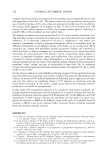
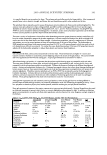
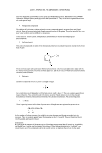
2005 ANNUAL SCIENTIFIC SEMINAR The most frequently used members of this group are lmidazolidin)ul Urea, Diazolidinyl Urea, DMDM Hydantoin, Sodium Hydro:xymethylglycinatc and Quatemium-15. They are all active against bacteria but arc weak against fungi. 4. Halogenated compounds The addition of a chlorine or iodine molecule to many compounds greatly increases their anti-fungal activity. Some of our most potent anti-fungal preservatives arc of this group. They also typically hme , cry poor water solubility and arc difficult to incorporate. In this class are Ch.loro:-..y lenol, Chlorphcnesin, DichlorobeflZ)·I Alcohol and lodopropynyl Butylcarbamate. 5. Isothiazolinoncs This class of compounds are some of the most potent presen·alivcs and are frequently used at le,·els of less than 50 ppm. There arc three major isothiazolinoncs. Methylisothiazolinone, which was just appro,·ed in Japan and the EU: Bcnzylisothiazolinonc ,, hich has not been appro,·cd : and the mixture of Methylchloroisothiazolinonc and mcth� lisothiazolinonc. 6. Quatemia Quatemia compounds all hm·c a positi,·c charged nitrogen. As a result these are pH dependent with the best activity at pH's abO\·e 7. They arc weakest against Gram ncgati,·e bacteria. They cannot be used with anionic systems. Popular prescrvati,·es in this class are: Benzalkonium Chloride, Benzethonium Chloride. He:xamidinc Diiscthionate. Polyamino Biguanide. 7. 1.2 Dials There is growing interest in this class of prcsenative although none are registered as presern1ti,·es. CH2-CH- (CHz)n-CH3 I I OIi Oil As the number of carbons increase, the solubility in water decreases and the anti-microbial activity increases. They are weakest against fungi. Most popular are the C-5.6 and 8. They are Pcntylene Gl)·col. 1,2-He:xanediol and Caprylyl Glycol. Conclusions By looking at the structure of the prcserntive, a formulator can get some idea of its activity, its solubility and finally how it can be used to preser,e formulations. When looking at preservative "cocktails", you should look to sec if the components add to the overall activity or duplicate the activity of other parts. 363
Purchased for the exclusive use of nofirst nolast (unknown)
From: SCC Media Library & Resource Center (library.scconline.org)