360 JOURNAL OF COSMETIC SCIENCE The solubility of preservatives is an important factor to consider in preserving product formulations because microorganisms will proliferate only in the aqueous phase of a formulation. Some preservatives are water-soluble and can be added directly to the aqueous phase of a formulation. While there are other preservatives that have limited water solubility, a water miscible solvent has to be used to dissolve them or use heat in order to incorporate them into the aqueous phase. In addition, there are preservatives that are more soluble in oil than in water and will partition themselves between the aqueous and oil phases of an emulsion. It is important to control the partition coefficient of these preservatives that exhibit both oil and water solubility to have an adequately preserved product formulation. Microbiological Activity of Preservatives When using preservatives, it is important to known the antimicrobial spectrum and recommended use concentration of a preservative or preservative system. There are very few preservatives that have a very broad spectrum of antimicrobial activity against both bacteria and fungi. Most preservatives have either good antimicrobial activity against bacteria or fungi. It is important to incorporate a combination of preservatives by using 2 or more types of preservatives or a preservative blend into a product formulation that will provide antimicrobial activity against both bacteria and fungi contamination. Furthermore, the concentration of a preservative in a formulation may determine if the antimicrobial activity is either cidal or inhibitory towards microorganisms. The minimum concentration for a preservative to prevent or inhibit the growth of a microorganism is known as the Minimum Inhibitory Concentration (MIC). The minimum preservative concentration for cidal activity against a microorganism is known as the Minimum Lethal Concentration (MLC). The MIC and MLC test data for a preservative is used to determine the spectrum of antimicrobial activity and use concentration in a product formulation. From this test data, it is important that the preservative in a formulation is at a sufficient concentration to have either cidal or inhibitory antimicrobial activity to prevent the growth or survivability of microorganisms in a product formulation. Ingredients Affecting Preservatives There are many raw ingredients that can affect the antimicrobial activity of preservatives. Besides a source of water, microorganisms need a source of microbial nutrients to proliferate in a formulation. With the presence of microbial nutrients, it could make a formulation more difficult to preserve because there is now an available source of nutrients for microbial proliferation and/or inactivate preservatives. There are also many raw ingredients that can give physical protection to microorganisms, chemically react, absorb or bind with a preservative to cause inactivation of the antimicrobial activity. Besides using preservatives to protect a formulation against microbial contamination, there are also raw ingredients that are able to enhance or increase the antimicrobial activity of a preservative system in a product formulation such as chelating agents, antioxidants, humectants, emollients, essential oils and fragrances. Processing Conditions The actual manufacturing conditions for a formulation need to be considered to have an adequately preserved product formulation. If the incorrect order of addition for a preservative is done during manufacturing, it may effect the partitioning of a preservative between the water and oil phases of an emulsion. The addition of emulsifying agents to a product suspension should always be performed first in order to coat the solid particles that would be able to absorb preservatives. Preservatives should always be added to a formulation at the appropriate pH to prevent decomposition or to have antimicrobial activity. The addition of a preservative to a batch at the incorrect temperature during processing may have an affect on the actual physical stability of a preservative in a formulation. Packaging The packaging in which a product formulation is going to be filled into is an important consideration when selecting a preservative system. There are many known examples in how the chemical composition of a product package will have an effect on the stability of the preservative system in a product formulation. The type of product package (e.g. tube, pump, aerosol can,jar) may pose an increase in the risk for the occurrence of microbial contamination to the product during consumer use by overwhelming the preservative system. A risk assessment needs to be performed to determine whether the configuration of the packaging can make an adequately preserved product formulation susceptible to microbial contamination during use by the consumer.

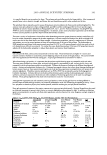
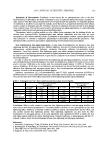
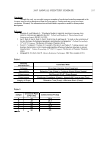
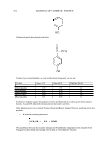
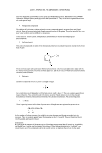
2005 ANNUAL SCIENTIFIC SEMINAR THE CHEMISTRY OF PRESERVATIVES David C. Steinberg Steinberg & Associates, Inc. A preservatiYe is defined as a chemical that is added to a cosmetic to preYent the gro\\th of or destroy microorganisms that may grow in the product. Various countries haYe different regulations of preserYatiYes. Other speakers will cover this. 361 If you reyiew the chemistry of the frequently used preservati\'es, you will find that they fall into these chemical classes: acids, aromatic alcohols, N-methylol containing substances halogenated compounds, isothiazolinones. quaternia and l,2 diols. Understanding the chemistry of these groups enables the formulator to choose the appropriate preservatiYe with less guess-work and more science. l. Acids Organic acids have been used for preserying foods and cosmetics. These chemicals are actiYe in the acid form but not the salt form: R-COOH � R-COO- + H + As organic acids arc weak acids, they exist in the acid or actiYe form depending on the pH. The lower the pH the more activity. Typical acids and their dissociations arc: pKa % ActiYe at each pH 3 4 5 6 7 Dchydroacctic 5 27 100 95 65 16 2 Benzoic .U8 94 61 13 1.5 0 Sorbic -U6 98 85 37 5.5 () Salicyclic 2.97 48 9 l 0 0 Formic ns 85 36 5 l () Propionic 4.87 99 88 43 7 l In general propionic. sorbic. salicylic and dchydroacetic acids arc stronger against fungi. while formic and bcnzoic acids show bcncr anti-bacteria action. 2. Aromatic nlcohols These represent the most important types of preservati,·es currently being used. All of these are substituted phenols. Phenol was once called Carbolic acid and found use as a hospital disinfectant. Trying to produce an odorless forrn of this, resulted in the discm·ery of parabens. our most frequently used prescn·atives. Like acids they are pH dependent:
Purchased for the exclusive use of nofirst nolast (unknown)
From: SCC Media Library & Resource Center (library.scconline.org)