366 JOURNAL OF COSMETIC SCIENCE HARMONIZATION OF MICROBIAL TESTING METHODS Joyce F. Graf, Ph.D. The Cosmetic, Toiletry, and Fragrance Association, 110117th Street, NW, Washington, DC 20036 CTFA, through their microbiology committee, has been actively working with many groups to harmonize microbial quality and test methods. These include other organizations such as USP, CO LIPA, /CIA and ISO TC-217 WG1. Recently harmonization on Microbial Limits Guidelines was agreed between the CTFA, COLIPA and /CIA. Manufacturers of personal care products must assure that finished products are free from unacceptable levels and types of microorganisms. From the development of the product and optimizing the preservative system through raw materials testing, manufacturing, and product release testing, the microbiologist is involved. It has been generally accepted that the microbial limit test is a starting point of quality control for member companies however they do not want to hamper the individualities of the cosmetic manufacturers by imposing numerical limits." For the manufacture of personal care products that are also personal care products, the Japanese, European, and United States Pharmacopeias also supply tests. There has been an effort to standardize these methods, although the harmonized preservative effectiveness test differs in many details. Trade organizations such as the Cosmetic, Toiletry & Fragrance Association (CTFA), the European Cosmetic, Toiletry and Perfumery Association (COLIPA), and the Japanese Cosmetic Ingredient Association GCIA) work on behalf of member companies to standardize procedures, disseminate technical information on product use and safety, and interface with governmental/ regulatory agencies to maximize compliance with the minimum amount of enforcement. National and international standard setting organizations have also published preservative efficacy tests. The validity of the AOAC International method, based on the CTFA method, was the subject of a round-robin testing protocol. The ASTM method is under 5-year revalidation, and it is expected to be changed to bring it more into line with the CTFA method. The International Standards Organization (ISO) has developed a number of microbiological methods that will soon be published as ISO international standards. Although the preservative efficacy test has been discussed, there is no formal movement to begin working on this new work area. This presentation will review the existing methods for preservation efficacy, update the efforts at standardizing the CTFA/COLIPA/JCIA microbiological limit guidelines, and review the status of the ISO methods. Microorganisms are opportunistic, and they may grow when nutrients (e.g., foods, drugs, cosmetics, raw materials, product residues, etc.), sufficient water, and environmental conditions are present. Products may provide sufficient nutrients for growth, and preservation is necessary for aqueous products in multiple-use containers. Microorganisms are ubiquitous and capable of adaptation and selection. No method can guarantee microbial control under all conditions. The method for challenge testing involves the inoculation of the product sample with bacteria, yeasts and molds, some of which may either be pathogenic or cause spoilage, followed by testing the inoculated product for viability of the microorganisms at various periods as long as considered necessary. In some cases, these tests are supplemented by chemical tests to measure the amount of preservative in the product. These kinds of chemical tests are required for drug products in the US.

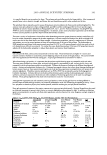
2005 ANNUAL SCIENTIFIC SEMINAR 367 Test methods and guidelines, such as the CTFA Guideline for Determination of Preservative Adequacy in Cosmetics, provide guidance in many areas of PET testing. Some of the guidance includes: • Personnel qualifications • Importance of Manufacturing GMPs • Factors to consider when designing preservative systems • Importance of testing formulations during development • Importance of using microbiologically acceptable raw materials • Use of an unpreserved formula as a control to determine the need for preservation • Stability testing of preservative systems • Testing of product in final packages after storage Similarly, the COLIPA Microbiological Testing Guidelines on Microbial Quality Management (MQM) note that the function of preservatives is consumer protection and prevention of spoilage during normal and reasonably foreseeable product use, that preservatives should not be used in lieu of good production hygiene, and that preservative selection should be chosen by microbiological challenge tests during product development. The Guideline states that packaging should be designed to restrict contamination and to avoid condensation of water from the product on the inner surface. Inactivation of preservative systems by the container and diffusion through it should be considered. Unlike the CTF A Guidelines and the compendia! methods, the Colipa Guidelines do not specify acceptance criteria. Thus, interpretation of adequacy of the preservative system is determined by review of the challenge test data, packaging, and intended consumer use. The recommendations from each of the methods will be discussed, and compared, including the challenge organisms, media, differences, and acceptance criteria - both time of exposure and reductions observed - will be highlighted. The differences between "compendia!" tests for drug products, standard test methods, and association guidelines will be reviewed. For example, the CTFA Guideline notes that the criteria are "minimal criteria". Manufacturers should understand that the preservative system of the formula, packaging, and consumer use must be evaluated in determining the preservative requirements of each product.
Purchased for the exclusive use of nofirst nolast (unknown)
From: SCC Media Library & Resource Center (library.scconline.org)