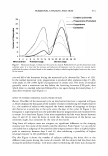
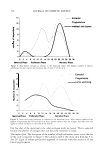
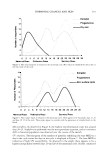
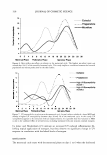
368 JOURNAL OF COSMETIC SCIENCE PRESERVATION - LEARNING FROM THE BASICS Donald S. Orth, Ph.D. Neutrogena Corporation, Los Angeles, CA 90045 Preservative efficacy testing is performed on aqueous cosmetics and drugs to determine the minimum effective concentration of one or more preservatives required for adequate control of contamination. Products are satisfactorily preserved if they meet appropriate acceptance criteria and if they are packaged properly. 1his presentation discusses the advantages of the linear regression method, acceptance criteria, the preservative system concept, use of the principles of preservation to reduce the need for chemical preservatives, and the use of a miniaturized system for preservative efficacy testing without counting colonies. PreseITative Efficacy Test Methods Several methods of preservative efficacy testing are used in different countries, including US Pharmacopoeia (USP), European Pharmacopoeia (EP), The European Cosmetic, Toiletry and Perfumery Association (COLIPA), Japan Cosmetic Ingredient Association (JCIA), and rapid procedures such as the Linear Regression Method. Advantages of the Linear Regression Method Several factors need to be considered when selecting the method of preservative efficacy testing used. These include reliability, time required for testing to be completed, labor and material costs, acceptance criteria, compliance with regulations or corporate guidelines, and environmental impacts of testing. The linear regression method offers several advantages, as follows: Quantitative - The rates of microbial death are expressed numerically in D-values. The D-value is the time required for a 90% decrease ( 1-log reduction) in the population of test organisms. The rationale for use of D-values is that every organism has a characteristic rate of death when subjected to any lethal treatment. Reliability - A method must be reliable or it is not worth using. The reliability of any test method depends on precision, sensitivity and accuracy. In microbiological testing, the precision generally depends on the skill and care used by the analyst. In the linear regression method, the correlation coefficient is used as an indicator of precision and is used to demonstrate the 'goodness of fit' of the data to the regression in this method. 1b.is allows a statistical control of each set of data. The linear regression method allows reliable determination of whether a product is satisfactorily preserved when appropriate recovery systems, culture conditions and acceptance criteria are used. Acceptance Criteria - It s possible to set meaningful guidelines for accepting or rejecting a product based on the performance of its preservative system because the linear regression method provides a quantitative measure of the rate of die-off of test organisms. Selection of appropriate acceptance criteria is key to successful preservation of a product. Rigorous criteria generally are desirable because they minimize the likelihood of product contamination during manufacturing and during use by the consumer. They minimize the Phoenix Phenomenon (i.e., rebound of organisms after initial testing reveals no organisms present). A preservative system with D-values no greater than 30 hr (e.g., about a 6-log reduction in 7 days) for gram negative bacteria has a greater safety factor than one with D-values of 56 hr (e.g., 3-log reduction in 7 days). Target acceptance criteria for topical products are: • D-value of 4 hr for pathogens/opportunistic pathogens • D-value of 28 hr for non-pathogens, yeasts and molds • Bacteriostatic or slowly bactericidal for Bacillus spp. spores. Time Needed to Complete Testing - The linear regression method is rapid because it uses rigorous acceptance criteria. Testing for pathogens may be completed within three days tests for nonpathngenfc bacteria, yeasts and molds may be completed within two weeks.

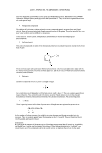
2005 ANNUAL SCIENTIFIC SEMINAR 369 No Rechallenge Testing - The rate of death (D-value) is independent of the initial concentration of test organisms present (up to the level at which the preservative system is overwhelmed). The same D-values were obtained on the first and 10th challenge of Staphylococcus aureus and Pseudomonas aeruginosa in product samples. Elimination of rechallenge testing may reduce testing time by one week. No Environmental Isolates - The use of environmental isolates of house organism is not necessary for routine testing. It is wtlikely that anyone can find all of the environmental isolates that may occur when formulas are inadequately preserved, when compliance with GMPs is unsatisfactory, or when test methods are inadequate to control product release. If products meet appropriate acceptance criteria, they will kill house organisms grown on laboratory media. Required D-value -- Three variables that determine whether a product will become contaminated are the preservative system of the formula, which may be expressed as the D-value, a packaging factor, and a consumer use/abuse factor. The required D-value (RDV) may be determined as follows: Maximum acceptable D-value for target organism RDV = (Packaging Factor) (Consumer Use/Abuse Factor) Preservative System Concept Preservative chemicals do not act independently in a formula because they are part of a "system". The preservative system includes preservative chemicals, the physicochemical composition of the product (pH, aw, surfactants, chelating agents, fragrance chemicals, etc.), and protective packaging. Formula ingredients that have antimicrobial activity become "hurdles" for microorganisms. Principles of Preservation The principles of preservation are used throughout the food, drug and cosmetic industries. These principles are: • Asepsis (keeping microorganisms out, microbial control of raw materials/processes, and protective packaging) • Removal of microorganisms (e.g., washing, trimming, filtering to minimize microbial content) • Retarding growth/killing of microorganisms using higMow temperatures, low and high pH, drying to achieve low water activity (aw), removal of substrates and oxygen, use of preservatives or biocides, and irradiation or mechanical disruption. The principles of preservation may be used to reduce and/or eliminate the need for addition of chemical preservatives in a formulation. Formulation components that contribute to the preservative system include compounds that raise/lower pH, compounds that lower aw, lipids and esters, surfactants antioxidants, chelating agents, aroma chemicals, and botanicals. Self-preserving, or "preservative-free" products utilize the principles of preservation (including protective packaging) so that they are adequately preserved without use of chemical preservatives. Summary We will be able to build on the basics of preservation using the chemistry of preservatives, knowing the strategies of preservation, complying with regulatory requirements, and hannonizing test methods for global products. This information will enable us to select appropriate preservative efficacy test methods and acceptance criteria to ensure that our products are adequately preserved.
Purchased for the exclusive use of nofirst nolast (unknown)
From: SCC Media Library & Resource Center (library.scconline.org)