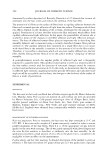
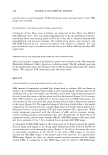
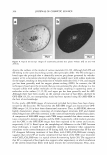
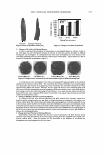
374 JOURNAL OF COSMETIC SCIENCE A NOVEL PHOSPHATE ESTER FOR HAIR-COLORING ENHANCEMENT Timothy Gao, Ph.D., Abel Pereira, Yoon-Hee Choi, Jung-Mei Tien and Robert Lanese Croda, Inc., 300-A Columbus Circle, Edison, NJ 08837 Introduction Bleaching and coloring of hair has become increasingly popular over the past years. Color is produced inside the hair fiber by hydrogen peroxide-induced oxidation and coupling reactions of aromatic amines and phenols. Since hydrogen peroxide is used, it will concurrently bleach the hair's melanin, and shades lighter than the natural hair color can be obtained. Oxidative dyeing is usually carried out under alkaline conditions preferably at pH 9 to I 0. At the time of dyeing, the alkaline solution containing the dye components is mixed with the peroxide developer, which is stabilized for storage at a pH of 3 to 5. The resulting mixture is then applied to hair for 20 to 40 minutes before being rinsed off with water. Surfactants play important roles in the efficacy of hair color products: Emulsification - to form stable and fine O/W emulsions for better solubility and distribution of dye intermediates and coupling agents Wetting - to accelerate the diffusion of dye intermediates and coupling agents into hair cortex Cleaning and Spreading - to ensure uniform dye coverage on the air surface and help removing dye residue on the hair surface, which contributes to a poor feel, dull appearance, and difficult combing. There have been a lot of studies on the factors that affect the bleaching and coloring process. These factors include dye solubility and distribution, coupling rates between dye and coupling agent, diffusion rates of dye intermediates and coupling agents into the hair cortex, hair swelling rate, effect of different alkali on dyeing process, and the efficiency of dye use. Phosphate ester compounds have long been used in hair and skin care formulations including hair relaxers, hair perms, sunscreens, and color bases as excellent emulsifiers and viscosity thickening agents. In this article we report our recent findings on how phosphate esters affect oxidative dye coloring performance. An excellent Hair Color Enhancer (HCE) - Oleth-5 Phosphate and Dioleyl Phosphate has been found. Experimental Materials I. Hair Dye bases were obtained from the Applications Lab at Innovation Center of Croda Inc Color Base A - A regular oxidative auburn color base without phosphates Color Base B - A modified Color Base A with addition of 4% HCE 2. Hydrogen Peroxide Hair Color Developer was prepared by Application Lab of Croda Inc 3. Bleached Hair was purchased from International Hair Importers and Products, Inc, New York Measurements 1. Hair color indexes {L, a•, b*) were determined using a LabScan XE Spectrocolorimeter equipped with a special sample holder for hair tress. 2. Dynamic advancing contact angle at the interface of hair fiber/deionized water was determined using a Cahn DCA-315 Dynamic Contact Angle Analyzer at constant temperature of 25°C. 3. Emulsion structure was inspected under a Nikon Optiphot -Pol Microscope, and the image was saved and analyzed by image analysis software. 4. Viscosity profile of emulsion samples was measured using a Brookfield DY-III Rheometer at constant temperature of 25°C Results and Discussion 1. Change in Hair Color with Time The photos of dyed hair samples are shown in Figure 1. The determined changes in hair red color index, a•, of bleached hair before and after dyeing with the two different dye bases are presented in Figure 2. It can be easily seen by visual inspection that the hair dyed with the color base containing HCE showed richer red color than the hair dyed with a regular base. The determined changes in the red color index of Lia*, in yellowing index of Lib*, and in total color difference of �E of these hair tresses clearly indicated that the development rate of red color on the hair dyed with the color base containing additional HCE was faster than that on the hair dyed with the base without HCE. This experimental result indicates that addition of HCE into regular oxidative auburn color base not only produced richer final shade, but also accelerated the whole coloring process and demonstrated faster coloring rate compared to the hair dyed with the corresponding regular dye without HCE.

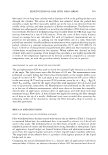
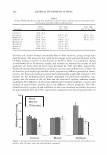
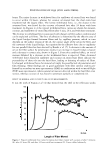
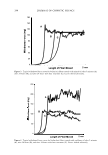
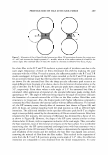
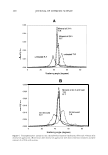
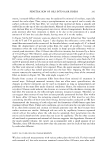
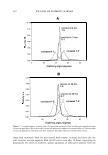
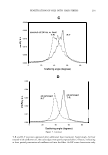
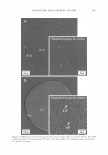
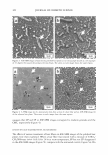
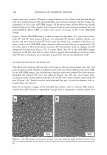
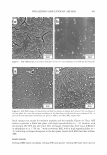
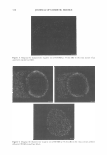
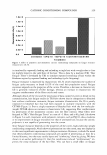
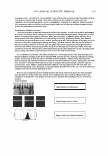
2005 ANNUAL SCIENTIFIC SEMINAR Dye base Dye base with HCE Figure 1 Photo of dyed hair tresses (20') 1. Change in The Color of Coloring Mixtures • l .5 • s::. 11.50 11.00 10.50- 10.00 9.50 1.00 8.50 8.00 7.50 7.00 Smln 10mln 20mln Dyeing Time (minutes) Figure 2 Change In red Index of dyed hair In order to understand the mechanism of enhancement in coloring performance by addition of HCE in the color base, the color development process of mixtures of color base and the developer at different mixing time was investigated. It is obseryed that the initial color development rate in the mixture of the color base containing HCE was slower than that of the mixture without HCE. T yp ical photos at 2 and I 0 minutes of mixing time are presented in Figure 3. Control Base (2') HCE Base (2') Control Base (10') HCE Base (10') Figure 3 Change In color of mixtures of color bases and developer at different mixing time It is clear that the color development in the mixture containing HCE appeared lighter in the emulsion compared to the emulsion without HCE. This could mean that the dye intermediates and coupling agents were protected in the emulsion at the beginning, which would allow the individual components to remain separated until diffuse into the hair. Therefore, the hair dyed with the hair color containing HCE could allow more of the dye intermediate and coupling agents to diffuse into the hair cortex, react inside the hair, thus locking in more color rather than laying on top of the hair. As a result, this may explain why the hair dyed with the hair color containing HCE showed a much better color uptake, fast coloring rate, and final richer color inside the hair cortex. J. Change in Em11lsion Str11ct11re of Coloring Mixt11res It is observed that the color mixture (emulsion) with HCE showed more uniformly dispersed oil droplets, smaller average droplet size, and faster oil droplet-breaking rate compared to the regular color mixture without HCE. Since most of dye intermediates and coupling agent are oil-soluble and prefer to stay in the oil phase, smaller number of oil droplets, more dye intermediates and couplers are distributed outside oil droplets and less chance to interact each other to form complexes outside the hair after oxidation. This means that when the color mixture (emulsion) was applied on hair, dye intermediates and coupling agent in the HCE color mixture had more and better chance to contact with and diffuse into hair, and therefore to enhance the coloring perf onnance. 4. Change in pH and Viscosity of Coloring Mixtures Experimental resuhs also indicated that the color mixture (emulsion) with HCE showed slower increases in pH value and viscosity in the initial stage of mixing (less IO') compared to the regular color mixture without HCE. These two factors are also favourable in the diffusion of un-reacted dye intermediates and coupling agents into the hair cortex. 375
Purchased for the exclusive use of nofirst nolast (unknown)
From: SCC Media Library & Resource Center (library.scconline.org)