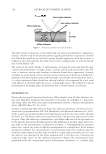
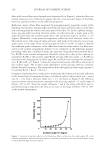
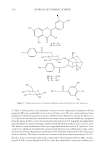
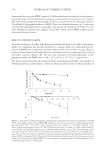
J. Cosmet. Sci., 60, 323–336 (May/June 2009) 323 Novel mechanism for hair shine with special optical enhancement effect on blonde hair SATOKO IWAI, HIRAYUKI SATO, SATOSHI SHIBUICHI, and NAOKI SATOH, Institute of Beauty Creation, Kao Corporation, Tokyo, Japan 131-8501 (S.I., S.S., N.S.), and Analitical Science Research Laboratories, Kao Corporation, Haga, Tochigi, Japan 321-3497 (H.S.). Accepted for publication October 21, 2008. Synopsis Compared with dark or brunette hair, blonde hair has different characteristic features of appearance such as bright shine with a soft tonal color. In this report, novel optical mechanisms of the characteristic blonde hair appearance are reported. Optical analyses of goniophotometric measurements were carried out to elucidate the mechanisms of strong refl ections observed in blonde hairs. As a result, refl ections with much higher intensity than those from the front surface of a fi ber were confi rmed to play important roles in the case of blonde hair fi bers, and the inten- sities were found to vary with the cross-sectional shape of a fi ber, the ellipticity (= minor axis/major axis). From light path simulation analyses, these strong refl ections were verifi ed to result from total refl ection from the back surface of a fi ber. Furthermore, since each hair fi ber acts as a lens and/or a refl ector, intricate refl ection behaviors are suggested to occur as a consequence of the combination of light condensation and total refl ection. INTRODUCTION Hair shine is one of the most important factors constituting hair beauty. Optical studies on mechanisms of hair shine have been carried out by many researchers (1–12). Stamm et al. (5,6) characterized the optical properties of a hair fi ber by refl ections from front and back surfaces and scattered light from surface roughness. They defi ned luster as a combina- tion of these refl ections. Most of the optical phenomena of hair have been understood based on this idea, and they have been measured and analyzed through goniophotometric mea- surements. Shinobu et al. (13) reported that light scattering due to micropores inside a hair fi ber signifi cantly affects hair appearance, and that both internal transparency of a hair fi ber and existence of cuticle inclination is important for the dimensional and dynamic appear- ance of hair shine (13–16). These theories have contributed to the understanding of hair shine as a relationship between fi ber structures, specular refl ections (mirror refl ections), and diffuse scattering. In the case of brown or dark hair, contrasts in intensity and color of the specular refl ections from the front and back surfaces and the diffuse scattering from the interior and the surface of a fi ber play a dominant role in hair shine (Figure 1). Front sur- face refl ection is defi ned as the fi rst event of light refl ection at fi ber surfaces, and back surface refl ection is defi ned as the resultant refl ection of light that passes through the front surface and interior of a fi ber and hits at the surface of the fi ber.

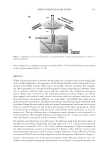
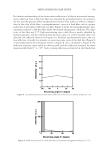
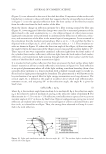
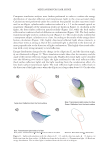
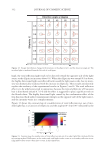
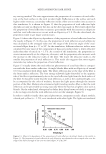
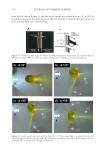
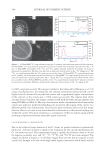
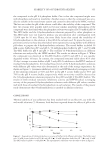
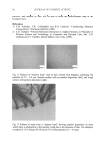
JOURNAL OF COSMETIC SCIENCE 324 The effects of the contrasts are, on the other hand, not obvious in blonde hair’s appearance. Instead, a former study by the present authors regarding blonde hair’s appearances showed that blonde hair panelists are inclined to prefer brighter appearance with less contrast in brightness and color and that the softly toned color is indispensable in order for blonde hair to look blonde (16). The origin of the word “blonde” is old Germanic, meaning the particular kind of color, “yellow/yellowish-brown” or “light colored,” and the word is used only for hair color. The color is, however, not the only attribute to describe blonde hair’s appearance. As many examples are easily found in lines of poems and in expressions of drawings, blonde hair’s appearance has also long been associated with light, rays of light, and strong shine. In fact, it is often experienced that blonde hair shining brightly is accompanied by a soft tonal color when it is observed under the sun or a strong light source. We studied the optical mechanisms of the bright shine of blonde hair that is closely related to its beauty. EXPERIMENTAL Chemically untreated Caucasian blonde hair (Most Bright) from De Meo Brothers Inc. was used. Hair fi ber diameters were measured at 20 points for each fi ber at 1-mm inter- vals along a fi ber axis with a laser optical measurement system, a diameter measurement device (SK2000, Kato Tec. Co., Ltd.). In order to understand light refl ection behaviors, refl ection intensities of a fi ber were mea- sured with a goniophotometer (GP-200, Murakami Color Research Laboratory Co., Ltd.). In this system, the parallel incident white light beams reach the specimen surface through the beam iris. The beams refl ected or transmitted from the specimen plane are fed to the receptor. Thus, the refl ectance, transmittance, and diffuse refl ectance of the specimen can be obtained by measuring the light intensity. The defi nition of incident angle and receiv- ing angle in the measurements is illustrated in Figure 2. Goniophotometric measure- ments were carried out with two different arrangements of a sample fi ber. In the normal arrangement (Figure 2a), measurements were performed under the condition that the irradiation light angle of incident light was fi xed at a right angle to the fi ber axis (0°), and the detector was operated in the plane perpendicular to the fi ber axis, including the irradiation light source. In the coplanar arrangement (Figure 2b), measurements were performed under the conventional optical measurement conditions, i.e., incident light Figure 1. Structure parameters and optical events.
Purchased for the exclusive use of nofirst nolast (unknown)
From: SCC Media Library & Resource Center (library.scconline.org)