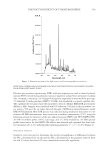
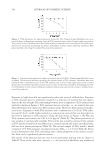
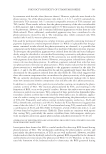
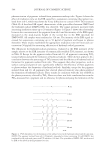
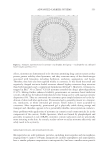
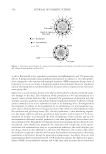
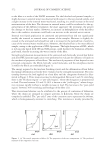
PHOTOCYTOTOXICITY OF TITANIUM DIOXIDE 539 DETECTION OF FREE RADICALS FORMED FOLLOWING PHOTOEXCITATION OF PIGMENTS ISOLATED FROM PERMANENT MAKEUP INKS Electron spin resonance spectroscopy (ESR) with spin trapping was used to detect hydroxyl radicals (HO•) formed during photoexcitation of pigments isolated from permanent makeup inks. A sample, containing 1 to 100 μg/ml of pigment suspended in water with the spin trap, 5,5-dimethyl N-oxide pyrroline (DMPO, 50 mM), was transferred to a quartz capillary tube. The capillary tube was placed into the microwave cavity of a Bruker EMX ESR spectrometer (Billerica, MA). Samples were irradiated with UV radiation (320 nm) in the microwave cav- ity, using a 500-watt Xe arc lamp directed through a McPherson monochromator, model DM200 (Chelmsford, MA). ESR spectra were collected during irradiation times from 1 to 25 minutes All ESR measurements were carried out at ambient temperature (27°C), using the following settings for detection of the spin adduct between DMPO and HO• (DMPO-OH): 20 mW microwave power, 100 G scan range, and 1 G fi eld modulation. An ESR spectral profi le characteristic for the DMPO-OH adduct was observed and contained four lines (rela- tive intensities of 1:2:2:1) with hyperfi ne splitting parameters aN = aH = 14.9 G (Figure 4). STATISTICAL ANALYSIS Student’s t-test was used to determine the statistical signifi cance of differences between the PD50 determined for an ink and the PD50 determined for the pigment isolated from the ink. P-values less than 0.05 were considered statistically signifi cant. Figure 1. Emission spectrum of the light source used for assessing photocytotoxicity.

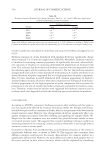
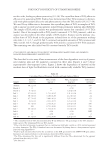
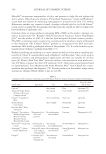
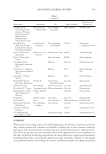
JOURNAL OF COSMETIC SCIENCE 540 RESULTS AND DISCUSSION CHARACTERISTICS OF THE PIGMENTS IN PERMANENT MAKEUP INKS The permanent makeup inks studied were white, except for inks 4 (fl esh-colored), 5 (light beige), and 9 (fl esh-colored). A partial characterization of pigments occurring in the permanent makeup inks is given in Table I. The pigment content of the inks varied between 32.8 and 67.8 w/w%. Analysis by X-ray fl uorescence indicated that the princi- pal component of the pigments in all ten inks was TiO2 (85.9 to 99.8 w/w%). In addi- tion, several inks contained Al and Si, which are reported in Table I as their most commonly occurring oxides, alumina and silica, respectively. These inorganic oxides are frequently used as surface coatings, applied both to reduce the photocatalytic activity of TiO2 and to facilitate incorporation of TiO2 into formulations by reducing particle aggregation (24). Alumina may also be added to promote the formation of TiO2 (rutile) during the production of TiO2 (24). Two of the colored inks, inks 5 (light beige) and 9 (fl esh-colored), contained iron oxide. Iron oxide is frequently used in mixtures of pig- ments to provide shades of brown (25,26). Ink 4 contained 0.3 % chlorine. Two elements, niobium (Nb) and P, were present in trace amounts (0.1%). These elements occur in ore used for production of TiO2, and therefore low levels of these elements are frequently found in commercially available TiO2 (24). Numerous studies have shown that the photocytotoxicity of TiO2 results from its ability to photocatalyze the generation of reactive oxygen species (ROS). Titanium dioxide strongly absorbs radiation in the ultraviolet A spectral region (320–400 nm) (27). Due to its semiconductor properties, photoexcitation of TiO2with UVA radiation results in charge separation, i.e., creation of electron-hole pairs, within particles of TiO2 (28,29). These paired charges can either recombine or ultimately react with water or oxygen near the particle’s surface to form ROS. The ROS formed include hydroxyl radical, superoxide radical anion, hydrogen peroxide, and singlet oxygen (30–32). The ROS generated in this photocatalytic cycle can then damage cellular components, including membranes and Table I Pigment Content and Elemental Composition of Inks Sample Pigment content of ink∗ (w/w %) Composition of pigmenta (w/w %) Ink 1 33.0 ± 0.8 TiO2 (99.7), P (trb) Ink 2 44.9 ± 1.8 TiO2 (99.2), Al2O3 (0.2), SiO2 (0.2), P (tr) Ink 3 38.1 ± 1.4 TiO2 (99.6), P (tr) Ink 4 52.5 ± 1.2 TiO2 (95.8), Al2O3 (2.6), SiO2 (0.8), CI (0.3), P (tr) Ink 5 57.5 ± 2.9 TiO2 (98.4), Al2O3 (0.1), SiO2 (0.3), P (tr), Fe2O3 (0.6), Nb (tr) Ink 6 32.8 ± 0.5 TiO2 (99.7), P (tr) Ink 7 45.8 ± 1.3 TiO2 (99.8), P (tr) Ink 8 46.8 ± 0.1 TiO2 (95.7), Al2O3 (4.2) Ink 9 67.8 ± 1.9 TiO2 (85.9), Al2O3 (3.8), Fe2O3 (10.2) Ink 10 37.8 ± 2.7 TiO2 (95.3), Al2O3 (4.6) ∗ Pigment content was determined by gravimetric analysis. Entries are average ± S.D (n=4). a The elemental composition of pigments was determined by X-ray fl uorescence. b Trace (less than 0.1%).
Purchased for the exclusive use of nofirst nolast (unknown)
From: SCC Media Library & Resource Center (library.scconline.org)