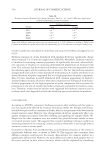
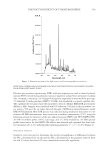
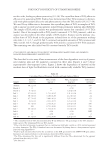
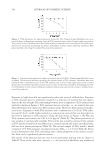
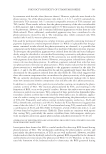
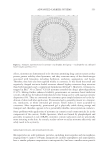
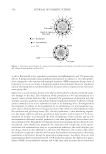
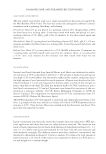
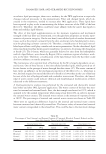
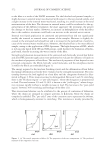
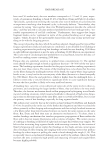
DAMAGED HAIR AND CERAMIDE-RICH LIPOSOMES 573 hydrogen bonds, which are present between turns and stabilize the α-helix. The “yield region” represents the transition from α-keratin to β-keratin, the chains unfolding with- out offering any resistance. The “post-yield region” shows the resistance of β confi gura- tion to stretching up to the disruption point. Breaking stress, deformation at break, and work necessary to break the fi ber were evaluated for all the fi bers studied in the strength measurement. The results are shown in Table IV. The highest value of the energy required to break hair (breaking stress) corresponded to the untreated sample. This value indicated a high hair reticulation proportional to the amount of crosslinks. The chemically treated hair revealed differences in the breaking stress. The more aggressive the treatment, the greater the damage to the reticular integ- rity of the hair: the relaxed treatment proved to be the most aggressive because of the facility of the hair to break, and the bleached treatment was the least aggressive. The deformation at break indicates the resistance of hair to break and is related to its internal lubricity. The high value of this deformation in the case of the bleached and permed samples with respect to the untreated one could be due to its higher water content in the previous thermogravimetric study. The water inside the fi ber can act like a lubricant, rendering the hair less rigid and facilitating the displacement of the fi brils. The high value obtained in the case of the relaxed sample was not signifi cant because of its low breaking stress value. The breaking work was calculated to combine the effect of the breaking stress and the deformation at break. Again the chemically treated fi bers had lower values than the untreated ones, the relaxed samples being the most affected. Figure 2. Schematic diagram for load-elongation curves for human hair fi bers. I. Hookean region. II. Yield region. III. Post-yield region. Table IV Values Obtained in the Strength Measurements Breaking stress (MPa) Deformation at break (%) Breaking work Initial IWL Initial IWL Initial IWL Untreated 1052.6 ± 146 1039.5 ± 241 47.9 ± 1.9 49.6 ± 2.3 50419.1 ± 8640 51559.2 ± 6043 Bleached 976.22 ± 161 965.58 ± 272 49.9 ± 7.5 55.1 ± 5.6 48713.4 ± 10297 53203.5 ± 10548 Permed 884.31 ± 234 869.52 ± 294 48.2 ± 9.8 49.7 ± 6.9 42623.7 ± 17711 43215.1 ± 11992 Relaxed 652.71 ± 170 606.1 ± 163 58.7 ± 4.0 56.4 ± 4.3 38314.1 ± 8015 34184.0 ± 16408

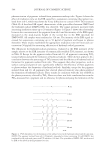
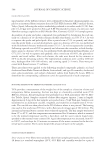
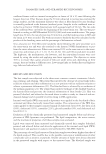
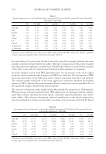
JOURNAL OF COSMETIC SCIENCE 574 After the application of IWL liposomes, the same strength measurements were performed. A notable increase in the breaking stress, deformation at break, and breaking work were observed in the case of the untreated sample. The IWL liposome application increased the deformation at break of the bleached and permed samples, although the breaking work was only slightly increased. Finally, no improvement was found in the relaxed fi ber after IWL application. Indeed, the deformation at break, breaking stress, and breaking work were diminished. The relaxation of the fi ber is attributed to the breakage of various physical and chemical crosslinks and to their reformation with the passage of time. Longer relaxation time means that hair has more bonds to break and form again, with the result that its integrity is improved. Based on time, these bonds are divided into three main groups (29): weak, intermediate, and strong bonds. Weak bonds have a short relaxation time below ten sec- onds, and they include hydrogen bonds, salt linkages, and van der Waals and electrostatic forces. Intermediate bonds have relaxation times between ten seconds and ten minutes, and they correspond to bonds between matrix and fi lament components. Finally, strong bonds have a relaxation time exceeding ten minutes and include the mainly disulfi de bonds. The fi bers were extended up to 30% of the length before the relaxation analysis. The low and intermediate relaxation times (tshort and tinterm), the relaxed stress at these times (σshort and σinterm), and the non-relaxed stress (σnon-relaxed) were measured in the relaxation anal- ysis (Table V). The percentage of σshort, σinterm, and σnon-relaxed indicate the proportion of weak, intermediate, and disulfi de bonds, respectively, in the breaking stress, which is discussed above. In the case of σshort and the tshort, a decrease in the amount of weak bonds was observed in bleached and permed samples, where a reduction in the lipidic composition was also de- tected in this study. Depletion of hair lipids made up of charged groups and groups such as OH and NH can contribute to a decrease in the amount of hydrogen bonds and elec- trostatic forces. The relaxed hair showed a signifi cant decrease in σnon-relaxed, which indi- cated damage in the disulfi de bonds after NaOH treatment. Subsequently, the percentage of weak bonds was even higher than in the untreated sample. In all the hair samples, the application of IWL involved a marked change in the σshort, indicating an increase in the weak bonds. The best results obtained in the weak bonds after applying IWL liposomes were found in the case of the untreated and bleached samples, Table V Values Obtained in the Relaxation Measurement σshort (%) tshort (s) σinterm. (%) tinterm. (s) σnon-relaxed (%) Initial IWL Initial IWL Initial IWL Initial IWL Initial IWL Untreated 15.33 19.86 5.95 6.67 11.59 16.86 80.50 95.32 73.81 63.77 Bleached 11.71 18.49 5.32 6.34 8.69 15.98 59.80 84.33 79.83 66.22 Permed 11.87 15.04 5.56 5.55 7.66 8.90 52.99 76.90 80.82 76.28 Relaxed 17.63 22.13 4.23 3.12 12.61 19.37 62.66 48.24 69.90 58.43 Short relaxed stress (σshort), short relaxation time (tshort), intermediate relaxed stress (σinterm.), intermediate relaxation time (tinterm.), and non-relaxed stress (σnon-relaxed).
Purchased for the exclusive use of nofirst nolast (unknown)
From: SCC Media Library & Resource Center (library.scconline.org)