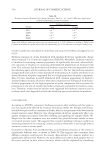
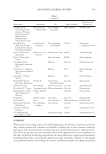
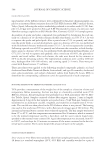
ADVANCED CARRIER SYSTEMS 559 Trade name Ingredient Use Name of brand Type of carrier system used Platinum Silver Nanocolloid® line products (Platinum Silver Nanocolloid Milky Essence, Platinum Silver Nanocolloid Cream) Botanicals and coenzyme Q10 Anti-wrinkles, anti-aging DHC Skincare Nanoparticles RevitaLift® line (RevitaLift Double Lifting Serum, Intense Lift Treament Mask) Pro-Retinol A, vitamin A Skin-tightening, anti-wrinkles L’Oreal Nanosomes, nanoparticles (84) Rutína® Nano-force Moisturizer Hyaluronic acid derivative Skin-moisturizing KOSÉ Nanotechnology Rutína® Nano-white Serum Skin-whitening KOSÉ Nanotechnology The Makeup Dual Balancing Foundation SPF 17 Makeup Shiseido Nanoparticles (85) Skin Forever®—Extreme Wear Flawless Makeup SPF 25 Makeup Dior Nanotechnology (86) Snow Pure® UV Base SPF 50 Makeup Dior Nano UV fi lters Hydra fl ash® Bronzer Daily Face Moisturizer Vitamin E Self-tanning, skin-moisturizing Lancome Nanocapsules Hydrazen® Cream Triceramides Skin-moisturizing Lancome Nanosphere (87) Elixir Skin Up® Cream Titanium dioxide Makeup foundation Shiseido Nanoparticles Bioperformance Crème Super Régénérante Absolue® Gamma linolenic acid Lancome Nanocapsules Platinéum® Hydroxyapatite Anti-aging Lancome Nanoparticles Gold Future® Gold Anti-free radical Helena Rubinstein Colloidal (88) Happylogy® Glowing Skin Essence Pro-endorphins complex Anti-wrinkle Guerlain Nanoemulsion (89) Precisone® Calming Emulsion Chanel Nanoemulsion (90) Coco Mademoiselle Fresh Moisture Mist® Skin-moisturizing Chanel Nanoemulsion (91) Table I Continued SUMMARY With people’s increasing vanity of youthful appearance and fl awless complexion, presum- ably carrier systems will continue to establish a leading role in the cosmetics industry. Liposomes and niosomes posses a similar structure and are both nontoxic and biocompat- ible. They are reported to exert favorable effects when applied with active ingredients on the skin, including facilitating ingredients into deep skin layers, improving ingredients’ biomedical functions, and reducing application time. Liposome stability is one signifi - cant problem however, the leakage of contents, oxidation of lipids, and change in particle

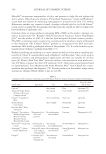
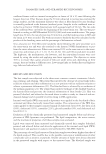
JOURNAL OF COSMETIC SCIENCE 560 size may infl uence product quality (81). Another concern is the cost and variable purity of phospholipids, which may cause trouble in massive production (12). In comparison, niosomes are more stable and the low cost of materials makes them suitable for industry manufacture. Stability is also a concern when SLN and micro-/nanoemulsions are applied to cosmetic and cosmeceutical products. In conclusion, a desired carrier system for cosmetic and cosmeceutical use requires release- control effects on active ingredients so that they remain at a constant level in the skin in order to preserve function for a period of time without repeated application of the prod- uct. The carrier system should also facilitate the ingredient penetration into certain layers of the skin, i.e., into vital epidermis and dermis but not into the blood circulation. The desired carrier system loading with the active ingredient should have a reasonably long shelf life, higher biocompatibility, and lower irritation properties. How to utilize carrier systems for each individual active ingredient and to overcome their limitations are con- cerns of further research. REFERENCES (1) History of cosmetics. http://en.wikipedia.org/wiki/History_of_cosmetics (20/2/2011). (2) Market Trends: The U.S. Cosmeceuticals and Anti-Aging Products Market. Packaged Facts: A Division of Market. http://www.packagedfacts.com/ Internet (11/6/2006). (3) Food Drug and Cosmetic Act, sec.201(i). Chapters I and II of the Federal Food, Drug, and Cosmetic Act. (4) B. S. Oricha, Cosmeceuticals: A review, Afr. J. Pharm. Pharmacol., 4(4), 127–129 (2010). (5) C. M. Choi and D. S. Berson, Cosmeceuticals, Sem. Cut. Med. Surg., 25, 163–168 (2006). (6) M. E. Aulton, Aulton’s Pharmaceutics: The Design and Manufacture of Medicines (Churchill Livingstone, Elsevier, 2007), pp. 565–566. (7) R. J. Scheuplein, Mechanism of percutaneous absorption: Transient diffusion and the relative impor- tance of various routes of skin penetration, Invest. Dermatol., 48(1), 79–88 (1967). (8) C. Sinico and A. M. Fadda, Vesicular carriers for dermal drug delivery, Drug Delivery, 8, 813–825 (2009). (9) G. Cevc, Transfersomes, liposomes and other lipid suspensions on the skin: Permeation enhancement, vesicle penetration, and transdermal drug delivery, Crit. Rev. Therapeut. Drug Carrier Syst., 13, 257–388 (1996). (10) T. Ogiso, N. Niinaka, and M. Iwaki, Mechanism for enhancement effect of lipid disperse system on percutaneous absorption. [Erratum appears in J. Pharm. Sci., May 1996, 85(5), 546]. J. Pharmaceut. Sci., 85, 57–64 (1996). (11) J. De Leeuw, H. De Vijlder, P. Bjerring, and H. Neumann, Liposomes in dermatology today, J. Eur. Acad. Dermatol. Venereol., 23, 505–516 (2009). (12) B. Vora, A. J. Khopade, and N. K. Jain, Proniosome based transdermal delivery of levonorgestrel for effective contraception, J. Control. Release, 54, 149–156 (1998). (13) A. D. Bangham and D. Papahadjopoulos, Biophysical properties of phospholipids. I. Interaction of phosphatidylserine monolayers with metal ions, Biochim. Biophys. Acta, 126, 181–184 (1966). (14) M. Mezei and V. Gulasekharam, Liposomes—A selective drug delivery system for the topical route of administration. I. Lotion dosage form., Life Sciences, 26, 1473–1477 (1980). (15) L. Lesoin, O. Boutin, C. Crampon, and E. Badens, CO2/water/surfactant ternary systems and liposome formation using supercritical CO2: A review, Colloids Surf. A, 371, 1–14 (2011). (16) G. M. Maghraby, A. C. William, and B. W. Barry, Can drug-bearing liposomes penetrate intact skin? J. Pharm. Pharmaca., 58(4), 415–429 (2006). (17) G. Cevc, A. Schatzlein, and H. Richardsen, Ultradeformable lipid vesicles can penetrate skin and other semi-permeable membrane barriers unfragmented. Evidence from double label CLSM experiments and direct size measurement, Biochim. Biophys. Acta, 1564, 21–30 (2002). (18) H. Hofl and, J. Bouwstra, F. Spiesb, et al, Interactions between nonionic surfactant vesicles and human stratum corneum in vitro, J. Liposome Res., 5(2), 241–263 (1995).
Purchased for the exclusive use of nofirst nolast (unknown)
From: SCC Media Library & Resource Center (library.scconline.org)