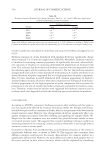
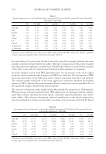
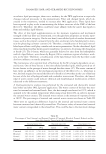
DAMAGED HAIR AND CERAMIDE-RICH LIPOSOMES 571 on relative lipid percentages, there was a tendency for the IWL application to repair the changes induced previously in the pretreatments. Polar and charged lipids, which de- creased in the treatments, tended to increase after IWL application. These lipids have been reported to play a role in maintaining the bilayer structure of the CMC of the hair fi ber (23). Therefore, the fi bers could have more affi nity with the native hair lipids to form and stabilize lipid bilayers. The effect of this lipid supplementation on the moisture regulation and mechanical strength of the hair fi ber was determined, even though these properties are mostly repre- sentative of protein integrity. On the one hand, intercellular lipids of another keratinized tissue, such as the stratum corneum from the skin, are known to be fundamental to main- tain the physiological water content (24). Therefore, a modifi cation of the lipid intercel- lular layers of hair could play a similar role in water permeation. On the other hand, lipid extraction from wool has shown poorer transference on stresses, decreasing the elongation at break (25). The b-layers, which are generally believed to arise from the hydrophobic ends of a lipid bilayer, were shown by Rogers (26) to constitute regions of relative weak- ness in the fi ber. Therefore, a modifi cation of the lipid bilayer from the hair fi ber could also have infl uence on tensile properties. The maintenance of an optimal level of hydration by the SC is largely dependent on sev- eral factors. One of these factors is the intercellular lamellar lipids, which provide an ef- fective barrier to the passage of water through the skin tissue (27). The water content of hair exerts an infl uence on the mechanical properties of the fi ber (22), i.e., when hair is wet, the load required to extend the fi ber or to break it is lower than in the case of dry hair because of the loss of hydrogen bonds and coulombic interactions. Therefore, the knowl- edge of water content could indicate chemical and morphological modifi cations of fi bers subjected to the different treatments. A thermogravimetric analysis was performed for the untreated and chemically treated hair before and after IWL liposome application. The water content of the hair was mea- sured at internal and external levels. First, the hair sample was heated at 65°C, which is assumed to be the normal temperature when using a hair dryer (28), in order to measure the external water content. The internal water content is the amount of evaporated water at 180°C. The percentages of internal and external water content are shown in Table III. There were no signifi cant differences found in the internal and external water content between untreated and chemically treated hair. The lowest values of internal and external water content corresponded to the relaxed hair. This could be due to the maximum damage Table III Percentages of Total, Internal, and External Content of Untreated, Bleached, Permed, Relaxed, and the Same Hair Samples Treated with IWL Liposomes Internal water (%) External water (%) Total water (%) Initial IWL Initial IWL Initial IWL Untreated 3.62 ± 0.12 3.70 ± 0.36 10.64 ± 1.09 10.49 ± 1.80 14.26 ± 0.98 14.19 ± 2.10 Bleached 3.81 ± 0.21 4.00 ± 0.16 10.54 ± 0.90 11.59 ± 0.66 14.35 ± 1.00 15.59 ± 0.82 Permed 3.92 ± 0.16 3.86 ± 0.16 10.51 ± 0.65 10.72 ± 0.45 14.43 ± 0.74 14.58 ± 0.60 Relaxed 3.56 ± 0.21 3.57 ± 0.13 10.42 ± 0.81 10.45 ± 0.43 13.98 ± 1.00 13.91 ± 0.52

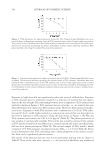
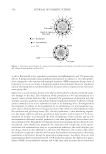
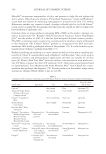
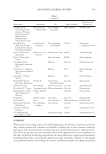
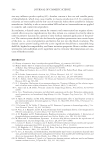
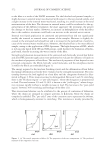
JOURNAL OF COSMETIC SCIENCE 572 to the fi ber as a result of the NaOH treatment. For the bleached and permed samples, a slight decrease in external water was observed with respect to the non-treated sample, and a slight increase in the internal water was found, resulting in a small increase in the total moisturization of the hair. The decrease in external water could be attributed to the ag- gressiveness of the different treatments: the more aggressive the treatment, the greater the damage to the hair surface. However, an increase in hydrophilicity of the hair fi ber due to the oxidative treatment could lead to an increase in the internal water content. Internal wool lipid application on untreated and pretreated hair did not signifi cantly modify the internal or external water content of the samples. Moisture is slightly de- creased in the untreated and relaxed hair and is increased in the permed hair, mainly be- cause of the external water modifi cation. However, the bleached hair is the most affected sample, owing to the application of IWL liposomes. The high absorption of IWL, which is rich in polar lipids with OH and NH groups, could facilitate the formation of hydro- gen bonds, thereby increasing the water content of the fi ber. Strength and relaxation measurements of the untreated and chemically treated hair before and after IWL liposome application were performed to evaluate the infl uence of lipids on the mechanical properties of hair fi bers. The mechanical properties of hair depend on two principal components: the fi brils, helically coiled molecules, and the amorphous matrix in which the fi brils are embedded (Figure 1). The energy required to fracture hair (breaking stress) and the deformation of hair before fracturing (deformation at break) were evaluated in the strength measurement. The rela- tionship between the load applied on a hair fi ber and the elongation obtained is illus- trated in Figure 2. Three main areas may be distinguished. Between 0 and 2% stretching there is the “Hookean region” or “pre-yield region,” where the elongation is proportional to load. The area between 2% and 25-30% is known as the “yield region,” where elonga- tion increases rapidly without a notable increase in load. The last area is the “post-yield region” between 30% stretching and breakage of the fi ber (21). This stress-strain behavior can be attributed to the process of conversion of α-keratin, where the chains are arranged in compact patterns, to β-keratin, where the chains are completely unfolded. The “pre-yield” zone of the extension curve represents the α-form, which is homogeneously resistant to stretching. This resistance is mainly provided by Figure 1. (a) The tensile properties of fi ber. (b) The properties of the two components. (c) The predicted response of the composite structure.
Purchased for the exclusive use of nofirst nolast (unknown)
From: SCC Media Library & Resource Center (library.scconline.org)