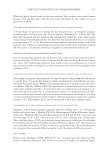
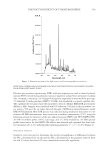
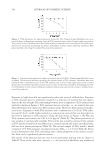
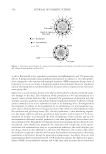
ADVANCED CARRIER SYSTEMS 553 effects, niosomes are demonstrated to be the more promising drug carriers system as they possess greater stability than liposomes, and they overcome many of the disadvantages associated with liposomes including hydration, oxidation, aggregation, and fusion. Therefore, they have also been applied widely in cosmetics. It was found that small and negatively charged tretinoin-loaded niosomes showed higher cutaneous drug retention than both liposomes and a commercial formulation (RetinA®). Moreover, tretinoin en- trapped in Brij® 30 or Triton® CG110 niosomes retarded the drug’s photodegradation (34,35). Having further enhanced stability, proniosomes are nonionic-based surfactant vesicles, which may be hydrated immediately before being used to yield aqueous niosome dispersions (36). They are converted into niosomes upon simple hydration or by the hy- dration of skin itself after application. Proniosomal gel is generally present in a transpar- ent, translucent, or white semisolid gel texture, which makes it more acceptable to consumers. More importantly, proniosomal gel is physically stable during storage and transport and, therefore, appears to be a potentially valuable carrier system in cosmetics. Some problems with application of niosomes in cosmetics and cosmeceuticals lie in the components of the carriers. Unlike liposomes, which are formed by phospholipids and generally recognized as safe (GRAS), niosomes contain surfactants and are potentially more irritating to the skin. As a result, studies on how to utilize niosomes effectively and safely needs to be a priority. MICROPARTICULATES AND NANOPARTICULATES Microparticles are solid polymeric particles, including microcapsules and microspheres, ranging from 0.1 μm to 100 μm nanoparticles include nanospheres and nanocapsules, have a similar polymer composition to microparticles, but have a smaller mean particle Figure 2. Schematic representation of a niosome. o: hydrophilic head group. --: hydrophobic tail. (Adapted from Uchegbu and Vyas (31).)

JOURNAL OF COSMETIC SCIENCE 554 diameter of 0.003 μm to 1 μm. For micro/nanospheres, the agents are either dissolved in the sphere matrix or absorbed onto the surface of the particles, while for micro/nanocap- sules the actives are either attached to the surface or trapped within the capsules. Incorporating agents into micro/nanoparticles has demonstrated to be advantageous in improved sustained drug release (37) and increased drug uptake (38), which has won these particles broad attention in the cosmetic industry. Specifi cally, nanoparticles have been used to encapsulate a wide range of ingredients that are intended to provide cos- metic benefi ts (39). Many studies focusing on the topical use of microparticles and nanoparticles have been carried out, and actives encapsulated into particles include vitamin A and some precious metal elements: vitamin A has skin-softening and anti-wrinkle functions. One compari- son experiment of in vitro and in vivo drug release of a microencapsulated vitamin A cream with a non-microencapsulated formulation showed that microspheres were able to remain on the skin for a longer period of time, and as a consequence were able to prolong the release of vitamin A (40). Free radicals including reactive oxygen species (ROS) are con- sidered to be one of the main hazards to the skin. A decrease in ROS production was observed in platinum-nonparticle-treated HaCaT kertinocytes. Pretreatment of the cells with nano-platinum also caused a signifi cant inhibition of UVB- and UVC-induced apoptosis. These results suggested that nano-platinum effectively protected against UV- induced infl ammation by decreasing ROS production and inhibiting apoptosis in kerati- nocytes (41). Gold nanoparticles enhanced the proliferation of keratinocytes (42), while silver nanoparticles demonstrated preservative effects against mixed bacteria and mixed fungi, and did not penetrate normal human skin, suggesting that silver nanoparticles may have a potential for use as a preservative in cosmetics (43). The use of nanomaterials gives rise to controversy: While cosmetologists claim that nano- particles are able to penetrate the skin, which is attributed to their size, some academics question the potential dangers of the contact of nanoparticles with human skin. Recently, Friends of the Earth, an international environmental organization, warned against the use of nanoparticles in cosmetic and sunscreen products due to a possible uptake of particles by the human skin into the circulation: “If nanoparticles penetrate the skin, they can join the bloodstream and circulate around the body with uptake by cells, tissues and organs.” (44). The safety of nanoparticles in cosmetic products needs to be addressed. SOLID LIPID NANOPARTICLES (SLN) AND NANOSTRUCTURED LIPID CARRIERS (NLC) Solid lipid nanoparticles (SLN) were developed at the beginning of the 1990s as an alter- native carrier system to emulsions, liposomes, and polymeric nanoparticles (45). With SLN, a solid lipid or a blend of solid lipids is used to substitute the oil phase of an oil-in- water space (o/w) emulsion. Nanostructured lipid carriers (NLC) were developed to over- come the low loading capacity of SLN. Both SLN and NLC can be loaded with actives as carriers in cosmetic and cosmeceutical products. It is reported that SLN and NLC are advantageous in dermal application in the following ways: (a) SLN and NLC are composed of biocompatible and biodegradable lipids exhibit- ing low toxicity (46) (b) SLN and NLC are reported to be able to enhance dermal pene- tration (47) (c) SLN and NLC provide controlled release profi les for many substances
Purchased for the exclusive use of nofirst nolast (unknown)
From: SCC Media Library & Resource Center (library.scconline.org)