DAMAGED HAIR AND CERAMIDE-RICH LIPOSOMES 569 cardboard frames with an internal rectangular cut frame of 50 × 25 mm following the longest direction. Fiber fi neness along the 50 mm subjected to testing was examined by image analysis, and the minimum diameter was taken as fi ber fi neness because breakage is normally produced at the thinnest (weakest) point. Samples in the cardboard were at- tached to an Instron 5500R dynamometer with a gauge length of 50 mm. The two sides of the cardboard were cut before the beginning of the stress-strain test. The test was per- formed according to ASTM Standard D 3822 (1980) with some modifi cations. The gauge length was 50 mm, the rate of strain was 30 mm/min, and the breaking stress in MPa and the strain in % were recorded. The work necessary to break the hair was calculated as the product of the breaking stress and the percentage of deformation at break. Stress-relaxation test. Five fi bers were randomly taken following the same procedure as in the stress-strain test and were also attached to the Instron 5500R dynamometer to per- form the stress-relaxation test. Fibers were strained 30% at the same rate as in the stress- strain test, and stresses at 0, 2, 5, 10, 15, 30, 45, 60, 120, and 180 seconds were recorded. The high-rate, the medium-rate, the low-rate, and the non-relaxed stresses were esti- mated by using the results and applying non-linear regression. The objective to strain 30% is to ensure that a great amount of links are under stress and, depending on their energy, they are broken at different rates. Low-energy links are broken fi rst and high-en- ergy links are broken later (20). RESULTS AND DISCUSSION The hair sample was subjected to the three most common cosmetic treatments: bleach- ing, perming, and relaxing. The permed hair involves the cleavage of cystine links with a reduction solution and their reformation in a new position with an oxidation solution to achieve a permanent deformation (21). The bleached hair is achieved by an oxidation of the melanin pigments (21). The relaxed hair involves breakage of the disulfi de bonds in the keratin fi bers and prevents the chemical reformation of these bonds (22). Hair was permed, bleached, and relaxed as discussed above in order to study its chemical and me- chanical damage and its possible recovery owing to IWL application. Internal wool lipids (IWL) structured as liposomes were applied to the four kinds of hair: untreated and three chemically treated hair samples. The composition of the IWL lipo- somes applied to these samples consisted mainly of cholesterol esters (4%), free fatty acids (18%), cholesterol (13%), ceramides (22%), glycosilceramides (9%), and cholesterol sul- fate (8%) (11). Evaluation of all the chemically pretreated and nontreated samples before and after ap- plication of IWL liposomes was performed. The lipid composition, the water content, and the mechanical properties of all these samples were evaluated. Lipids were extracted from untreated and chemically treated hair samples (bleached, permed, and relaxed) before and after the application of the internal wool lipid (IWL). Quantitative and qualitative analyses were performed by TLC-FID (Table I). The percentage of total lipids extracted from hair samples was always higher than that of the lipids analyzed. This could be due to the possible extraction or solubilization of other compounds such as proteins or peptides. Smaller amounts of lipids were always obtained in the pretreated samples with respect to the untreated ones. The bleached sample was

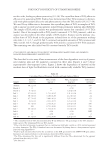
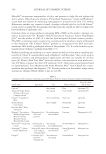
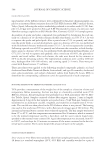
JOURNAL OF COSMETIC SCIENCE 570 the most affected. In particular, all the chemically treated hair samples showed a decrease mainly in cholesterol and cholesterol sulfate. The lipid composition of the permed sample bore the greatest resemblance to native hair. The bleached extract recorded lower amounts of free fatty acids, and the relaxed extract showed smaller amounts of ceramides. In all the samples treated with IWL liposomes there was an increase in the total of lipid analyzed, which confi rmed the absorption of IWL into the fi ber. The absorption of IWL liposomes descended in the following order: relaxed, untreated, bleached, and permed. The relaxed sample (subjected to the most aggressive treatment) absorbed the highest amount of IWL, whereas the permed sample (whose composition most resembled that of the untreated sample) absorbed the lowest amount. The selective absorption of the lipids by hair fi bers should be pointed out. Although the FFA percentage remained unaltered after IWL application, the damaged and the undam- aged fi bers mainly absorbed the polar lipids: ceramides, glysosilceramides, and choles- terol sulfate. This selective absorption induced equilibrium in the lipid composition, which resembled that of the untreated fi ber, resulting in lipid restoration (Table II). Based Table I Lipid Composition in % of Total Hair Fibers (untreated (UT), bleached (B), permed (P), and relaxed (R)) Obtained by TLC-FID UT UT+IWL B B+IWL P P+IWL R R+IWL Chol-Est 0.39 0.35 0.34 0.35 0.31 0.37 0.31 0.56 FFA 1.02 1.18 0.71 0.79 1.03 1.05 1.06 1.08 R-OH 0.14 0.14 0.09 0.09 0.08 0.06 0.07 0.13 Chol 0.11 0.13 0.06 0.10 0.05 0.07 0.08 0.17 Ceram. 0.20 0.34 0.18 0.16 0.15 0.19 0.10 0.18 GC 0.10 0.16 0.05 0.09 0.05 0.06 0.06 0.13 Chol-S 0.21 0.31 0.07 0.16 0.05 0.10 0.09 0.17 % Analyzed 2.17 2.61 1.50 1.74 1.72 1.90 1.77 2.42 % Extracted 2.81 3.33 2.34 2.79 2.52 1.82 3.09 2.76 Cholesterol ester (Chol-Est), free fatty acids (FFA), fatty alcohol (R-OH), cholesterol (Chol), ceramides (Ceram.), glycosyl ceramides (GC), and cholesterol sulfate (Chol-S). Table II Percentages of Lipid Extracted (%) from Hair Samples (untreated (UT), bleached (B), permed (P), and relaxed (R)) Obtained by TLC-FID UT UT+IWL B B+IWL P P+IWL R R+IWL Chol-Est 17.97 13.41 22.67 20.11 18.02 19.47 17.51 23.19 FFA 47.00 45.21 47.33 45.40 59.88 55.26 59.89 44.72 R-OH 6.45 5.36 6.00 5.17 4.65 3.16 3.95 5.38 Chol 5.07 4.98 4.00 5.75 2.91 3.68 4.52 7.04 Ceram. 9.22 13.03 12.00 9.20 8.72 10.00 5.65 7.45 GC 4.61 6.13 3.33 5.17 2.91 3.16 3.39 5.38 Chol-S 9.68 11.88 4.67 9.20 2.91 5.26 5.08 6.83 Cholesterol ester (Chol-Est), free fatty acids (FFA), fatty alcohol (R-OH), cholesterol (Chol), ceramides (Ceram.), glycosyl ceramides (GC), and cholesterol sulfate (Chol-S).
Purchased for the exclusive use of nofirst nolast (unknown)
From: SCC Media Library & Resource Center (library.scconline.org)