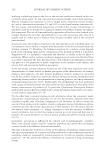
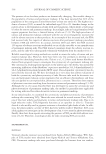
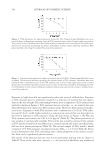
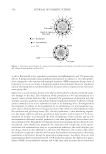
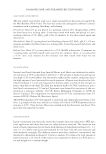
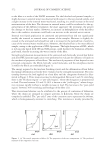
ADVANCED CARRIER SYSTEMS 551 4. Liposomes enhance drug penetration through intact liposome skin penetration, vesicle ad- sorption and fusion onto the skin surface, and interaction of the lipid of liposomes and the stratum corneum. The mechanism by which intact liposomes with loaded drugs can penetrate into skin was fi rst proposed by Mezei and Gulasekharam (14). Though this mech- anism was disputed (16), reports indicated that intact liposomes, especially ultradeformable liposomes, may penetrate deeply into the skin (17). The second mechanism was proposed by Hofl and et al. (18) and Abraham and Downing (19). They suggested that vesicles ag- gregate, fuse, and adhere to the skin surface and that this may lead to a high thermody- namic activity gradient of the drug, which serves as a driving force for drug penetration. The third mechanism stated that the similarity between the lipid composition of liposomes and the structure of epidermis enables liposomes to penetrate the epidermal barrier. It was suggested by Kirjavainen et al. (20) that the lipids of liposomes fuse and mix with the lipid of the intercellular matrix of the stratum corneum, altering its structure and promoting drug penetration through this impaired barrier. 5. Liposomes are considered to act not only as “drug transporters” but also as a “drug local- izer.” Liposomes have received considerable attention for delivering actives to the Figure 1. (a) Schematic representation of a liposome (i) and a phospholipid (ii). (b) Schematic representation of the structure of liposomes (SUV: small unilamellar vesicles LUV: large unilamellar vesicles MLV: multi- lamellar vesicles). (Adapted from Lesoin et al. (15).)

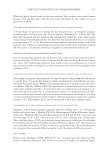
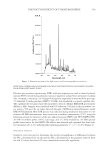
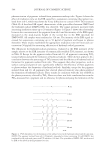
JOURNAL OF COSMETIC SCIENCE 552 target tissue, and with topical use liposomes may increase active absorption into the epidermis and dermis, decreasing systemic clearance from cutaneous tissue (21). After Mezei and Gulasekharam (14) suggested that liposomes can be used on the skin, several studies followed, reporting that liposomes enhanced the skin deposition of certain drugs, e.g. corticosteroids (22), tetracaine (23), and ciclosporin (24). Except for the ap- plication of liposomes in treating skin diseases, there has been considerable interest in the use of liposomes as active ingredients in cosmetics and cosmeceutics (25). Researchers have studied the effects of liposomal systems on several compounds: tretinoin, for in- stance, is an anti-acne agent often used in pharmaceutical products. It was found that after the skin had been treated with negatively charged liposomal tretinoin, there was a higher accumulative amount of tretinoin in the epidermis. This may suggest that lipo- somes are effi cient delivery carrier systems for tretinoin in acne treatment (26). Another hot topic in the cosmetic and cosmeceutical fi eld is how to protect the skin from UV ra- diation. To maintain sodium ascorbyl phosphate (SAP), a photoprotective agent, in the skin, SAP-loaded liposomes were prepared for cutaneous use. This enabled greater SAP penetration through the epidermal membrane than did SAP in water solution (27). Sim- ilarly, anionic surfactants such as deoxycholic acid (DA) and dicetyl phosphate (DP) were incorporated in the liposomes in the presence of 15% ethanol. It was detected that this formulation increased the skin permeation and deposition level of (+)-catechin—a bo- tanical ingredient in skin antioxidation and photoprotection—compared to catechin so- lution (28). Another example is Aloe vera leaf gel extract (AGE), which is widely used as a cosmetic and pharmaceutical ingredient because of its versatile skin care properties. It was found that liposomal AGE signifi cantly improved proliferation and type I collagen synthesis in human fi broblast cell lines as well as the proliferation of human keratinocyte cell lines (23). The ease of preparation of liposomes and the improvement in cosmetic and cosmeceutical effects by the carrier system make liposome use widespread, and there are now numerous products on the market claiming that they contain liposomal technology. However, sev- eral disadvantages were encountered by using liposomal products, such as hydrolysis, aggregation, fusion and oxidation of liposomes, as well as the leaching of actives, leading to a shorter shelf life of liposomal products. The cost of phospholipids may increase the price of liposomal cosmetics, which might deter a great number of consumers. Therefore, enhancing the effectiveness and effi cacy of an ingredient-loaded liposome formulation, improving its stability, and lowering its production cost are still challenging topics for all formulation scientists globally. NIOSOMES Evolved from liposomes, niosomes (Figure 2) also have a closed bilayer structure, but they are formed from a self-assembly of nonionic surfactant(s) in an aqueous surrounding. In 1979, Handjani-Vila et al. (29) was the fi rst to report the formation of a vesicular system on the hydration of a mixture of cholesterol and a single-alkyl chain nonionic surfactant. Since they exhibit similar behavior but possess distinct advantages over liposomes, this research led to further studies on niosomes as an alternative to liposomes (30). Niosomes as carrier systems can also enhance the permeability of drug actives (32) and control the release of ingredients (33). Despite the similar bilayer structure and topical
Purchased for the exclusive use of nofirst nolast (unknown)
From: SCC Media Library & Resource Center (library.scconline.org)