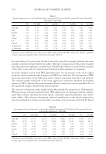
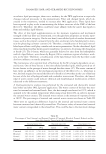
FRESHNESS EVALUATION OF REFRESHING CREAMS 531 that consumers had not had training previous to the evaluations and therefore did not have a clear representation of what a “very fresh” cream was. These differences in consum- ers’ scores could be attributed to cultural differences in freshness perception and could be also related to the fact that consumers had no training prior to their evaluations. However, both consumer samples perceived creams formulated with emulsion B as sig- nifi cantly fresher, not detecting differences due to the type of peppermint oil (Table V), which suggests the validity of using consumers to gather information about the sensory characteristics of cosmetic products. Table IV Results of the ANOVA Performed on Data from Consumers Variable Source of variation ANOVA results F p-value Freshness after smelling Type of peppermint oil 0.30 0.5817 Emulsion formulation 17.87 0.001 Type of peppermint oil × emulsion formulation 2.44 0.1190 City 9.15 0.001 Liking after smelling Type of peppermint oil 0.24 0.6252 Emulsion formulation 10.94 0.001 Type of peppermint oil × emulsion formulation 0.11 0.7426 City 15.83 0.001 Freshness after application Type of peppermint oil 0.36 0.7406 Emulsion formulation 66.61 0.001 Type of peppermint oil × emulsion formulation 0.11 0.9973 City 16.68 0.001 Liking after application Type of peppermint oil 0.26 0.6137 Emulsion formulation 50.02 0.001 Type of peppermint oil × emulsion formulation 0.03 0.8607 City 15.43 0.001 Table V Average Consumers’ Freshness Sensation and Liking after Smelling and Applying the Four Evaluated Refershing Creams in Montevideo and Buenos Aires City Sample After smelling After application Freshness Liking Freshness Liking Buenos Aires (n=50) APO 6.3b 6.5b 6.4b 6.5b ADPO 6.2b 5.8a 6.2b 5.9a BPO 6.8c 6.6b 6.0c 6.7b BDPO 7.4c 7.2b 7.4c 7.2b Montevideo (n=50) APO 5.0a 5.1a 5.0a 5.0a ADPO 4.7a 4.7a 4.7a 4.7a BPO 7.3c 6.5b 7.2c 6.5b BDPO 7.2c 6.5b 7.2c 5.5b Rows with different superscripts within the same column are signifi cantly (p ≤ 0.05) different according to Tukey's test.

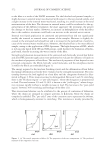
JOURNAL OF COSMETIC SCIENCE 532 As shown in Table IV, consumers’ liking scores were also signifi cantly affected by emul- sion formulation. Consumers showed a higher liking for samples formulated with emul- sion B (Table V), which indicates that consumers’ liking of refreshing creams increased as the freshness sensation increased. Consumers in Buenos Aires and Montevideo showed highly signifi cant differences in the degree of preference for the evaluated refreshing creams, which could be related to the fact that they perceived their freshness differently. This stresses the importance of per- forming cross-cultural studies when developing cosmetics for different markets. CONCLUSIONS Results from the present work showed that emulsion formulation has a great effect on freshness perception. This suggests that when evaluating refreshing agents or developing refreshing products, different formulations should be considered in order to obtain accurate results and assure the products’ success in the market. Although dementholated peppermint oil had a lower concentration of menthol than common peppermint oil, it contained several other components that cause the freshness sensation in the fi rst minutes after application. This oil could be used to formulate cheaper refreshing creams with re- spect to common peppermint oil because of the lower price of the former product. Consumers’ freshness evaluation was similar to that of trained assessors, indicating the validity of gathering information about the sensory characteristics of cosmetic products from consumers. Consumers from different cities evaluated their preference of refreshing creams in signifi cantly different ways, showing the importance of performing cross-cultural studies when developing cosmetic products aimed at different markets. ACKNOWLEDGMENTS The authors are indebted to Aromática S.A. (Buenos Aires, Argentina) for providing the samples of peppermint oil evaluated in the present study. REFERENCES (1) S. C. Sweetman, Martindale: The Complete Drug Reference (Kathleen Parfi t, USA), pp. 1600–1602. (2) P. P. Gerbino, Remington: The Science and Practice of Pharmacy., Vol. II (Mack Publishing Company, USA, 1995), pp. 875. (3) E. Carretero, Terpenos: Aceites esenciales, Panorama Actual Med., 24, 297–303 (2000). (4) P. Ody, Las Plantas Medicinales. The Herb Society (Javier Vergara S.A., Spain, 1993), pp. 79. (5) Cosmetic Bench Reference (Allured Publishing Corporation, Carol Stream, IL, 1998). (6) I. S. Ale, J. J. Hostynek, and H. I. Maibach, Menthol: A review of its sensitization potential, Exog. Dermatol., 1, 74–78 (2002). (7) M. B. Erman, Cooling agents and skin care applications, Cosmet. Toiletr., 120, 109–110 (2005). (8) M. Rieger, “Factors Affecting Sorption of Topical Applied Substances,” in Skin Permeation: Fundamentals and Application, J. Zatz, Ed. (Allured Publishing Corporation, Carol Stream, IL, 1993). (9) H. Stone and J. L. Siedel. Sensory Evaluation Practices (Academic Press, UK, 1985). (10) M. Meilgaard, G. V. Civille, and B. T. Carr. Sensory Evaluation Techniques (CRC Press, Boca Raton, FL, 1999).
Purchased for the exclusive use of nofirst nolast (unknown)
From: SCC Media Library & Resource Center (library.scconline.org)