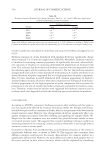
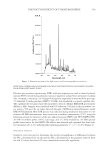
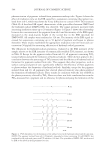
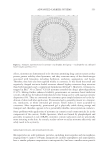
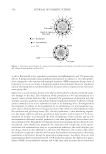
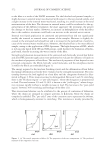
PHOTOCYTOTOXICITY OF TITANIUM DIOXIDE 545 hydroxyl radical. These results indicate that ESR is a useful method for qualitative screen- ing of inks and pigments containing TiO2 for photocytotoxicity, but that it has limited value for predicting the relative photocytotoxic potentials of these pigments. CONCLUSIONS Although there has been a dramatic increase in the popularity of permanent makeup, there has been little progress in the development of toxicological methods to determine the safety of the inks used. Undoubtedly, no single in vitro test will be fully adequate to demonstrate the safety of a permanent makeup ink. A battery of tests may be needed to assess the toxic, phototoxic, immunogenic, and carcinogenic potential of these inks. The assay described here allows an in vitro assessment of both toxicity and phototoxicity. We have found that this assay is applicable for testing inks used for decorative tattoos as well as permanent makeup (44). Because of the small number of permanent makeup inks studied in this work, we cannot view our results as a general survey of permanent makeup inks. However, our results sug- gest that inks containing TiO2 are frequently formulated with the photocatalytically active and photocytotoxic crystalline form of TiO2. The clinical consequences of this photocytotoxicity are unclear. Sunlight-induced adverse reactions in skin bearing decora- tive tattoos and permanent makeup have been reported. In most cases, the pigment(s) responsible for these adverse reactions is not known. However, because TiO2 strongly absorbs in the UV region of the terrestrial solar spectrum, is widely used in inks, and can elicit in vitro phototoxicity, concern over TiO2-induced phototoxicity is warranted. An- other concern is the effect of photocatalytically active TiO2 on the removal of tattoos and permanent makeup. Investigators have reported diffi culties in removing tattoos and per- manent makeup using laser ablation. It has been noted that the use of inks containing TiO2 is associated with some of these adverse outcomes (21,22,45). The use of inks con- taining photocatalytically active TiO2 may introduce deleterious photochemical reactions in the skin during laser ablation. An additional issue for individuals obtaining tattoos or permanent makeup is sun-induced fading. Individuals acquiring a new tattoo are com- monly instructed to protect tattooed skin from the sun. This precaution is consistent with studies that demonstrate that organic pigments commonly used in tattoo and permanent Figure 5. Concentration dependence for the formation of the adduct between the hydroxyl radical and the spin trap, DMPO. The pigment isolated from ink 6 was suspended in water containing 50 mM DMPO and irradiated for 20 minutes with UV radiation (320 nm). For each concentration of pigment, the ESR intensity, in arbitrary units, was obtained by measuring the peak-to-peak height of the second line of the ESR spectrum for the spin adduct, DMPO-OH. The conditions for detection of the ESR signal are described in the Experimental section.

JOURNAL OF COSMETIC SCIENCE 546 makeup inks decompose when exposed to light (46,47). The use of photocatalytically active TiO2 may further accelerate sun-induced fading. The in vitro toxicological method described here should be useful both to manufacturers formulating inks and organiza- tions charged with overseeing the safety of these inks. REFERENCES (1) C. S. Zwerling, A. C. Walker, and N. F. Goldstein, Micropigmentation, State of the Art (C. S. Zwerling, Chapel Hill, NC, 1993). (2) Food and Drug Administration, Tattoos, FDA Med. Bull., 24, 8 (1994). (3) Food and Drug Administration, Tattoos and permanent makeup (2008). http://www.fda.gov/Cosmetics/ ProductandIngredientSafety/ProductInformation/ucm108530.htm. (4) D. Papameletiou, A. Zenie, D. Schwele, and W. Bäumler, Working paper on health effects and risks from tattoos, body piercing and related practices, European Commission, Ispra, Italy (2003). http:// phdres.caregate.net/curriculum/Reading%20fi les/EU_health0603.pdf. (5) D. Papameletiou, A. Zenie, and D. Schwele, Regulatory review on the safety of tattoos, body piercing and related practices, European Commission, Ispra, Italy (2003). http://ec.europa.eu/consumers/cons_safe/ news/eis_tattoo_reg_052003_en.pdf. (6) A. E. Laumann and A. J. Derick, Tattoos and body piercings in the United States: A national data set. J. Am. Acad. Dermatol., 55, 413–421 (2006). (7) W. Bäumler, E. T. Eibler, U. Hohenleutner, J. Sauer, and M. Landthaler, Q-Switch laser and tattoo pig- ments: First results of the chemical and photophysical analysis of 41 compounds, Lasers Surg. Med., 26, 13–21 (2000). (8) G. Lehmann and P. Pierchalla, Tätowierungsfarbstoffe, Derm. Beruf Umwelt, 36, 152–156 (1988). (9) S. M. Wenzel, J. Wenzel, C. Hafner, M. Landthaler, and W. Bäumler, Permanent make-up colorants may cause severe skin reactions, Contact Dermatitis, 63, 223–227 (2010). (10) M. Straetemans, L. M. Katz, and M. Belson, Adverse reactions after permanent-makeup procedures, N. Engl. J. Med., 356, 2753 (2007). (11) K. C. Klontz, L. A. Lambert, R. E. Jewell, and L. M. Katz, Adverse effects of cosmetic tattooing: An illustrative case of granulomatous dermatitis following the application of permanent makeup, Arch. Dermatol., 141, 918–919 (2005). (12) M. Falconi, G. Teti, M. Zago, A. Galanzi, L. Breschi, M. Pelotti, A. Ruggeri, and G. Mazzotti, Infl uence of commercial tattoo ink on protein production in human fi broblasts, Arch. Dermatol. Res., 301, 539– 547 (2009). (13) N. Bendsoe, C. Hansson, and O. Sterner, Infl ammatory reactions from organic pigments in red tattoos, Acta Derm. Venereol., 71, 70–73 (1991). (14) A. Bjornberg, Reactions to light in yellow tattoos from cadmium sulfi de, Arch. Dermatol., 88, 83–87 (1963). (15) D. De Argila, A. Chaves, and J. C. Moreno, Erbium: YAG laser therapy of lichenoid red tattoo reaction, J. Eur. Acad. Dermatol. Venereol., 18, 332–333 (2004). (16) M. Goldstein, Mercury-cadmium sensitivity in tattoos, Ann. Intern. Med., 67, 484–489 (1967). (17) C. Jäger, W. Harschuh, and U. Jappe, Sonnenlichtgetriggerte granulomotöse reaktion auf permanent lip-liner, Hautarzt, 56, 63–65 (2005). (18) A. Tourlaki, V. Boneshi, D. Tosi, P. Pigatto, and L. Brambilla, Granulomatous tattoo reaction induced by intense pulse light treatment, Photodermatol., Photoimmunol. Photomed., 26, 275–276 (2010). (19) I. Waldmann and F. Vakilzadeh, Allergische spätypreaktion auf rotten azofarbstoff in tätowierungen, Hautarzt, 9, 666–670 (1997). (20) H. Yazdian-Tehrani, M. M. Shibu, and N. C. Carver, Reaction in a red tattoo in the absence of mercury, Br. J. Plast. Surg., 54, 555–556 (2001). (21) J. W. Kim, J. W. Lee, Y. H. Won, J. H. Kim, and S. C. Lee, Titanium, a major constituent of blue ink, causes resistance to Nd-YAG (1064 nm) laser: Results of animal experiments, Acta. Derm. Venereol., 86, 110–113 (2006). (22) E. V. Ross, S. Yashar, N. Michaud, R. Fitzpatrick, R. Geronemus, W. D. Tope, and R. R. Anderson, Tattoo darkening and nonresponse after laser treatment: A possible role for titanium dioxide, Arch. Dermatol., 137, 33–37 (2001).
Purchased for the exclusive use of nofirst nolast (unknown)
From: SCC Media Library & Resource Center (library.scconline.org)