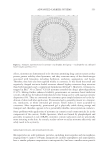
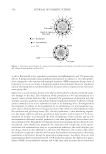
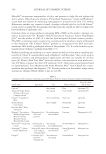
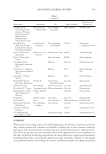
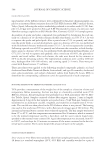
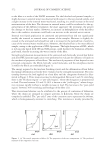
ADVANCED CARRIER SYSTEMS 555 (48) and (d) lipid nanoparticles are able enhance the chemical stability of compounds sensitive to light, oxidation, and hydrolysis (49). Researchers successfully incorporated active ingredients, e.g., vitamin A (55), Coenzyme Q10 (57), ascorbyl palmitate (58), etc., into SLN and NLC. The outcome of the study in vitamin A-loaded glyceryl behenate SLN has shown a sustained release of vitamin A from SLN compared to a vitamin A nanoemulsion (50,51). Experiments compar- ing SLN and conventional o/w emulsions as carrier systems for the molecular sunscreen oxybenzone found that release rates could be decreased by up to 50% with the SLN for- mulation. SLN was also able to improve UV protection when applied together with or- ganic sunscreens such as 2-hydroxy-4-methoxy benzophenone (52). Coenzyme Q10 is a potent antioxidation enzyme and is a popular component in many cosmetic and cosme- ceutical products. It was reported that in contrast to the Coenzyme Q10-loaded nano- emulsion, Coenzyme Q10-loaded NLC possessed a favorable biphasic release pattern. The NLC release patterns were defi ned by an initial fast release followed by a prolonged re- lease, while the nanoemulsion showed a nearly constant release (53). Ascorbyl palmitate (AP), a cosmetically effective ingredient in skin-whitening, is unstable under normal conditions, but was proven to be more stable in both the NLC and SLN stored at 4°C (54). The mechanism is explained as the occlusion effect of the fi lm formed by lipid nano- particles on the skin. Film formation on the skin may increase stratum corneum hydra- tion, resulting in reduced corneocyte packing and an open intercellular gap for drug penetration. Although SLN and NLC are promising carrier systems in cosmetics and cosmeceutics, they suffer drawbacks. Low loading capacity and instability during storage are two prob- lems concerning SLNs. To overcome these issues, NLCs were developed with their high- loading capacity and long-term stability, making them favorable in many cosmetic applications. However, NLCs are not suitable for purposes that may require a high level of crystallinity, such as in UV protection (55). These problems need to be addressed in the future. MICROEMULSIONS AND NANOEMULSIONS The concept of microemulsions (Figure 3) was introduced for the fi rst time in the 1940s by Hoar and Schulman (56), who produced a transparent single-phase solution by titrating a milky emulsion with hexanol. The term “microemulsion” was coined in 1959 (57). Mi- croemulsions consist of an aqueous phase, an oil phase, a surfactant, and a cosurfactant. They are colloidal, thermodynamically stable dispersion systems with a droplet diameter usually in the range of 10–100 nm (58). Compared to microemulsions, nanoemulsions have a droplet diameter smaller than 100 nm, are in a metastable state, and are easily val- ued in skin care because of their sensorial and biophysical properties (59). Stability studies of nanoemulsions indicate that they are stable for 15 years, which is an advantageous prop- erty for carriers in cosmetic and cosmeceutical products (60). In addition, they exhibit several advantages in topical drug delivery, i.e., control of drug release (61), protection of labile agents, increase of bioavailability, and enhancement of actives penetration (62). They are considered as potentially good carriers for cosmetic and cosmeceutical use. Drugs incorporated into microemulsions and nanoemulsions range from antioxidants, such as hesperetin and quercetin, to moisturizing compounds, like ceramides. Hesperetin

JOURNAL OF COSMETIC SCIENCE 556 is also a fl avonoidal active ingredient possessing anti-infl ammatory and UV-protecting effects. A hesperetin-loaded microemulsion was reported to enhance in vitro skin perme- ation compared to the aqueous and isopropyl myristate (IPM) suspension dosage form of hesperetin. In an in vivo study, a hesperetin-loaded microemulsion showed a signifi cant topical whitening effect and diminished skin irritation when compared to the non-treat- ment group (64). Quercetin is an antioxidant, known to be able to diminish UV radiation-mediated oxida- tive damage to the skin. The evaluation of the potential of a w/o microemulsion as a topical carrier system indicated that it increased the penetration of quercetin into the stratum corneum, epidermis, and dermis without transdermal delivery. Caffeine is widely used in cosmetics as an active substance because of its slimming effect. Investigation of the transport of caffeine to the hypodermis by an alcohol-free o/w microemulsion sug- gests that it allowed delivery of a larger fraction of the caffeine to the hypodermis than the emulsion and gel dosage forms (65). Ascorbyl palmitate, a skin-whitening ingredi- ent, has better stability and skin penetration than ascorbic acid (vitamin C). A micro- emulsion of ascorbic acid decreased the level of formation of free radicals, and an o/w microemulsion delivered ascorbyl palmitate to the skin signifi cantly better than a w/o microemulsion (66). Though the mechanism of penetration enhancement still needs to be eluciadated, some theories are proposed: the surfactant and cosurfactant in the micro- emulsions and nanoemulsions may act as penetration enhancers the small droplets give the drug a chance of close adherence to the skin cells. Moreover, the occlusive effect after the emulsion is applied to the skin will increase the hydration of corneocytes so that drug penetration is facilitated. Except for penetration enhancement, the effects of micro- and nanoemulsions have been demonstrated: UVB irradiation induces the depletion of gluta- thione (GSH), an antioxidative enzyme and at the same time increases the secretion and Figure 3. Schematic representation of a water-in-oil microemulsion (A) and an oil-in-water microemulsion (B). (Adapted from Moulik and Paul (63).)
Purchased for the exclusive use of nofirst nolast (unknown)
From: SCC Media Library & Resource Center (library.scconline.org)