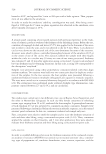
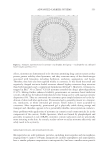
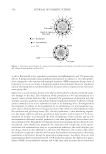
JOURNAL OF COSMETIC SCIENCE 550 Though the effects of these products are fascinating, given the barrier function of the skin they are diffi cult to achieve merely by adding functional compounds to the products. The human skin is comprised of three tissue layers: the epidermis, the dermis, and the subcu- taneous layer. The stratum corneum, the outermost layer of the epidermis, is the essential permeability barrier that limits the passage of most compounds. Normally, the penetrant that is applied to the skin surface may trespass the stratum corneum through three path- ways: via appendages or through transcellular or intercellular routes (6). Although the pores of appendages bypass the stratum corneum, their openings onto the skin surface are very small (0.1% of total skin surface) (7), which renders this pathway negligible. With the transcellular route, a penetrant has to infi ltrate into corneocytes, diffuse through keration, and then penetrate the next corneocyte. This route is not considered as a main pathway either and is merely suitable for highly hydrophilic compounds. The intercel- lular route is the principal pathway through which the compound goes through the con- tinuous and tortuous domain formed by the intercellular lipid matrix (5). In fact, only small and lipophilic compounds are able to penetrate the stratum corneum therefore, this poses a problem for cosmetic and cosmeceutical products: how to overcome the skin barrier and facilitate the active ingredients deep into skin where they can exhibit their functions. The use of carrier systems is one of the strategies investigated to enhance the penetration of compounds through the stratum corneum. Carrier technology, also re- ferred to as nanotechnology if the vesicle or particle is under nanoscale, refers to the cou- pling of agents to carrier particles such as liposomes, niosomes, and solid lipid nanoparticles (SLN) (8) and is the main method of delivering ingredients into the skin. This is one reason why carrier systems are benefi cial in skin and body care products. Besides enhancing penetration (9,10), carrier systems may have other uses in cosmetic and cosmeceutical products such as improving agent stability (11), as targeting agents (12), and in modulating drug release (8). APPLICATION OF CARRIER SYSTEMS IN COSMETICS AND COSMECEUTICALS LIPOSOMES Liposomes (Figure 1), fi rst described by Bangham and Papahadjopoulos in the 1960s (13), are microscopic vesicles formed by phospholipid bilayers surrounding an aqueous medium. The ability of phospolipids to form a bilayer structure is attributed to their amphipathic character. The polar/hydrophilic head region assembles towards the aqueous phase, while the nonpolar/lipophilic tail part orientates towards the inside (13). Lipo- somes were investigated for the fi rst time in 1980 as a topical delivery system for derma- tological agents into the skin (14). Since then, studies on liposomes for dermal application have progressed. The advantages of using liposomes for dermal application are summarized as follows: 1. Liposomes are biodegradable and nontoxic. 2. Due to the amphiphilic property of phospholipids, of which the bilayer is constituted, liposomes contain domains for both lipophilic and hydrophilic substances, meaning they can be used as carrier systems for active ingredients with different solubilities (8). 3. Liposomes provide controlled release profi les for many substances.

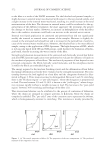
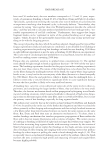
ADVANCED CARRIER SYSTEMS 551 4. Liposomes enhance drug penetration through intact liposome skin penetration, vesicle ad- sorption and fusion onto the skin surface, and interaction of the lipid of liposomes and the stratum corneum. The mechanism by which intact liposomes with loaded drugs can penetrate into skin was fi rst proposed by Mezei and Gulasekharam (14). Though this mech- anism was disputed (16), reports indicated that intact liposomes, especially ultradeformable liposomes, may penetrate deeply into the skin (17). The second mechanism was proposed by Hofl and et al. (18) and Abraham and Downing (19). They suggested that vesicles ag- gregate, fuse, and adhere to the skin surface and that this may lead to a high thermody- namic activity gradient of the drug, which serves as a driving force for drug penetration. The third mechanism stated that the similarity between the lipid composition of liposomes and the structure of epidermis enables liposomes to penetrate the epidermal barrier. It was suggested by Kirjavainen et al. (20) that the lipids of liposomes fuse and mix with the lipid of the intercellular matrix of the stratum corneum, altering its structure and promoting drug penetration through this impaired barrier. 5. Liposomes are considered to act not only as “drug transporters” but also as a “drug local- izer.” Liposomes have received considerable attention for delivering actives to the Figure 1. (a) Schematic representation of a liposome (i) and a phospholipid (ii). (b) Schematic representation of the structure of liposomes (SUV: small unilamellar vesicles LUV: large unilamellar vesicles MLV: multi- lamellar vesicles). (Adapted from Lesoin et al. (15).)
Purchased for the exclusive use of nofirst nolast (unknown)
From: SCC Media Library & Resource Center (library.scconline.org)