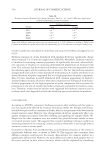
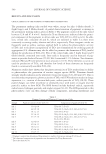
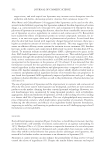
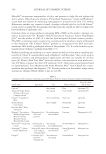
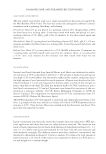
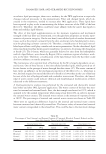
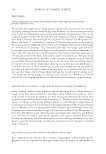
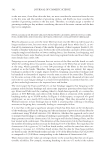
JOURNAL OF COSMETIC SCIENCE 530 menthol could have contributed to immediate and long-term freshness of peppermint oil (6,25). Freshness sensation of creams formulated with emulsion B did not signifi cantly change when evaluated 5 or 10 min after application (Table III). Meanwhile, freshness sensation of emulsion A containing common peppermint oil signifi cantly increased, whereas fresh- ness sensation of emulsion A containing dementholated peppermint oil decreased with time. This indicates that the evolution of freshness sensation with time depended on both the refreshing agent and the emulsion that contained it. The fact that freshness sensation changed with time only for creams formulated with emulsion A could be attributed to its slower liberation of apolar compounds due to its high proportion of apolar components. After 10 min, emulsions A and B formulated with common peppermint oil showed a similar freshness intensity. However, when these emulsions were formulated with demen- tholated peppermint oil, the high proportion of apolar components did not permit the penetration to the skin of menthol and other components responsible for freshness sensa- tion. Therefore, results from the present work suggested that freshness sensation and its evolution with time depended on both the refreshing agent and emulsion formulation. CONSUMER PANEL According to ANOVA, consumers’ freshness perception after smelling and after applica- tion was signifi cantly affected by emulsion formulation (Table IV). Samples with formu- lation B were perceived by consumers as fresher, which is in agreement with data from the trained assessor’s panel. However, type of peppermint oil did not signifi cantly affect con- sumers’ freshness perception both after smelling and applying the samples (Table IV). Despite the fact that consumers were not trained, they provided results similar to those of a trained assessors’ panel. This suggests that consumer profi ling techniques could be an interesting alternative for evaluating cosmetic products when there is not enough time or resources to train a sensory panel. Consumers in Buenos Aires and Montevideo scored freshness sensation of the creams in signifi cantly different ways, as shown in Table IV. This suggests that consumers from different countries could perceive the sensory characteristics of a cosmetic product in a signifi cantly different way. However, the main differences between both samples were in the scores, and not in their relative intensity, which could be explained by considering Table III Freshness Sensation Evaluated by a Trained Assessors’ Panel (n = 6), 5 and 10 Min after Application of the Four Refreshing Creams Considered Sample Freshness sensation 5 min 10 min APO 4.0a A 6.0b B ADPO 4.0a B 3.0a A BPO 6.0b A 6.0b A BDPO 7.0b A 7.0b A Rows with different lowercase superscripts are signifi cantly (p ≤ 0.05) different according to Tukey's test. Columns with different capital superscripts are signifi cantly (p ≤ 0.05) different according to Turkey's test.

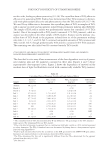
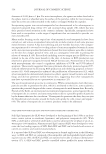
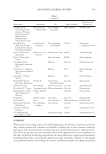
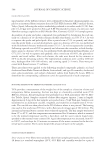
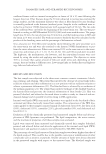
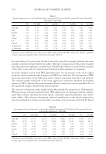
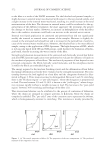
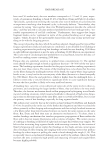
FRESHNESS EVALUATION OF REFRESHING CREAMS 531 that consumers had not had training previous to the evaluations and therefore did not have a clear representation of what a “very fresh” cream was. These differences in consum- ers’ scores could be attributed to cultural differences in freshness perception and could be also related to the fact that consumers had no training prior to their evaluations. However, both consumer samples perceived creams formulated with emulsion B as sig- nifi cantly fresher, not detecting differences due to the type of peppermint oil (Table V), which suggests the validity of using consumers to gather information about the sensory characteristics of cosmetic products. Table IV Results of the ANOVA Performed on Data from Consumers Variable Source of variation ANOVA results F p-value Freshness after smelling Type of peppermint oil 0.30 0.5817 Emulsion formulation 17.87 0.001 Type of peppermint oil × emulsion formulation 2.44 0.1190 City 9.15 0.001 Liking after smelling Type of peppermint oil 0.24 0.6252 Emulsion formulation 10.94 0.001 Type of peppermint oil × emulsion formulation 0.11 0.7426 City 15.83 0.001 Freshness after application Type of peppermint oil 0.36 0.7406 Emulsion formulation 66.61 0.001 Type of peppermint oil × emulsion formulation 0.11 0.9973 City 16.68 0.001 Liking after application Type of peppermint oil 0.26 0.6137 Emulsion formulation 50.02 0.001 Type of peppermint oil × emulsion formulation 0.03 0.8607 City 15.43 0.001 Table V Average Consumers’ Freshness Sensation and Liking after Smelling and Applying the Four Evaluated Refershing Creams in Montevideo and Buenos Aires City Sample After smelling After application Freshness Liking Freshness Liking Buenos Aires (n=50) APO 6.3b 6.5b 6.4b 6.5b ADPO 6.2b 5.8a 6.2b 5.9a BPO 6.8c 6.6b 6.0c 6.7b BDPO 7.4c 7.2b 7.4c 7.2b Montevideo (n=50) APO 5.0a 5.1a 5.0a 5.0a ADPO 4.7a 4.7a 4.7a 4.7a BPO 7.3c 6.5b 7.2c 6.5b BDPO 7.2c 6.5b 7.2c 5.5b Rows with different superscripts within the same column are signifi cantly (p ≤ 0.05) different according to Tukey's test.
Purchased for the exclusive use of nofirst nolast (unknown)
From: SCC Media Library & Resource Center (library.scconline.org)