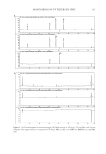
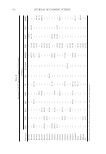
J. Cosmet. Sci., 63, 93–101 (March/April 2012) 93 Natural oils and waxes: Studies on stick bases LÍVIA BUDAI, ISTVÁN ANTAL, IMRE KLEBOVICH, and MARIANNA BUDAI, Semmelweis University, Department of Pharmaceutics, Hőgyes E. u. 7., Budapest, Hungary, H-1092. Accepted for publication September 21, 2011. Synopsis The objective of the present article was to examine the role of origin and quantity of selected natural oils and waxes in the determination of the thermal properties and hardness of stick bases. The natural oils and waxes selected for the study were sunfl ower, castor, jojoba, and coconut oils. The selected waxes were yellow beeswax, candelilla wax, and carnauba wax. The hardness of the formulations is a critical parameter from the aspect of their application. Hardness was characterized by the measurement of compression strength along with the softening point, the drop point, and differential scanning calorimetry (DSC). It can be concluded that coco- nut oil, jojoba oil, and carnauba wax have the greatest infl uence on the thermal parameters of stick bases. INTRODUCTION Oils and waxes are natural products that have been widely used for topical skin applica- tion since ancient times. For the last few decades, synthetic substances that can replace natural oils and waxes have became commonly available. However, nowadays there is a rising trend towards the use of natural materials in cosmetology and dermatology (1). Sunfl ower, castor, coconut, and jojoba oils are the most important oil crops in continental, Mediterranean, and tropical regions. These oils are used for many purposes, including ointments, lotions, sticks, shower gels, and baby care and sun care products (1–6). The candelilla and carnauba waxes originating from tropical areas are more commonly used in lipsticks and decor cosmetics. The most common type of stick is a mixture of waxes and oils that are cast into a solid, elongated form containing dissolved or undissolved active ingredients (7). In order to became more familiar with them and their formulations, it is important to describe and compare their thermoanalytical behaviors (8). The objective of the present article was to highlight the thermal properties of selected stick compositions prepared from natural oils and waxes. Various examination methods used in the determination of the thermal properties of the prepared sticks were based on pharma- ceutical guidelines for the determination of the softening point and the drop point. Fur- thermore, differential scanning calorimetry (DSC) was applied to examine the role of the quality and quantity of selected oils (sunfl ower, castor, jojoba, and coconut) and waxes (yellow beeswax, candelilla wax, and carnauba wax). In addition to the components men- tioned above, the role of glycerol and lanolin added to formulations was also investigated.

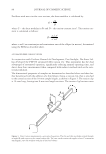
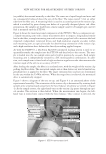
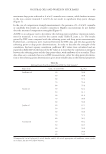
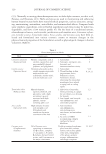
JOURNAL OF COSMETIC SCIENCE 94 Correlation coeffi cients between data sets consisting of softening-point measurements, drop point determination, and thermoanalytical parameters measured by DSC are consis- tent with one another. The hardness of the formulations, a critical parameter from the application aspect, was characterized by the measurement of compression strength. MATERIALS AND METHODS MATERIALS Jojoba oil, castor oil, coconut oil, candelilla wax, and carnauba wax—produced by Henry Lamotte GmbH (Bremen, Germany)—were obtained for research purposes from HSH- Chemie Ltd. (Budapest, Hungary) as a gift. Pharmaceutically pure sunfl ower oil, yellow bees- wax, glycerol, and lanolin were purchased from Hungaropharma Ltd. (Budapest, Hungary). PRODUCTION OF STICK SAMPLES The samples were produced by melting the waxes and oils in various ratios. The composi- tions tested can be found in Table I. The mass of the prepared sticks was 3.0 ± 0.1 g. DETERMINATION OF PHYSICOCHEMICAL PARAMETERS Drop point. The drop point is the temperature at which the fi rst drop of the melting sub- stance to be examined falls from a cup under defi ned conditions. In our study the apparatus used in the pharmaceutical industry was applied. Drop point measurements were carried out according to the method described in the European Pharmacopoeia Ed. 5.0, chapter 2.2.17. (9). Table I Composition of Samples Sample (w/w%) Composition (w/w%) Glycerol Lanolin Yellow beeswax Sunfl ower oil 1. Sunfl ower oil 5 5 50, 40, 30, 20, or 10 0 (40, 50, 60, 70, or 80) 2. Castor oil 5 5 50, 40, 30, 20, or 10 0 (40, 50, 60, 70, or 80) 3. Jojoba oil 5 5 50, 40, 30, 20, or 10 0 (40, 50, 60, 70, or 80) 4. Coconut oil 5 5 50, 40, 30, 20, or 10 0 (40, 50, 60, 70, or 80) 5. Carnauba wax 5 5 30, 29, 28, 27, 26, or 25 60 (0, 1, 2, 3, 4, or 5) 6. Candelilla wax 5 5 30, 29, 28, 27, 26, or 25 60 (0, 1, 2, 3, 4, or 5)
Purchased for the exclusive use of nofirst nolast (unknown)
From: SCC Media Library & Resource Center (library.scconline.org)