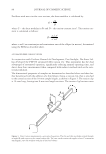
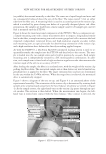
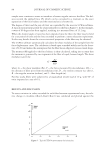
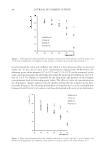
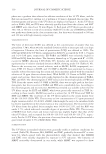
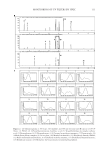
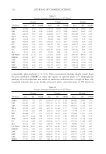
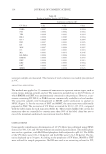
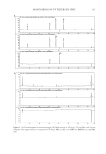
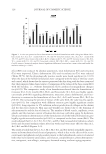
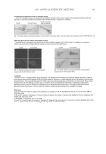
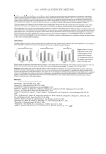
HERBAL FORMULATIONS FOR SKIN IMPROVEMENT 129 Figure 2. Melanin determination of various formulations before and after one-week, two-week, and four- week periods of application on the volar forearm. Here Cc0 is the baseline value (value without application of formulation). Statistical analysis showed signifi cant differences between baseline values and from the formulation-treated areas ( p 0.01). Figure 3. Skin hydration studies of various formulations before and after one-week, two-week, and four- week periods of application on the volar forearm. Statistical analysis showed signifi cant differences between baseline values and from the formulation-treated areas (p 0.001). CONCLUSIONS This study observed a signifi cant improvement in skin moisturizing and mechanical properties following the use of several herbal formulations having photochemoprotective properties. These benefi cial affects might be due to the synergistic anti-oxidant, anti- infl ammatory, and ultraviolet-radiation-protective properties of the herbal ingredients and components of cream formulations. The Cinnamon, Centella, and Tamarindus ex- tract formulations (1% and 3% w/w) gave highly signifi cant results as compared to the

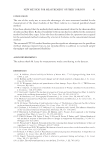
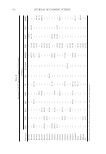
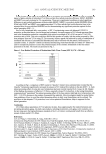
JOURNAL OF COSMETIC SCIENCE 130 Figure 4. Sebum determination of various formulations before and after one-week, two-week, and four-week periods of application on the volar forearm. Statistical analysis showed signifi cant differences between base- line values and from the formulation-treated areas (p 0.001). Areca and Curcuma extract-containing formulations the reason might be due to their chemical constituents and their affi nity with the cream formulation. Further in vivo sun protection factor (SPF) determination studies should also be conducted to confi rm the in vitro results. Therefore, it can be concluded that formulated protective creams Cc1, Cc2, Hc1, Hc2, Tc1, and Tc2 are more effective and photochemoprotective as compared to Ac1, Ac2, Kc1, and Kc2. The SPF values increased as the concentration of extract was increased up to a limit in the formulation, and so the different concentrations of extract in the formulations also played a benefi cial role. Our fi ndings support the fact that bo- tanical photochemoprotective formulations are a very signifi cant approach for combating the deleterious effects of sunlight, which changes skin properties and leads to photoag- ing. Hence, herbal formulations could be used cosmetically for the improvement of skin properties, and deeper penetration could treat various skin ailments. ACKNOWLEDGMENTS The authors are thankful to the University Grants Commission (UGC) (Major Research Project, F. No. 32-133/2006 (SR), New Delhi, for instrumental and fi nancial support for this work, and to the Head, Cosmetic Laboratory, University Institute of Pharmacy, Rai- pur, for providing laboratory facilities. REFERENCES (1) F. Afaq and H. Mukhtar, Photochemoprevention by botanical antioxidants, Skin Pharmacol. Appl. Skin Physiol., 15, 297–306 (2002). (2) S. F’guyer, F. Afaq, and H. Mukhtar, Photochemoprevention of skin cancer by botanical agents, Photo- dermatol. Photoimmunol. Photomed., 19, 56–72 (2003). (3) S. Saraf and C. D. Kaur, Phytoconstituents as photoprotective novel cosmetic formulations, Pharmacog. Rev., 4(7) 1–11 (2010).
Purchased for the exclusive use of nofirst nolast (unknown)
From: SCC Media Library & Resource Center (library.scconline.org)