NEW METHOD FOR MEASUREMENT OF FIBER TORSION 83 onto the measurement station, and this means that the operator must remain with the instrument to initiate each experimental run. This is time-consuming, and it also be- comes problematic when attempting to make measures at non-ambient conditions as it is required to enclose the experiment in a controllable environment that may require the use of a glove box or additional equilibration time following each sample loading. In addi- tion, it is problematic to alter the experimental parameters, such as the angle of exciting deformation or longitudinal stress on the fi ber during these tests, without infl uencing other experimental parameters. Finally, it is not possible to measure the relaxation of stress in torsional deformation utilizing a pendulum method. This paper presents data relating to the experimental ineffi ciencies and the errors as- sociated with the torsional pendulum technique, and introduces new instrumentation that allows for more accurate and higher-throughput evaluation of fi ber torsional stiff- ness. The authors present a direct-contact method with automated sample loading and unloading that addresses all of the aforementioned problems, and also present a description of automated data collection of all relevant measurement parameters, in- cluding angle and rate of deformation, longitudinal stress, and torsional stiffness during deformation (shear modulus) and over time following deformation (shear stress relaxation). MATERIALS AND METHODS PREPARATION OF THE HAIR Swatches of hair composed of fi bers from several individuals were purchased from Inter- national Hair Importers and Products, (Glendale, NY). The swatches were classifi ed by the supplier as undamaged Dark Brown European Hair (10”/7 g) and present in what approximates the virgin, undamaged state, having had no aggressive chemical treatment or physical treatments applied while on the head of the consumer or post-sampling. Prior to testing, the hair was washed twice with a 12% SLES:2% CAPB solution, rinsed, and then allowed to dry overnight at 20°C and 50%RH. Individual hair fi bers were separated from the swatch and two plastic tabs were attached to the fi ber, separated by 30 mm. The plastic tabs were sourced from Dia-stron Ltd. (Andover, UK). Each plastic tab had two parts: one male part and one female, which “snap” together, enclosing the ends of the fi ber section and holding securely. After the plastic tabs were attached, any excess fi ber extending from the tab was cut away with a scalpel. After preparation each fi ber was placed in a humidity-controlled environment and equilibrated at 20°C and 50% RH for at least 12 hours before the experiment was performed. PREPARATION OF THE NYLON Reels of nylon fi ber, Ultima® PowerSilk® (0.75 kg, 0.09 mm), were purchased to demon- strate the transferability of the torsion measurement methodology to different material types. Individual sections of nylon were prepared by the same means as the hair fi bers, as described above.

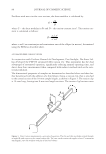
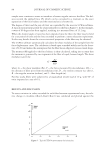
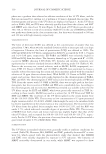
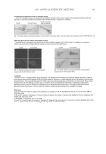
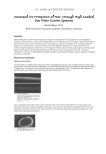
JOURNAL OF COSMETIC SCIENCE 84 FIBER DIMENSIONAL ANALYSIS Determination of the shear modulus requires an accurate cross-sectional area and shape to be determined for each fi ber being tested. This is particularly important for natural fi bers, which exhibit large fi ber-to-fi ber variation combined with variation over the length of the sample. After sample preparation and environmental equilibration, both groups of fi bers were measured in an automated Dia-Stron FDAS765 laser scan micrometer. The Dia-Stron FDAS765 uses a Mitutoyo LSM500S laser micrometer (Mitutoyo UK Ltd., Andover, UK), which has an operating range of 5–2000 microns, with an accuracy and repeatability signifi cantly better than 1 micron. The FDAS765 has been commercially available for 15 years and is widely used for normalization of fi ber measurements to cross-sectional area (27). The samples are fi rst loaded into a linear cassette, which is then placed in the ALS1500 Automatic Loading System. A pneumatically operated pick-up head transfers the samples sequentially from the linear cassette to the laser micrometer and then back to the cassette. The entire measurement sequence is controlled by Dia-Stron UvWin software. Once loaded in the laser micrometer, a small tensioning force is applied to one end of the sample to ensure the fi ber is orthogonal to the laser beam. The fi ber is then measured at several positions (or “slices”) along its length. At each position, the fi ber is rotated by 360°, and the maximum and minimum dimensions are determined by a sensor measur- ing the time interval for which the fi ber interrupts the beam of a high-speed scanning laser. The dimensional results are stored within the UvWin program for subsequent use with the Dia-Stron Fiber Torsion Tester or can be exported for use with other instruments. TORSIONAL PENDULUM EXPERIMENTS Following equilibration, one end of a crimped fi ber was inserted into a groove close to the top of the custom-built “Single Fiber Torsion Rig” (Figure 1), and a pendulum bob Figure 1. Single-fi ber torsion rig.
Purchased for the exclusive use of nofirst nolast (unknown)
From: SCC Media Library & Resource Center (library.scconline.org)