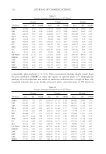
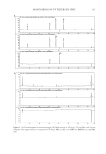
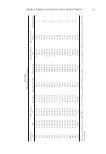
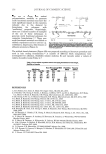
ANTIBIOTIC SUSCEPTIBILITY AND UVc LIGHT 135 (Staphylococcus haemolyticus) (n=2), were employed in this study. All isolates were origi- nally isolated in 2008 from blood culture from patients with bacteremia and were subse- quently stored at -80°C in the Strain Repository, Northern Ireland Public Health Laboratory, Belfast City Hospital (MicroARK). All isolates were recovered from storage at -80°C onto Columbia Agar Base (Oxoid CM0331, Oxoid Ltd., Basingstoke, England, UK) supplemented with 5% (v/v) defi brinated horse blood and passaged three times. DETERMINATION OF THE MINIMUM INHIBITION CONCENTRATION (MIC) The minimum inhibitory concentration (MIC) of all isolates to penicillin, erythromycin, and ciprofl oxacin was determined in triplicate by the broth microdilution method, according to the CLSI standard method (5). The effect of effl ux pumps was examined by supplementation with 15 μg/ml of reserpine. Lyophilized antibiotic tablets were purchased from MAST Ltd. (Merseyside, UK). MIC values were determined to a maximum concentration of 32 μg/ml, as beyond this all organisms were considered to be clinically resistant. SUBLETHAL UVc IRRADIATION Fresh (24 h) cultures of all staphylococcal organisms were subcultured separately onto fresh Columbia Blood Agar (Oxoid CM0331) at 37°C, supplemented with 5% (v/v) de- fi brinated horse blood. The inoculated plates were then exposed to UVc light in a UVc lightbox (PMcK Ltd., Moy, Co. Tyrone, N. Ireland) for periods of time up to 5 min dura- tion, including t=0, 0.5, 1.5, 3.0 and 5.0 min. Organisms were cultured on the same plate on which they were exposed to UVc irradiation for 24 h at 37°C. Following incuba- tion, survivor colonies were harvested at each timepoint and the MIC determined, as detailed above. RESULTS AND DISCUSSION MIC values were obtained for all eight staphylococcal organisms at t=0 (i.e., before UVc exposure), as well as at three UVc exposure time points, namely t=0.5, 1.5 and 3 min UVc exposure (Table I). None of the organisms were able to be cultured at 37°C follow- ing UV exposure for 5 min, and qualitatively the survival of the organisms on the inocu- lated plates diminished markedly with time. There was no statistical difference in MIC values between t=0 and t=3 min (Table I) in any of the isolates examined with any of the three antibiotic agents employed. The addition of reserpine had a minimal effect on fl uo- roquinolone susceptibility, and it led to a single doubling dilution reduction in four or- ganisms. There was no difference in susceptibility activity pre- or post-UVc exposure among the MSSA, MRSA, or coagulase-negative staphylococcal organisms examined. McMahon et al. previously defi ned environmental stress as “an external factor that has an adverse effect on the physiological welfare of bacterial cells, leading to reduction in growth rate or in more extreme circumstances, to inhibition and/or cell death, at individual or population levels” (2). Exposure of bacterial cells to bacteriocidal UV radiation could therefore be considered an environmental stress, as this property has been used as a phys- ical disinfection technique with the purpose of eliminating entire bacterial populations,

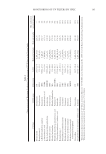
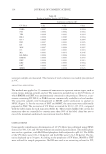
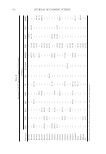
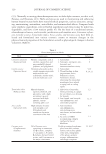
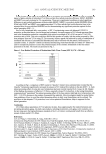
JOURNAL OF COSMETIC SCIENCE 136 Table I Effect of UVc Radiation Exposure on Minimum Inhibitory Concentration (MIC) on Staphylococcal Organisms Pen* MIC (μg/ml) Isolates UVc exposure time (min) Ery** MIC (μg/ml) Isolates UVc exposure time (min) 0 0.5 1.5 3 0 0.5 1.5 3 MRSA 3 ≥16 ≥16 ≥16 ≥16 MRSA 3 ≥32 ≥32 ≥32 ≥32 MRSA 20 ≥16 ≥16 ≥16 ≥16 MRSA 20 ≥32 ≥32 ≥32 ≥32 MRSA 80 ≥16 ≥16 ≥16 ≥16 MRSA 80 ≥32 ≥32 ≥32 ≥32 MRSA 143 ≥16 ≥16 ≥16 ≥16 MRSA 143 0.5 0.5 0.5 0.5 MSSA 63 0.03 0.03 0.03 0.03 MSSA 63 1 1 1 1 MSSA 93 0.03 0.03 0.03 0.03 MSSA 93 0.5 0.5 0.5 0.5 S. haemolyticus 16 ≥16 ≥16 ≥16 ≥16 S. haemolyticus 16 ≥32 ≥32 ≥32 ≥32 S. haemolyticus 17 ≥16 ≥16 ≥16 ≥16 S. haemolyticus 17 ≥32 ≥32 ≥32 ≥32 Cip*** MIC (μg/ml) Isolates UVc exposure time (min) Cip+res**** MIC (μg/ml) Isolates UVc exposure time (min) 0 0.5 1.5 3 0 0.5 1.5 3 MRSA 3 8 8 8 8 MRSA 3 8 8 8 8 MRSA 20 32 32 32 32 MRSA 20 32 32 32 32 MRSA 80 32 32 32 32 MRSA 80 32 32 16 16 MRSA 143 0.5 0.5 0.5 0.5 MRSA 143 0.25 0.25 0.25 0.25 MSSA 63 0.5 0.5 0.5 0.5 MSSA 63 0.25 0.25 0.25 0.25 MSSA 93 0.25 0.25 0.25 0.25 MSSA 93 0.25 0.25 0.25 0.25 S. haemolyticus 16 16 16 16 16 S. haemolyticus 16 8 8 8 8 S. haemolyticus 17 32 32 32 32 S. haemolyticus 17 32 32 32 32 MRSA = methicillin-resistant Staphylococcus aureus. MSSA = methicillin-sensitive Staphylococcus aureus. *Pen=penicillin **Ery=erythromycin ***Cip=ciprofl oxacin ****res=reserpine. particularly from within the clinical environment. Several environmental stresses induce the mar (multiple antibiotic resistance) operon (6), which regulates the expression of sev- eral genes, including those which encode a broad-specifi city effl ux pump (7). In addition, stress hardening (8) may lead to cross-protection against a range of apparently unrelated stress challenges, including resistance to antibiotics. Therefore, bacterial cells have sev- eral mechanisms to select for mutants from within sublethally stressed bacterial popula- tions, as well as to minimize stress and maximize continued cell viability to ensure survival following the removal of the stress conditions. More recently, the term “stresso- some” has been proposed, which describes a signal transduction cascade that increases the expression of stress-response genes and where stress signals may be integrated by a mul- tiprotein signalling hub that responds to various signals to effect a single outcome (9). In the current study, we wished to examine whether or not the sublethal stress relating to UV radiation of staphylococcal organisms led to an increase in the organism’s antibiotic resistance levels, by phenotypic examination of resistance to three common classes of an- tibiotics, namely the β-lactams (pencillin), the macrolides (erythromycin), and the fl uo- roquinolones (ciprofl oxacin). UV radiation exerts its bacteriocidal effect on bacterial populations through dimerization of adjacent thymine molecules on the organism’s
Purchased for the exclusive use of nofirst nolast (unknown)
From: SCC Media Library & Resource Center (library.scconline.org)