HERBAL FORMULATIONS FOR SKIN IMPROVEMENT 121 MATERIALS AND METHODS Plant materials Curcuma caesia (rhizome), Areca catechu (seeds), Centella asiatica (leaves), Cinnamon zeylanicum (dried bark), and Tamarindus indica (fruit pulp) were selected because of their reported physiological action, and were procured from a local authentic herbal distributor in Raipur, Chhattisgarh. All plant materials were identifi ed from the Her- barium, Department of Pharmacognosy, Pt. Ravishankar Shukla University, Raipur, In- dia, and were tested for per cent purity (99.7%) by microscopic methods. All the other chemicals and reagents used in the study were of analytical grade. PREPARATION OF HERBAL EXTRACTS Hydroethanolic extracts of herbs were used in this study. All of the dried materials from Curcuma, Areca, Centella, and Cinnamon were cleaned and ground, and their coarse powders were passed through a number 20 sieve. Exactly 50 g of each herb was ex- tracted with a hydroalcoholic mixture (200 ml, 50:50 v/v ethanol:water) at 60°–70°C for 24 h by a continual hot extraction method, until complete exhaustion of the drug, by using a soxhlet apparatus (8). Soxhlet extraction is a well-established, easier, and faster method for the extraction of the above-stated herbs, and the antioxidant activity of the constituents is not affected by the raised temperature, and so this method was adopted for their extraction (31). The fruit pulp of Tamarindus indica (50 g) was extracted with a hydro-alcoholic mixture (200 ml, 50:50 v/v ethanol:water) using a cold macera- tion process for three days at 4°C (12). The obtained extracts were evaporated under reduced pressure (AU 5 psi) at 50° ± 5°C for 5–15 min, and the concentrated extracts were dried to obtain actual yields. PREPARATION OF BASE CREAM Base cream was prepared by using a phase inversion emulsifi cation technique (18). Ini- tially olive oil (5% w/w), cetyl alcohol (3.5% w/w), stearic acid (4.75% w/w), polysorbi- tan monooleate (2% w/w), and glycerin (3.5% w/w) were mixed using a magnetic stirrer at 200 ± 25 r.p.m. at 65°–75°C. After complete melting and homogenous mixing, a 50- ml portion of deionized water (70° ± 2°C) was added at a rate of 30 ml per min at increased speed (275 ± 25 r.p.m.). When the temperature of the internal phase was reduced to 50°C, phase inversion took place and the solution became viscous the remaining aqueous phase (up to 100% w/w) containing propylene glycol (4% w/w) was then added. When the temperature was reduced to 40°C, lemon grass oil (two to three drops) was added to this mixture. PREPARATION OF HERBAL CREAM The hydroethanolic extract of each herb was soluble in the aqueous phase, and so part of the aqueous phase was replaced with extract (according to desired concentration of ex- tract, i.e., 1, 3 and 5% w/w), and the aqueous phase was added to the oil phase. For each herbal extract three formulations were prepared: Cinnamon (Cc1, Cc2, Cc3), Areca (Ac1,

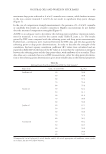
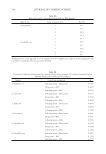
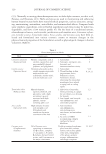
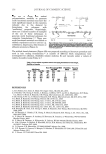
JOURNAL OF COSMETIC SCIENCE 122 Ac2, Ac3), Curcuma (Kc1, Kc2, Kc3), Tamarindus (Tc1, Tc2, Tc3) and Centella creams (Hc1, Hc2, Hc3). They contained 1, 3, and 5% w/w of herbal extract, respectively. STABILITY STUDIES Stability studies were carried out for all the formulations at different temperature condi- tions (4°, 25° and 37° ±2°C) and a relative humidity of 60% for three months. All the evaluation parameters, i.e., color, odor, pH, viscosity, spreadability, and phase separation, were studied at different time intervals, i.e., 15, 30, 60 and 90 days (30). STUDY DESIGN Healthy human volunteers who were willing to give their informed consent were in- cluded in the subjective study. Volunteers having known hypersensitivity reactions to any of the formulation ingredients, or with skin wounds or scratches on the volar forearm, were not selected. The biophysical study was done according to Table II. The volar fore- arm was used as the site for the application of the formulations because of the need for uniformity in assessment of all the skin parameters at a time and because this site was more convenient and volunteer-acceptable. EVALUATION STUDIES Physicochemical parameters and microbial examination. Several physicochemical parameters were measured for each prepared cream formulation (18,20). These physicochemical pa- rameters provided information regarding formula stability and skin compatibility. Vis- cosity was measured using a Brookfi eld viscometer. All the evaluations were carried out Table II Protocol and Design of the In Vivo Study Parameters Protocol and design Place This prospective study was conducted at the University Institute of Pharmacy, Pt. Ravishankar Shukla University, Raipur, Chhattisgarh, India. Number of Total: 60 (30 males and 30 females) (ten groups having six volunteers each) volunteers Site 1: Baseline values to observe initial compliance and safety to the skin (CC0) Site 2: Base cream (BC) Site 3: Coded formulations (Cc1, Cc2, Ac1, Ac2, Kc1, Kc2, Tc1, Tc2, Hc1, Hc2) Age of volunteers 22–45 years Application dose 5 mg/cm2 to 2 cm2 area of skin. Twice a day on the volar side of the forearm during four weeks. Readings taken every morning Evaluation Skin hydration determination by corneometer Skin viscoelasticity determination by cutometer Sebum determination by sebumeter Melanin determination by mexameter
Purchased for the exclusive use of nofirst nolast (unknown)
From: SCC Media Library & Resource Center (library.scconline.org)