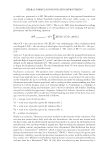
HERBAL FORMULATIONS FOR SKIN IMPROVEMENT 123 in triplicate, presented as ± SD. Microbial contamination of the prepared formulations was tested according to Indian Standards methods. The total viable counts, i.e., total bacterial, yeast, and mold counts, were recorded by using a colony counter (21). Determination of sun protection factors (SPFs). The in vitro SPFs were determined according to the method described by Mansur et al. (22) and Sayre et al. (23), utilizing UV spectro- photometry and the following equation: 320 290 spectrophotometric SPF CF I Abs u O u O u O ¦EE where CF = the correction factor (10) EE (λ) = the erythmogenic effect of radiation with wavelength λ I(λ) = the intensity of solar light of wavelength λ and Abs (λ) = the spec- trophotometric absorbance values at wavelength λ. The values of EE × I are constants (24). Safety test. A patch test design was conducted to make sure that the prepared formulations did not cause any skin irritation. Cream formulations were applied on the volar forearm with the help of surgical gauze (0.5 g/cm2), and the score was determined using the scale defi ned in the Indian Standards (25). The positive comments of all volunteers helped us to begin the biophysical studies. The fi ve formulations with 5% w/w extract that caused irritation were not used in further study. Psychometric evaluations. The products were compared based on sensory evaluation, and ranking was done as per score obtained according to the hedonic scale. The cream formu- lations were applied twice a day, once in morning and once in evening at the same time, on the volunteers for up to six weeks, and observations are made by ranking method. The volunteers were asked various questions, and according to their answers ranking was done between 0–9 of the hedonic scale: 8–9 (extreme liking), 5–7 (medium), 1–3 (dislike), 6 (between extreme liking and medium), and 4 (between medium and dislike). Ranking was perfect verbally for appearance, fragrance, lathery feel, softness, irritation, stickiness, smoothness, and after effect on the skin. Overall ranking was done on the basis of an aver- age score for each product, determined as follows: E1 = average score of each product V1 = total score of product given by volunteer No.1 V2 = total score of product given by volunteer No.2 Vn = total score of product given by volunteer No. n N = number of volunteers Biophysical evaluation. Three test areas were marked on the forearms of the volunteers. One test area was treated twice daily with the test formulation, the second was treated with the base cream, and the third was left untreated and used as a control. At the baseline visit and after one, two, and four weeks of regular use, skin viscoelasticity, fi rmness, hydration level, sebum content, and melanin content were determined. Skin hydration was deter- mined by a Corneometer® CM 825, which is based on capacitance measurement (26). Sebum determination was done by a Sebumeter® SM 815, which is based on grease-spot photometry, whereby a special tape becomes transparent in contact with the sebum on the skin surface (27). Melanin and erythema determination is based on absorption/refl ection and was done by a Mexameter® MX 18 (28). Skin viscoelasticity was determined by a

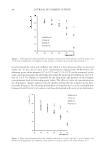
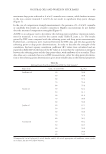
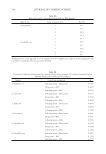
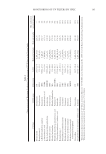
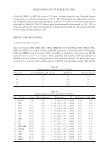
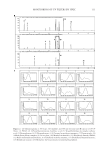
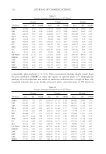
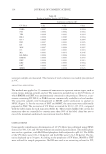
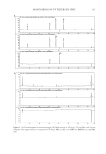
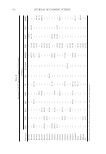
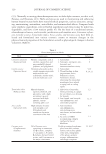
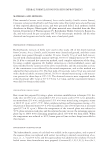
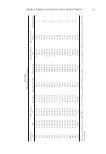
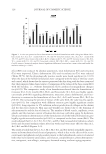
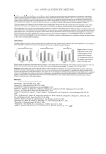
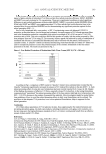
JOURNAL OF COSMETIC SCIENCE 124 Cutometer® MPA 580, based on the suction method, whereby negative pressure is cre- ated in the device and the skin is drawn into the aperture of the probe. The resistance of the skin to be sucked up by the negative pressure (fi rmness) and its ability to return into its original position (elasticity) are displayed as curves at the end of each measurement (29). Statistical section. Statistical analysis was carried out by using SPSS software (SPSS, Inc., Chicago, IL), and results were expressed as mean ± SD. Physicochemical parameters were statistically analyzed at the 90% confi dence level in the column, whereas all physiological parameters were analyzed between formulations at the 95% confi dence level. RESULTS AND DISCUSSION All the physicochemical parameters of the base cream (Table IV) were satisfactory and showed no signs of bleeding at room temperature, which indicated that uniform mixing and the desired consistency remained in the base cream formula. The formulations with 1% and 3% extract were stable at all temperatures and showed no change in color, odor, pH, viscosity, spreadability, and phase separation, but the formulations containing 5% w/w of extracts were not very stable and were irritating to the skin (erythema score 1), possibly related to high free-acid values that were obtained (Table III). Microbial viable counts were slightly higher (40±5) in all the herbal formulations having 5% w/w herbal extract, indicating that these formulations had a slight susceptibility to microbial attack. This microbial growth might be because of the incompatibility of the higher extract content with the base cream. The microbial counts for all the other formulations were low and were within the lower limit as given by the Cosmetics, Toiletries and Perfumery Association (CTFA) for cosmetic and toiletry products (100 cfu g−1) (31). The SPF of the base cream was found to be 5.4 ± 0.2. This might be due to constituents present in the base cream that also provide sun protection, such as olive oil and lemon grass oil (24). The SPF values obtained were extremely signifi cant (p 0.0001). For all the herbal ex- tracts, the SPF value was highest with 3% extracts, and for 5% extracts the value de- creased. The herbal formulations containing the highest concentration of extract showed lower SPFs, which may be due to the effect of a combination of constituents in the base cream with higher concentrations of herbal extract constituents (Figure 1). Creams containing 3% w/w Cinnamon, Tamarindus, and Centella extracts showed higher SPFs as compared to Areca and Curcuma. This shows the high photoprotective property of the Cinnamon, Tamarindus, and Centella extracts. The sequence of SPF values obtained was Cc2 Hc2 Tc2 Ac2 Kc2. Cinnamon extract produced the highest SPF values, which could be correlated with the presence of high total phenolic content, as reported by Gallo et al. (33). In the psychometric evaluation parameters, all the subjects gave positive responses with respect to fragrance, skin softness, and smoothness, and negative responses to irritation, as compared with the initial condition of the skin. Formulations containing 5% extract produced slight irritation, and so they were not selected for further studies. Based on the results of the physicochemical and safety studies, ten formulations (with 1% and 3% w/w extracts) were selected for the in vivo studies. The viscoelastic property mea- surement showed that, in the relative parameters, overall elasticity (R2), pure elasticity (R5), biological elasticity (R7) were improved sagginess (R6), pliability (R8), and tiring
Purchased for the exclusive use of nofirst nolast (unknown)
From: SCC Media Library & Resource Center (library.scconline.org)