J. Cosmet. Sci., 63, 119–131 (March/April 2012) 119 Development of photochemoprotective herbs containing cosmetic formulations for improving skin properties SWARNLATA SARAF, SUMIT KOUR CHHABRA, CHANCHAL DEEP KAUR, and SHAILENDRA SARAF, University Institute of Pharmacy, Pt. Ravishankar Shukla University, Raipur (C.G.), India 492010. Accepted for publication October 6, 2011. Synopsis Botanical photochemoprotectives are used because they act on various stages to prevent skin cancer and pho- toaging. The aim of this study was to prepare herbal creams from various photochemoprotective herbs and to perform effi cacy studies on them by using physicochemical, microbiological, safety, psychometric, biophysi- cal, and sun protection factor measurements. Herbal creams were prepared by incorporating hydroalcoholic extracts of Curcuma caesia (rhizome), Areca catechu (seeds), Centella asiatica (leaves) Cinnamon zeylanicum (dried bark), and Tamarindus indica (fruit pulp) in varied concentrations (1–5% w/w) in a base cream. The effi cacy of all formulations was checked out for four weeks on 60 normal subjects on the volar forearm for evaluation of biophysical properties, and for psychometric evaluations (fragrance, lathery feel, softness, irritation, sticki- ness, smoothness, and aftereffect on the skin) and safety measurements. In the biophysical characterization, a cutometer for viscoelasticity, a mexameter for melanin content, a corneometer for hydration, and a sebumeter for sebum determination were used. All the cream formulations with 1% and 3% w/w extracts showed posi- tive results and passed physicochemical, microbiological, and safety tests. The SPF values increased as the concentration of extract was increased up to a limit in the formulations. The SPF values were signifi cantly higher (p 0.01) in formulations with 3% herbal extract than with 1% herbal extract. Increased skin hydra- tion, sebum levels, viscoelasticity, and decreased melanin values were obtained. The Cinnamon, Centella, and Tamarindus formulations were found more effective as photoprotectives than the Areca and Curcuma formulations. INTRODUCTION Photochemoprotective agents are capable of preventing the adverse effects of ultraviolet radiation on the skin, which are caused by excessive generation of reactive oxygen species (ROS). The induction of oxidative stress and imbalance of the antioxidant defense system leads to infl ammation, photoaging, systemic immunosuppression, and skin cancer (1). Botanical agents may work in various ways: by stimulating the immune response, by inducing or suppressing gene action, by detoxifying carcinogens, by blocking oxidative damage to DNA, and by initiating selected signaling pathways and other mechanisms Address all correspondence to Swarnlata Saraf at swarnlata—saraf@rediffmail.com.

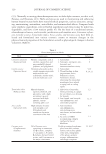
JOURNAL OF COSMETIC SCIENCE 120 (2,3). Naturally occurring photochemoprotectives include alpha carotene, ascorbic acid, fl avones, and fl avanone (4,5). Herbs and spices are used in maintaining and enhancing human beauty because herbs have many benefi cial properties, such as sunscreen, antiag- ing, moisturizing, antioxidant, anticellulite, and antimicrobial effects. Compared with some synthetic ingredients, selected herbal ingredients and extracts may be mild, bio- degradable, and have a low toxicity profi le (6). On the basis of a traditional system, ethanobotanical survey, and scientifi c justifi cation with modern uses, Cinnamon zeylani- cum, Centella asiatica, Tamarindus indica, Areca catechu, and Curcuma caesia have been se- lected and formulated into various cosmetic creams to measure changes in the physicochemical properties of the formulation as well as physiological changes in human volunteers (Table I). Table I Photochemoprotective Herbs Herb Constituents Uses References Cinnamon zeylanicum (Lauraceae) bark Phenolic compounds, such as catechin, epicatechin, and procyanidin B2, phenol polymers, and polyphenols 1. Antioxidant 2. Antiseptic, astringent, anti- bacterial, and immunostimulant activity 7 8 Centella asiatica (Apiaceae) leaves Triterpene glycosides such as centella saponin, asiaticoside, madecassoside, and sceffoleoside, and also asiatic acid and madecassic acid 1. Antioxidant 2. Wound healing, in skin improvement tonics, Parkinson’s disease, Alzheimer’s disease, improving the antioxidant neurological state related to aging, and as cooling agents 9,10 8, 10,11 Tamarindus indica (Fabaceae) fruit Mineral elements, saponins, alkaloids, and glycosides, with a high antioxidant capacity associated with high phenolic content including gallic acid 1. Alleviation of sunstroke, Datura poisoning, as a gargle for sore throats, as a dressing for wounds 2. Anti-fungal, anti-bacterial, anti-infl ammatory, and antioxidant properties 12 12,13 Areca catechu (Arecaceae) seeds High amounts of tannic acid and gallic acid (Polyphenols and tannins are the major constituent of the nut) 1. Anti-microbial, anti-infl ammatory, anti-melanogenesis, anti-elastase, and antioxidant activity 2. As active as GABA in stimulating collagen synthesis by buccal fi broblasts 8,9 14 Curcuma caesia (Zingiberaceae) rhizomes Oil of Curcuma caesia containing ar-turmerone, (Z)-β-ocimene, camphor, ar-curcumene, 1,8-cineole, β-elemene, borneol, bornyl acetate, and γ-curcumene as the major constituents Useful in treating leucoderma, piles, bronchitis, asthma, tumors, tuberculous glands of the neck, enlargement of the spleen, epileptic seizures, infl ammations, and allergic eruptions 15, 16,17
Purchased for the exclusive use of nofirst nolast (unknown)
From: SCC Media Library & Resource Center (library.scconline.org)