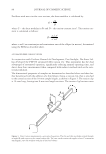
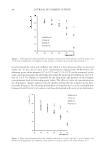
JOURNAL OF COSMETIC SCIENCE 82 reason, changes in the forces generated upon deformation can also be related to changes in the molecular structure of the hair, and infl uencing these characteristics is desirable for the optimization of hair products. The stiffness and strength properties of hair are impressive when compared to other natural and man-made materials, but due to the small cross-sectional area of a hair fi ber, an area of the order of 10−9 m2, the absolute values of the restoring forces generated by a hair under deforming loads are small. At small deformations within the Hookean region, tensile stresses of up to 980 MPa (13) are measured, but small deformations in bending and torsion generate much lower forces. Furthermore, tensile measurement requires a simpler experimental confi guration than required for the determination of bending or torsional properties and few commercially available instruments are currently available. Consequently, the scant literature relating to the bending and torsional properties of the hair fi ber can largely be attributed to diffi culties associated with making accurate deter- minations of these characteristics for such microfi brous materials (14,15). The tensile stiffness of hair is dominated by the crystalline fi brillar regions within the microstructure, which are aligned along the direction of the fi ber axis, and by the strength of the inter- and intramolecular interactions in the amorphous matrix that connects these regions. As the tensile stiffness of hair along the fi ber axis is a function of these molecular interactions in the direction normal to the fi ber axis, the Young’s modulus can be assumed to be almost entirely associated with the fi ber cortex. Any contribution from the cuticle will be small due to its low area fraction of the fi ber cross section in the direc- tion normal to the fi ber axis (2,16). The fi ber’s mechanical response in deformation by bending is complex and will be infl uenced by both the cuticle and the cortex. In bend- ing, a fourth-power relationship exists between the fi ber diameter, and the restoring force generated upon deformation, and for this reason material at greater distances from the center of the cross-section has a larger infl uence on this property than material close to the center. It has been predicted that the cuticle will have a major infl uence on bend- ing stiffness (17,18). Elsewhere, it has been reported by modeling of the hair fi ber structure that the cuticle will have a signifi cant but non-dominating infl uence on fi ber- bending properties, with a signifi cant contribution from the fi ber cortex (19). A wide range of methods has been applied to characterize bending forces, including application of a cantilever load to one end of the fi ber, loaded loop, pendulum, and vibrating rod methods (20–24). The torsional storage modulus is a function of the shearing forces experienced in the amorphous matrix of the fi ber cortex as the fi ber is deformed around the long axis, and it may be signifi cantly infl uenced by the cuticle that surrounds the hair fi ber. Although the cuticle generally accounts for a small fraction of the total area of the hair fi ber cross sec- tion, as with deformations arising from bending, a fourth-power relationship exists be- tween torsional stiffness and the fi ber diameter. To date, oscillatory pendulum methods have largely been used (11,15,25,26) to determine the torsional storage modulus, and they can also be used to measure loss modulus characteristics. These pendulum methods observe the frequency and magnitude of the oscillatory movement of a bob that is sus- pended from the fi ber and excited into motion by an applied force or torque. There are several factors that limit the utility of the oscillatory method, particularly regarding the testing of large numbers of samples. The torsional pendulum method re- quires manual attachment of the pendulum bob and loading and unloading of samples

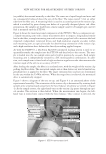
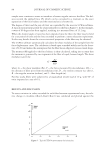
NEW METHOD FOR MEASUREMENT OF FIBER TORSION 83 onto the measurement station, and this means that the operator must remain with the instrument to initiate each experimental run. This is time-consuming, and it also be- comes problematic when attempting to make measures at non-ambient conditions as it is required to enclose the experiment in a controllable environment that may require the use of a glove box or additional equilibration time following each sample loading. In addi- tion, it is problematic to alter the experimental parameters, such as the angle of exciting deformation or longitudinal stress on the fi ber during these tests, without infl uencing other experimental parameters. Finally, it is not possible to measure the relaxation of stress in torsional deformation utilizing a pendulum method. This paper presents data relating to the experimental ineffi ciencies and the errors as- sociated with the torsional pendulum technique, and introduces new instrumentation that allows for more accurate and higher-throughput evaluation of fi ber torsional stiff- ness. The authors present a direct-contact method with automated sample loading and unloading that addresses all of the aforementioned problems, and also present a description of automated data collection of all relevant measurement parameters, in- cluding angle and rate of deformation, longitudinal stress, and torsional stiffness during deformation (shear modulus) and over time following deformation (shear stress relaxation). MATERIALS AND METHODS PREPARATION OF THE HAIR Swatches of hair composed of fi bers from several individuals were purchased from Inter- national Hair Importers and Products, (Glendale, NY). The swatches were classifi ed by the supplier as undamaged Dark Brown European Hair (10”/7 g) and present in what approximates the virgin, undamaged state, having had no aggressive chemical treatment or physical treatments applied while on the head of the consumer or post-sampling. Prior to testing, the hair was washed twice with a 12% SLES:2% CAPB solution, rinsed, and then allowed to dry overnight at 20°C and 50%RH. Individual hair fi bers were separated from the swatch and two plastic tabs were attached to the fi ber, separated by 30 mm. The plastic tabs were sourced from Dia-stron Ltd. (Andover, UK). Each plastic tab had two parts: one male part and one female, which “snap” together, enclosing the ends of the fi ber section and holding securely. After the plastic tabs were attached, any excess fi ber extending from the tab was cut away with a scalpel. After preparation each fi ber was placed in a humidity-controlled environment and equilibrated at 20°C and 50% RH for at least 12 hours before the experiment was performed. PREPARATION OF THE NYLON Reels of nylon fi ber, Ultima® PowerSilk® (0.75 kg, 0.09 mm), were purchased to demon- strate the transferability of the torsion measurement methodology to different material types. Individual sections of nylon were prepared by the same means as the hair fi bers, as described above.
Purchased for the exclusive use of nofirst nolast (unknown)
From: SCC Media Library & Resource Center (library.scconline.org)