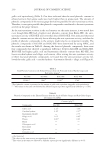
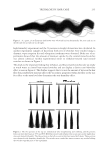
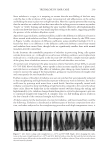
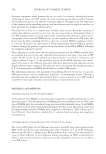
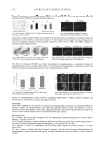
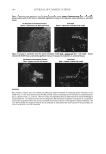
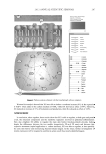
JOURNAL OF COSMETIC SCIENCE 248 MICROSCOPIC ANALYSIS The behavior of samples A and B during spreading were followed by microscopy to understand more fully the role of pretreatment on product distribution. The microscopic observations were performed with a microscope (Axio Imager, Carl Zeiss S.A.S.) in con- junction with a camera (Axio Cam MRc.) The images were then analyzed with Axio Vision software. RESULTS AND DISCUSSION Different in vitro methodologies have already been proposed by the industry to assess the in vitro SPF of suncare products, but all the methods proposed showed poor correspon- dence between in vitro and in vivo values. The limitations of the existing in vitro methods were explored and showed the importance of the substrate used. A previous study, using the injected molded plates, revealed that results can be improved by controlling the physical characteristic (the roughness) of the plates. Nevertheless, this step seems to be necessary, but not suffi cient, to have complete control of the technique, as HD6 fails to reproduce the in vivo results in some cases. The question is why the HD6 sometimes fails to give reliable results. The present study investigates the chemical aspect of the spreading of different products on HD6 plates, offering either poor or good correlation with the in vivo results. The aim is to compare the interactions between product and substrate in both cases. First, the criteria of transparency and roughness were controlled on both types of plates (treated and untreated) in order to reproduce exactly the same experimental conditions and adhere to the Colipa guidelines concerning the transparency and the roughness con- trol chart (5). OPTICAL TRANSMISSION GUIDELINES According to Colipa guidelines, the minimum average optical transmission require- ment through a substrate treated with glycerin is 60% at 290 nm, 69% at 300 nm, and 81% at 320 nm. The present study complied with these recommendations. The optical characteristics of cocamidopropyl betain are compared with glycerin in Table II. The results of transmission obtained with the cocamidopropyl betain-treated HD6 plates showed that the transparency required is appropriate for UV analysis. This amphoteric pretreatement can be introduced in an in vitro UV spectroscopic method. Table II Percentage of Transmission at 290 nm, 300 nm, and 320 nm for the PMMA Plate HD6 Treated with C.B. Treatment PMMA HD6 + glycerin PMMA HD6 + TegoBetain F50 Wavelength (nm) 290 300 320 290 300 320 % Transmittance 66.7 71.8 83.1 68.5 73.6 84.9

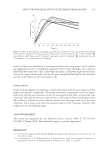
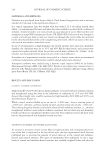
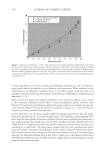
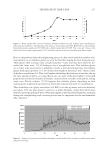
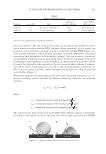
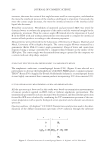
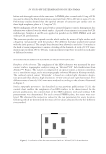
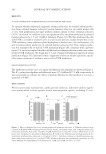
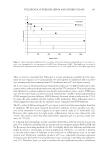
IN VITRO SPF DETERMINATION ON HD6 PMMA 249 INFLUENCE OF C.B. PRETREATMENT ON ROUGHNESS OF THE HD6 SUBSTRATE The second criterion checked was the surface roughness in the presence of the cocamido- propyl betain fi lm. The values obtained (Table III) were compared with those obtained with a petrolatum fi lm applied on the HD6. The amphoteric pretreatment has a lower infl uence on the roughness substrate compared with petrolatum pretreatment. The C.B. treatment makes a very thin fi lm whose roughness will not affect the SPF results. INFLUENCE OF C.B. PRETREATMENT ON THE WETTABILITY OF THE HD6 SUBSTRATE The contact angles between a 10-μl drop of ionized water and HD6 PMMA plates with and without pretreatment were measured. The values (Table IV) show the hydrophilic nature of PMMA (contact angle of 63°). In the presence of C.B. pretreatment the sub- strate becomes highly hydrophilic (θ=14.9). INFLUENCE OF C.B. PRETREATMENT ON THE SPREADING OF TWO SELECTED PRODUCTS SPF investigations were performed with two different bases, an O/W emulsion and a gel. Both these formulae were chosen according to their respective poor and good correlations with the in vivo values. Sample A with poor in vitro/vivo correlation. Product A is selected in this study because HD6 plates failed to reproduce the in vivo SPF value. It is interesting, however, to mea- sure the SPF of such a product on the amphoteric pretreated HD6 in order to compare the results. The in vitro SPF results (Table V) obtained with the same operator on untreated plates (5.59) were much lower than those obtained on the pretreated HD6 (18.46), which are in line with the in vivo values. It is therefore necessary to understand why untreated HD6 failed to give a result close to the in vivo value, whereas it works on the pretreated plates in the case of sample A. Table III Mean Values of the Different Roughness Parameters for the Untreated PMMA and Pretreated PMMA Plates Roughness parameters Ra Rp Rv Rdq Rsk Rku A1 A2 Ssc Vvv Untreated PMMA plate 4.70 10.80 12.83 10.60 -0.22 3.64 213.83 550.83 0.032 9.50E-07 PMMA plate + TegoBetain F50 3.54 9.38 8.43 6.91 0.30 3.87 309.40 296.00 0.017 6.54E-07 PMMA plate + petrolatum 2.42 6.85 4.57 3.59 0.78 4.45 279.00 99.46 0.008 4.69E-07 Table IV Values of the Contact Angle (θ) between Deionized Water and the Substrate before and after Pretreatment 10 μl deionized water Untreated HD6 Pretreated HD6 Contact angle θ 63 14.9
Purchased for the exclusive use of nofirst nolast (unknown)
From: SCC Media Library & Resource Center (library.scconline.org)