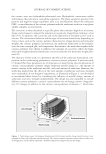
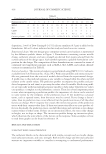
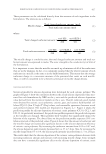
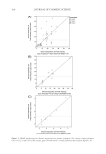
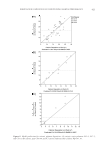
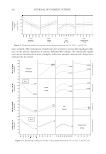
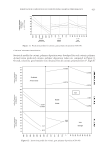
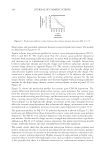
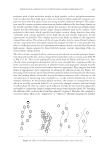
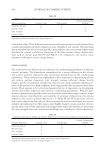
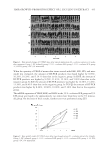
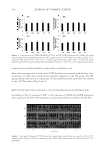
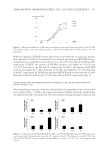
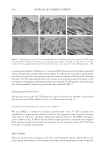
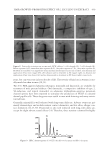
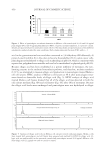
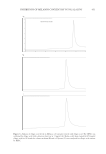
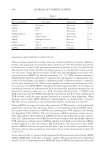
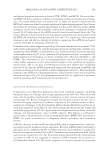
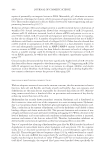
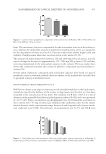
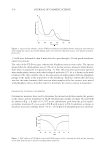
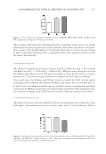
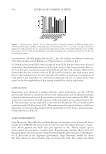
JOURNAL OF COSMETIC SCIENCE 434 Skin was observed for erythema or edema as required by the Draize test (0: no erythema or no edema 1: barely perceptible erythema or edema 2: well-defi ned erythema or slight edema 3: moderate to severe erythema or moderate edema 4: severe erythema or edema) at 24 and 72 h after application (28,29). The Draize test was done and evaluated accord- ing to the Korea Food and Drug Administration guideline. ANALYSIS BY HIGH-PERFORMANCE LIQUID CHROMATOGRAPHY FOR THE QUANTIFICATION OF LYCOPENE The quantifi cation analysis of the lycopene of the LTS was performed using a Waters 600E HPLC system (Waters Co., Milford, MA) equipped with Waters 486 UV detector, as de- scribed by Rho et al. (23). The chromatographic analysis was conducted using a reverse- phase ZORBAX Eclipse plus C18 column (4.6 mm × 250 mm Agilent, Santa Clara, CA) with 5 μm particles. The characterization of the lycopene extracts was performed in isocratic mode and the mobile phase used was methanol/THF (90:10 v/v). Lycopene samples were dissolved in 20 μl of a methanol/hexane (1:2 v/v) solution. Chromatographic separation of extracts was performed at a constant fl ow rate of 1 ml/min. Lycopene was detected at 472 nm. For quantitative analysis, standard lycopene (Sigma L9879 Sigma-Aldrich, Ltd., St. Louis, MO) was also analyzed using the high-performance liquid chromatography (HPLC) system under the same conditions. STATISTICAL ANALYSIS Analysis of variance as a statistical analysis was performed using SPSS (version 12.00 SPSS Inc. Chicago, IL). A value of p 0.05 was considered statistically signifi cant. RESULTS YIELD OF L. ESCULENTUM EXTRACT The yields of EAE, SCE, and LTS of L. esculentum (100 g) were 3.8 g, 0.75 g, and 0.014 g, respectively. HAIR GROWTH–PROMOTING EFFECT OF L. ESCULENTUM EXTRACT After 4 weeks of daily topical treatment on C57BL/6 female mice, 3% (w/w) formulations of EAE, SCE, and LTS all showed hair growth–promoting activity greater than the NC. The hair growth–promoting activity of LTS was also similar to that of the 3% Minoxidil control (PC) (Figs 1 and 2). EFFECT OF L. ESCULENTUM EXTRACT ON THE MRNA LEVEL OF GROWTH FACTORS According to Fig. 3, increases in VEGF and IGF-1 were signifi cant only for SCE and LTS. Increases in KGF were signifi cant only for LTS, and there were no signifi cant increases in TGF-β over the NC.

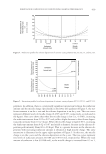
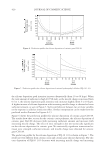
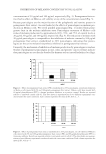
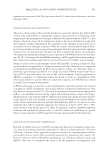
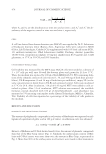
HAIR GROWTH–PROMOTING EFFECT OF L. ESCULENTUM EXTRACT 435 When the quantity of VEGF of mouse skin tissue treated with EAE, SCE, LTS, and min- oxidil was evaluated, the amount of RT-PCR products was found higher by 8.09%, 10.29%, 10.29%, and 5.14 % than that in the negative group. In KGF, the amount of RT-PCR products was higher by 9.29%, 11.43%, 12.14%, and 5.00% than that in the negative group. In IGF, the amount of RT-PCR products was higher by 12.68%, 15.49%, 13.38%, and 8.45% than that in the negative group. In TGF-β, the amount of RT-PCR products was higher by 8.46%, 10.80%, 10.00%, and 5.38% than that in the negative group. The mRNA expression of VEGF, KGF, and IGF-I in the 3% L. esculentum SCE group and 3% LTS group was found to be approximately two times more than those in the 3% minoxi- dil group. On the basis of these results, further tests were performed using LTS. Figure 1. Hair growth change of C57BL/6 mice after topical application of L. esculentum extracts at 4 weeks after treatment. Group 1: NC (ethanol) group 2: 3% L. esculentum EAE group 3: 3% L. esculentum SCE group 4: 3% LTS group 5: PC (3% minoxidil). Figure 2. Hair growth index of C57BL/6 mice after topical application of L. esculentum extracts for 4 weeks. Group 1: NC (ethanol) group 2: 3% L. esculentum EAE group 3: 3% L. esculentum SCE group 4: 3% LTS group 5: PC (3% minoxidil).
Purchased for the exclusive use of nofirst nolast (unknown)
From: SCC Media Library & Resource Center (library.scconline.org)