J. Cosmet. Sci., 65, 359–364 (November/December 2014) 359 Foundation products have a measureable impact on moisturization TRICIA DALEY-BOWLES, JILLIAN LIGUORI, FARRAH RAZURI, AMBER HUBSCHMITT, JILL LITCHAUER, BETTY AUCAR, and MARC DE MUL, BASF Corporation, Stony Brook, NY 11790 (T.D.-B., J.L., F.R., A.H.), and BASF Corporation, Tarrytown, NY 10591 (J.L., B.A., M.D.M.). Accepted for publication August 11, 2014. Synopsis Multifunctional products are becoming more prevalent in the color cosmetics market. We evaluated four foundation products for in vivo moisturizing benefi ts using the mini-regression test method. We found that statistically signifi cant long-lasting moisturization was provided by the foundations tested, but only if hy- groscopic moisturizing ingredients were present. INTRODUCTION Today’s consumers are increasingly looking for products that offer multifunctional- ity, and cosmetics are no exception. Women prefer product formulations that offer benefi ts beyond basic makeup. One such benefi t that is appealing to a broad base of con- sumers is moisturization (1). Dermatologists and makeup artists alike recommend keep- ing the facial skin moisturized to ensure optimal skin health and appearance. This advice extends across all facial skin types. Although much work has been done to assess the effi cacy of moisturizers, less is known about the ability of a color cosmetic product to have lasting, measurable effects on skin. In particular, this study examined the ability of a foundation to have a measureable im- pact on skin hydration when applied under real wear conditions—once per day, remain- ing on the skin for approximately 8 h before being washed off. To assess a cosmetic’s impact on skin hydration, we made skin impedance measurements. The measurement of skin impedance (the total electrical resistance of the skin to an applied alternating cur- rent) provides a simple and well-established technique to assess the hydration of the skin surface (2). Skin surface hydration changes are a contributor to skin dryness and can be used to evaluate moisturization of the skin (3). Address all correspondence to Marc de Mul at marc.demul@basf.com.

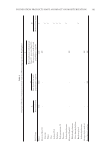
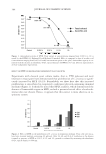
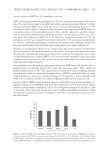
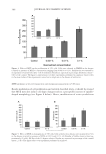
JOURNAL OF COSMETIC SCIENCE 360 The accepted way of comparing the moisturizing performance of skin care products is to determine how long the moisturizing effect on the skin is sustained after treatment is stopped, which is known as the regression method. This method was fi rst developed by Kligman (4), who assessed skin dryness at various time points after discontinuation of daily treatment with a moisturizer for a number of weeks. In the original method, dryness measurements continued until the skin regressed to its original condition before treat- ment. A faster method is the mini-regression test suggested by Grove (3), which indicates 4 weekdays of treatment, followed by skin dryness evaluations the following week for up to a week of regression. To understand the effect that product formulation has on moisturization, a foundation formulation and two variations were compared. The fi rst variation built upon the base formulation with the inclusion of an emollient commonly used as an aesthetic modifi er. The second variation continued to build upon the base formulation by including the same emollient from the fi rst variation as well as a moisturizing active material. Finally, a marketed moisturizing foundation was included as a benchmark formula with similar- colored pigments, but a different emulsion composition. This benchmark foundation was claimed to provide moisturizing benefi ts. MATERIALS AND METHODS PRODUCT FORMULATIONS The product formulations applied are listed in Tables I–III. The base foundation formula- tion was a silicone in water formula with moderate viscosity and a pH of about 6. Two variations of the base formulation were tested, one with propylheptyl caprylate as an aesthetic modifi er, and a second with three moisturizing active materials added: • Moisture blend #1 is a blend of hygroscopic molecules and hydrating agents. • Moisture blend #2 consists of dehydrated hyaluronic acid microspheres. • Moringa oleifera seed oil is an organic oil with moisturizing properties. CLINICAL STUDY DESIGN The double-blinded study was conducted with a total of 24 healthy Caucasian female subjects between the ages of 18 and 65. The study started on February 20, 2013 and concluded on March 1, 2013. All subjects executed an Informed Consent Form prior to the start of study procedures. The principles of Good Clinical Practice, as defi ned by the International Conference on Harmonisation of Technical Requirements for Registration of Pharmaceuticals for Human Use, were followed except for the requirement that investigational products should be manufactured, handled, and stored in accordance with applicable Good Manufacturing Practice, which is not a requirement for cosmetic products. The study protocol was reviewed and approved by our Internal Review Board on February 19, 2013. There were no adverse events encountered, and no protocol amendments or deviations took place.
Purchased for the exclusive use of nofirst nolast (unknown)
From: SCC Media Library & Resource Center (library.scconline.org)