J. Cosmet. Sci., 65, 365–375 (November/December 2014) 365 Effect of the combination of different depigmenting agents in vitro ALFREDO MARTÍNEZ-GUTIÉRREZ, JUAN ANTONIO ASENSIO, and BEGOÑA ARAN, Mesoestetic Pharma Group, C/Tecnologia, 25, 08840 Viladecans, Barcelona, Spain. Accepted for publication August 28, 2014. Synopsis Melanin plays a key role in our skin, protecting us against ultraviolet radiation, but there are situations in which its anomalous accumulation can lead to either aesthetic problems or diseases like melasma. For this reason, it is important to fi nd agents that are able to decrease the skin pigmentation. It has been demon- strated that the melanin synthesis pathway can be inhibited at different levels by different mechanisms of action. The aim of this project is to combine some of these agents with different mechanisms of action on this pathway in order to fi nd synergistic effects in the inhibition of tyrosinase and melanin synthesis. Kojic acid + α-lipoic acid combination are the only ones that have shown a synergistic effect over mushroom tyrosinase. However, this effect is not seen in melanin synthesis inhibition, although this combination is the most effec- tive one. A potentiation effect is seen in arbutin + α-lipoic acid and kojic acid + azelaic acid combination. Kojic acid and α-lipoic acid combination might prove a good approach as treatment for hyperpigmentation disorders. INTRODUCTION Melanin is a pigment present in most living organisms. In animals, it derives from the amino acid tyrosine, and it is synthesized in melanocytes, which are located in the epider- mis. More specifi cally, inside these cells, melanin is synthesized in specialized organelles called melanosomes. Melanin has different functions, among which the most important is its function as a protecting pigment against ultraviolet radiation of the sun (1–3). Despite its benefi cial role in sunlight protection, there are diseases in which an anomalous ac- cumulation of melanin happens (hyperpigmentation), such as melasma or post-infl ammatory hyperpigmentation (4). However, sometimes it is simply an aesthetic matter, where the patient wants to eliminate non-malignant dark spots. Hydroquinone is the depigmenting agent of reference and one of the most effective up to now, but it is cytotoxic (causing long- term adverse effects). Thus, hydroquinone has been banned in the European Union (24th Dir 2000/6/EC) as a skin-lightening agent because of its toxicity, although it can still be Address all correspondence to Begoña Aran at baran@mesoestetic.com.

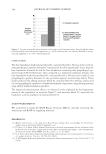
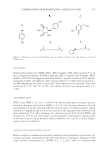
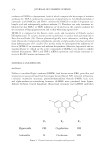
JOURNAL OF COSMETIC SCIENCE 366 obtained on prescription for the treatment of melasma and other hyperpigmentary disorders (5–7). For this reason, there is an increasing concern about developing and fi nding new depigmenting agents that are effective and not cytotoxic so they can be used as an alterna- tive to hydroquinone (6). The use of synergistic inhibition would be of interest to increase the inhibition and to reduce the dose needed to produce the desired effect too. Melanin synthesis can be inhibited at different levels of the pathway. This has led to the idea that compounds with different mechanisms of action can be combined to obtain synergistic effects, so we can get a greater reduction of the melanin synthesis. Regarding the background in the combination of some of these agents, the one that has proved to be the most effective is a standard triple combination cream, which contains hydroquinone (which inhibits tyrosinase activity), an exfoliating agent (which stimulates the epidermal turnover and reduces the oxidation caused by hydroquinone), and a corticosteroid to re- duce infl ammation. Clinical trials have been performed with this cream and it has shown a good effectiveness. Arbutin, a derivative compound from hydroquinone, inhibits tyrosinase in a competitive way (as an alternative substrate of tyrosine or L -3,4-dihydroxyphenylalanine [L-DOPA]), without affecting the expression of the enzyme (3,8–11). Kojic acid, which is a fungal metabolite obtained from Aspergillus or Penicillium, also inhibits tyrosinase activity by chelating copper atoms, which are essential for its function, in the active site of the en- zyme. It also has antioxidant properties, preventing the conversion of o-quinone to L -DOPA, which will form melanin at the end (8,10,12–14). Azelaic acid, synthesized by the fungus Pityrosporum ovale, acts as a competitive inhibitor of tyrosinase, besides affect- ing the mitochondrial metabolism and having an antioxidant effect neutralizing free radicals. It also has a certain anti-proliferative and cytotoxic effect for melanocytes by inhibiting enzymes involved in DNA synthesis (2,10,15,16). α-Lipoic acid (or thioctic acid) also has a double action, as azelaic acid and kojic acid. On one hand, it inhibits the expression of microphthalmia-associated transcription factor (MITF), thus inhibiting the expression of the melanogenic enzymes (Tyrosinase, TYRP-1, TYRP-2). On the other hand, it has antioxidant properties in its oxidized form, although it is more antioxidant in its reduced form (dihydropholic acid) (17–20). In this work, some widely used depigmenting cosmetic agents, which are arbutin, kojic acid, azelaic acid, and α-lipoic acid (see Figure 1), will be evaluated individually and in different combinations to look for synergistic effects between them. Mechanisms of action will be studied with a cell-free mushroom tyrosinase assay, although for some of them it has been already suggested (1,8,9). Pair combinations will be done to assess synergistic effects over mushroom tyrosinase and melanin content. For the determination of melanin content, maximum non-cytotoxic concentrations will be obtained for these compounds. METHODS MATERIALS Arbutin, kojic acid, azelaic acid, α-lipoic acid, L -DOPA, synthetic melanin, mushroom tyrosinase, α-melanocyte-stimulating hormone (α-MSH) and 3-isobutyl-1-methylxanthine (IBMX) were purchased from Sigma-Aldrich (St. Louis, MO). Sodium hydroxide (NaOH) was purchased from Panreac (Barcelona, Spain).
Purchased for the exclusive use of nofirst nolast (unknown)
From: SCC Media Library & Resource Center (library.scconline.org)