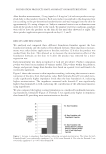
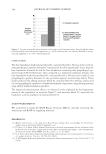
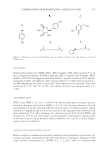
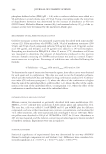
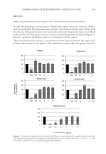
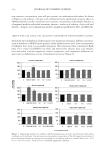
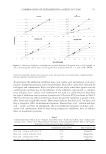
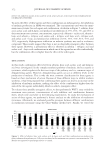
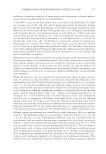
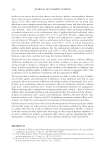
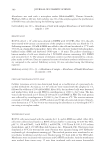
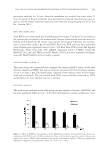
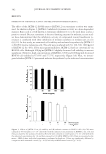
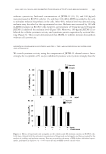
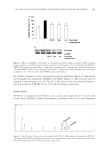
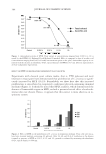
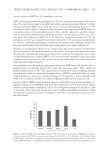
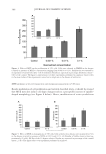
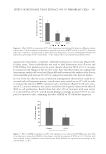
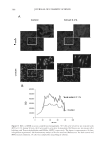
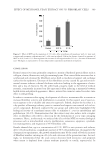
EFFECT OF METHANOL YEAST EXTRACT ON 3T3 FIBROBLAST CELLS 395 TROPHIC EFFECTS OF MYE ON 3T3 FIBROBLAST CELL LINE MTT cytotoxicity assays were performed on 3T3 cells in order to determine if deleterious side effects are observed and to establish the usable concentration limit (Figure 3). These assays revealed that MYE can be used up to 0.1% without inducing any decrease of 3T3 metabolic activity. On the contrary, at this concentration, it appears that MYE induces a noticeable increase of mitochondrial activity that could be relevant to growth stimula- tion. In agreement with this view, proliferation assays carried out by crystal violet stain- ing show that addition of MYE at 0.1% induces a signifi cant increase of 3T3 cell proliferation (264% as compared to untreated cells) after a 72 h incubation period (Figure 4). Of note, additional experiments carried out in antibiotic-free medium exclude any bias potentially induced by penicillin and/or streptomycin (see insert of Figure 4). Actually, the proliferation induction we observe here may be the result of two phenom- ena: an increase of cell number entering in cell cycle or a decrease of the generation time. As shown by clonogenicity experiments (Figure 5), it appears that the yeast extract plays on both these behaviors. Indeed, MYE is able to increase the number of clones (increased number of cells entering into the cycle) and, on the other hand, to increase their size (more division within colonies). As proliferation and clonogenicity experiments show that MYE favors cell mitosis, there is suspicion that it could also impede their entry into senescence phase. Thus, analysis of β-galactosidase activity of 3T3 cells cultured in low amount (2%) serum-containing medium was achieved in order to evaluate the potential ability of MYE to reverse the effect of serum impoverishment on senescence induction (Figure 6). As expected, a 3-day treatment with MYE at 0.1% reduces over 80% the number of β-galactosidase-positive senescent cells. Likewise, effect of MYE was evaluated on apoptosis induced by serum starvation (Figure 7). Analyses carried out by TUNEL assay show that addition of 0.1% of yeast extract signifi - cantly decreases number of apoptotic cells (45% as compared to untreated cells) after 2 days of treatment. Note that these results agree with 7-AAD permeability experiments which also showed a signifi cant decrease of apoptotic cells (64% as compared to untreated cells data not shown). Figure 3. Effect of MYE on the metabolic activity of 3T3 cells. Cells were cultured in DMEM in the absence (control) or presence of MYE at concentration ranging from 0.001% to 1%. Metabolic activity was assessed by MTT assay after 48 h of incubation. Results are expressed in percentage absorbance (mean ± S.D.) of the control. Measurements were performed in sixplicate and the fi gure refers to an experiment performed twice.

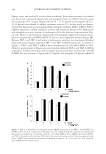
JOURNAL OF COSMETIC SCIENCE 396 MYE MODIFIES ACTIN CYTOSKELETON AND INCREASES MIGRATION OF 3T3 CELLS Besides modulation of cell proliferation and survival described above, it should be stressed that MYE may also induce cell shape changes such as a perceptible increase of spindle- shaped morphology (see Figure 8 below). Hence, modifi cation of actin cytoskeleton Figure 4. Effect of MYE on the proliferation of 3T3 cells. Cells were cultured in DMEM in the absence (control) or presence of MYE at concentration ranging from 0.001% to 0.1%. Proliferation was assessed by incorporation of crystal violet after 72 h of incubation. Results are expressed in percentage absorbance (mean ± S.D.) of the control. The fi gure is representative of three experiments performed in sixplicate. Insert refers to the mean values of two experiments carried out in sixplicate in the absence of antibiotics. Figure 5. Effect of MYE on clonogenicity of 3T3 cells. Cells seeded at low density were incubated for 72 h in the absence (control) or presence of MYE at 0.01% and 0.1%. (A) Number of visible clones (at least ap- proximately 20 cells). (B) Size of the 10 largest colonies. Results are expressed in percentage of the control (mean ± S.D.). The fi gure refers to an experiment performed in triplicate.
Purchased for the exclusive use of nofirst nolast (unknown)
From: SCC Media Library & Resource Center (library.scconline.org)