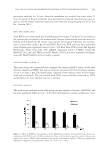
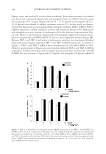
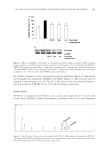
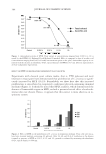
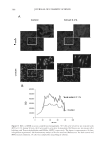
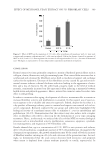
EFFECT OF METHANOL YEAST EXTRACT ON 3T3 FIBROBLAST CELLS 393 fl uorescence of Texas red-labeled phalloidin associated to F-actin was quantifi ed using Image J software (National Institute of Health). MIGRATION STUDY BY SCRATCH ASSAY Migration of 3T3 cells was assessed by the technique of the scratch assay (24) using a protocol adapted for cells having a high migration rate (wound of 2.2 mm). 3T3 cells, seeded 6-well plates (5 × 10⁵ cells/well), were incubated for 48 h without any treatment. Cells were then treated with mitomycin C at a concentration of 5 μg/ml for a period of 90 min in order to inhibit cell proliferation. After wound formation using a 2.2-mm width scraper (t0), cells were washed 3 times with PBS and incubated for a period of 24 hours (t24) in the absence (control) or presence of MYE at 0.01 and 0.1%. Migration rate was then calculated (difference of the wound width at t0 and t24 normalized by the width at t0). Note that marks made on the back of the plate were done in order to identify the exact location of measurements. RESULTS MAIN CHARACTERISTICS OF MYE EXTRACT MYE is obtained by methanol extraction of pressed yeast S. cerevisiae. Various stages of precipitation are then performed to purify this extract (see Materials and Methods for details). Brownish and liquid at room temperature, this extract has a specifi c gravity of 1.41 and a pH value of 7.5. Preliminary studies carried out by G-25 exclusion chroma- tography have shown that the molecular mass of the MYE is about 1500 Da and it shows an absorption peak at 260 nm (16,17). The bioactive properties of yeast extracts containing chromium or soluble β-glucans be- ing established (9–15), we attempted to detect the presence of these compounds in our extract. Concerning chromium, analysis carried out by ICP (inductively coupled plasma) showed that this element is only present in trace amounts (less than 10 ppm data not shown). Similarly, enzymatic assays (Megazyme, Wicklow, Ireland) made on the MYE failed to demonstrate the presence of β-glucans (data not shown). Hence, according to these experiments, one may assume that the extract described here differs from chro- mium- or β-glucans-rich yeast complexes. Note that presence of amines, probably from peptidic origin, was detected by both ninhydrin and BCA (Pierce, Rockford, IL) colori- metric assays (data not shown). ANTIOXIDANT PROPERTIES OF MYE It is a general agreement that antioxidant compounds are benefi cial with regard to skin aging. Hence, we evaluated the potential antioxidant property of MYE using DPPH (Figure 1). In this assay, MYE exhibits antioxidant property with an IC50 of 1.16 × 10³ ppm. Tested in parallel as a positive control, ascorbic acid has an IC50 of 0.034 mM (= 5.9 ppm). Thus, although MYE is about 200 times less potent than ascorbic acid in this assay, this extract appears to possess signifi cant antioxidant properties.

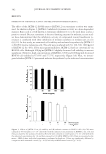
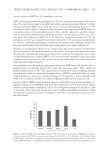
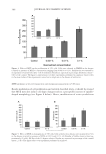
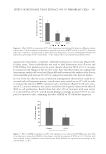
JOURNAL OF COSMETIC SCIENCE 394 EFFECT OF MYE ON RESPIRATORY-DEPENDENT YEAST GROWTH Experiments with classical yeast culture media, that is, YPD (glucose) and wort (maltose in major part) have demonstrated that proliferation of S. cerevisiae is signifi - cantly increased by MYE (16,19). Remarkably, we show here that this increased proliferation is exacerbated in respiratory conditions (glycerol-containing minimal medium) (Figure 2). It should be noted that HPLC analyses, which demonstrated the absence of fermentable sugars in MYE, exclude a potential trivial effect of such sub- strates (data not shown). Hence, it appears that this extract is more effective on re- spiratory system. Figure 1. Antioxidant activity of MYE. Yeast extract at concentrations ranging from 0.001% to 1% is tested by the DPPH (1,1 Diphenyl Pycril Hydrazil 2) method. Effect is compared to that of ascorbic acid (concentrations ranging from 0.001 to 1mM concentrations given on the plot). Antioxidant capacity is cor- related with the decrease in absorbance (O.D. optical density) of DPPH at 517 nm. Data are representative of three independent experiments. Figure 2. Effect of MYE on the proliferation of S. cerevisiae in respiratory medium. Yeast cells were inocu- lated into minimal medium containing 4% glycerol. After 24, 48, and 96 h of incubation in the absence (control) or presence of MYE at 0.01%, 0.1%, and 1%, growth is evaluated by measuring the absorbance (O.D. optical density) at 660 nm.
Purchased for the exclusive use of nofirst nolast (unknown)
From: SCC Media Library & Resource Center (library.scconline.org)